Executive presence coaching for leaders who are ready to be chosen
Two leaders present the same strategy to the same board. Same data, same slides, same deadline. One walks out with the budget. The other hears, “Let’s revisit this next quarter.”
Nobody in that room would say the second leader was less competent. Most of them could not even tell you what the difference was. But they felt it, and they acted on it.
That difference has a name: executive presence. It is the quiet, constant signal you send about whether you are ready for more, and it shapes promotions, board seats and client decisions long before anyone says a word about them out loud. The good news is that it is not a gift some people are simply born with. It is a set of signals and habits, and it can be coached.
I spent nearly two decades on the other side of those decisions, in corporate HR and leadership development, sitting in the rooms where people were promoted, passed over, hired and let go. On this page I share what I learned there: what executive presence really is, why it matters even more now that AI can do so much of the visible work, and how coaching changes it.
KEY TAKEAWAYS
- Executive presence is how others experience your judgment, confidence and credibility, especially when you are not in the room.
- It can be learned. It is a set of signals and habits, not a personality type.
- Coaching starts with an honest assessment of how others actually perceive you.
- The work is practical: high-stakes meetings, presentations, difficult conversations, your digital footprint.
- In an AI era, presence is one of the few advantages a machine cannot copy.
What is executive presence?
Executive presence is the impression that you are ready to lead at the next level. It is how calmly you handle pressure, how clearly you make your point, how you listen, how you decide, and how your reputation travels when you are not there. People rarely name it out loud. But they use it to decide whom to promote, whom to trust with a client and whom to put in front of the board.
The good news: presence is not something you are born with or without. It is built from signals and habits, and both can be changed.
The five signals decision-makers read
When I ask executives why they chose one person over another, they rarely talk about résumés. They talk about moments. These are the five signals behind those moments:
- The first minutes. How you enter a room, open a meeting or start a presentation. People decide quickly whether to lean in or tune out, and those first minutes color everything that follows.
- Composure under pressure. What happens to your voice, your face and your sentences when the question is hard, the numbers are bad or the room turns against you. Calm is contagious, and so is panic.
- Clarity. Senior leaders are measured by how fast they get to the point. If it takes you three slides to say what you think, someone else will say it in one sentence and get the credit.
- Listening. Presence is not only how you speak. It is how fully you are with the person in front of you. The leaders people trust most make others feel heard.
- Your reputation when you are absent. What people say about you in the meeting you were not invited to, and what they find when they look you up. Your LinkedIn profile, your emails and your last three projects speak for you all day long.
Why does executive presence matter more in the age of AI?
AI can now draft the strategy, summarize the meeting and polish the slides. That means the visible output that once set leaders apart is becoming a commodity. What remains is the human being people choose to trust: the judgment, the composure, the way someone makes a room feel safe enough to decide.
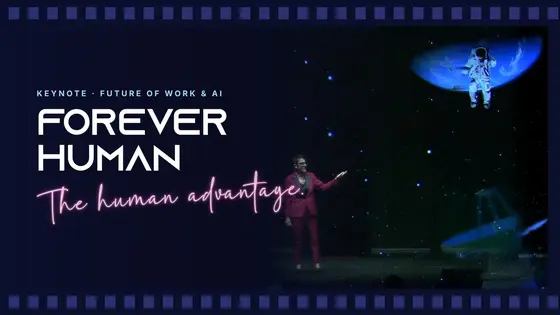
That is the message of my keynote Forever Human, and it is the heart of this coaching. The better the machines get, the more your presence becomes the reason people choose you.
Signs it is time for executive presence coaching
- You have been told you are “not quite ready,” but nobody can tell you what is missing.
- Your ideas get adopted when someone else repeats them.
- You are about to step into a bigger, more visible role and want to start strong.
- You prepare thoroughly for important meetings and still leave feeling you undersold yourself.
- You are great with your team but less comfortable with the board, the C-suite or clients.
- You moved into a new company, industry or country and your reputation did not travel with you.
Who is executive presence coaching for?
- Senior leaders and executives stepping into a bigger role, a board seat or a more visible position.
- High performers who keep hearing “you are not quite ready” and want to know what that really means.
- Leaders in transition who need to make a strong first impression in a new company, industry or country.
- Technical experts whose ideas are brilliant but do not land with senior audiences.
- Organizations that want their next generation of leaders trusted, not just talented.
Executive presence coaching, leadership coaching or communication coaching?
| Focus | Best when | |
|---|---|---|
| Leadership coaching | What you do: decisions, strategy, managing people | You want to lead your team better |
| Communication coaching | How you speak and present | You have a specific talk or skill to improve |
| Executive presence coaching | How you are experienced and chosen, in and out of the room | You are ready for more and want others to see it too |
The three overlap, and good coaching touches all of them. The difference is the question we start with: not “How do I lead?” but “How am I experienced, and is that helping me get where I want to go?”
What we work on
- Perception. Where the gap sits between who you are and how you are experienced, and what to do about it.
- Communication. Speaking with clarity and influence in meetings, presentations and on camera.
- Gravitas under pressure. Staying calm and credible in high-stakes rooms, from the board meeting to the difficult conversation.
- Visibility. Making your contributions seen without bragging, internally and online.
- Digital footprint. A LinkedIn profile and online presence that speak for you when you are not there.
- Habits and boundaries. Routines that protect your energy, so your presence is consistent, not occasional.
How executive presence coaching works
- Start the conversation. Send me a note. If it looks like a fit, we schedule an introductory call.
- Assess. A clear-eyed look at where you stand today, including how others actually experience you.
- Set the goal. What success looks like, your priorities and how we will measure progress.
- Build the plan. Concrete actions, scripts and habits, matched to the rooms you need to win.
- Coach and challenge. Regular one-on-one sessions, in person or virtual, with honest feedback and accountability in between.
- Track results. We measure progress at every step, so you see the change before everyone else does.
Competence gets you in the room. Presence decides what happens next.
What coaching can look like in practice
Say you have just been promoted to vice president. You know the business, but now you present to the executive committee every month, and the first two meetings did not go the way you hoped.
We would start by finding out how you are actually experienced, from the people who matter, not from a personality test. Maybe the content is strong but you bury the recommendation on slide eleven. Maybe you answer hard questions with more data instead of a clear position. Then we rebuild: how you open, how you frame a decision, how you handle pushback, what you do in the ten minutes before you walk in. Between sessions you try it in the real room, and we adjust after every meeting.
That is the difference between coaching and advice. Advice tells you what to do. Coaching stays with you until it works.
Why work with me
I bring three things most coaches cannot: the insider view of someone who made these decisions for years, a Hall of Fame speaking career on stages in more than 25 countries, and an honest, direct style. You will hear what others are too polite to tell you, and you will leave knowing exactly what to do about it. I am also the author of The Image of Leadership, the book much of this work is built on.
What clients say
Sylvie worked with me earlier this year, and her advice was spot-on! Just landed a dream job. I could not have done it without her.
Sylvie is incredibly professional and insightful. This is an incredibly worthwhile investment for any individual or for a corporation looking to invest in key talent.
Sylvie was great to deal with remotely and was extremely thorough in her assessment of me. Her advice and guidance had made a tremendous difference.
Ready to be seen the way you deserve?
Tell me a little about you and what you want to change, and I will personally get back to you.
- One-on-one executive presence coaching, in person or virtual
- Consulting for leadership and client-facing teams
- Just one burning decision, presentation or conversation? Book a single Rent My Brain session
Frequently asked questions
What is executive presence coaching?
One-on-one coaching that helps leaders be seen, trusted and chosen for the right reasons. It works on how you show up, communicate and lead in high-stakes moments, and on how your reputation travels when you are not in the room.
Can executive presence really be learned?
Yes. Executive presence is a set of signals and habits, not a fixed personality trait. With honest feedback, a clear plan and practice, leaders change how they are experienced, often within a few months.
How long does executive presence coaching take?
Most engagements run over several months, with regular one-on-one sessions and accountability in between. If you need help with one specific moment, a single Rent My Brain session may be enough.
Is coaching in person or virtual?
Both. We meet in person or virtually, whatever fits your calendar and wherever you are.
Can my organization book executive presence coaching for a team?
Yes. I work with leadership teams, client-facing teams and high-potential groups, often combined with a keynote so the stage moment turns into lasting change.