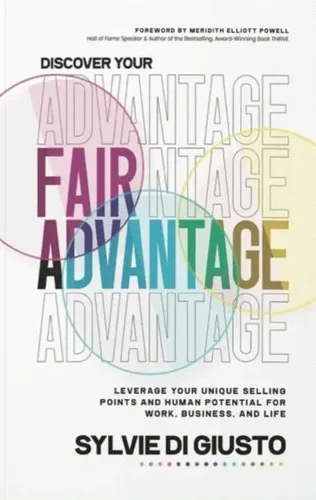
Discover Your Fair Advantage cover
The book

Discover Your Fair Advantage

Leverage your unique selling points and human potential for work, business and life

Your skills can be copied. Your Fair Advantage can’t.

Foreword by Meridith Elliott Powell, CSP CPAE

Order on Amazon

Stop fixing weaknesses.
Start using what no one can copy.

Discover Your Fair Advantage takes the opposite route. It helps you find the experiences, strengths and perspectives that already set you apart, and shows you how to use them on purpose, in a job search, a promotion, a sales conversation or your own business.

Success rarely comes from being better than everyone else. It comes from being different in ways that matter.

Sylvie takes the mystery out of why you need to learn to differentiate and promote yourself, and she shows you how to do it.
Meridith Elliott PowellCSP CPAE, Hall of Fame speaker, foreword to Discover Your Fair Advantage

Who it is for

  • A hardworking professional who keeps getting passed over for promotions while less productive colleagues move ahead
  • A specialist, such as an accountant, whose results are invisible beyond their own team and job title
  • A salesperson, consultant, or business owner who has to answer why customers should choose them over the competition
  • A leader who wants to develop talent and future leaders at every level of the organization
  • A professional with an accent, an international background, or an unusual story who sees it as a handicap rather than an asset
  • Anyone who finds self-promotion boastful or uncomfortable and has stayed quiet about their accomplishments as a result
A story from the book

The Accent on Live Television

Early in her career, Sylvie was invited by a television production executive to join a segment analyzing the public persona of a politician running for a significant office. A camera team followed the candidates through their day, and each evening a panel of seasoned experts, with decades of experience advising politicians, commented on what viewers had seen. Sylvie was invited back again and again. Yet every time she watched herself on screen between those eloquent experts, all she could hear was her accent and the words she did not know. English was not her first language, and the anxiety grew with each appearance. At a holiday party for the production organization, she finally sat down with the producer, pointed at her own mouth and lips, and asked the question that had been haunting her: with so many polished experts available, why did they keep inviting her? His answer changed how she competes to this day. What was it?

The book tells you why they kept inviting her back.

Ten steps from self-awareness to self-actualization

  1. 01Self-AwarenessKnow yourself before you sell yourself.
  2. 02Self-ConfidenceHow belief shapes what others see.
  3. 03Self-EsteemThe stories that stop you from going for it.
  4. 04Self-DiscoveryThe experiences and talents that make you, you.
  5. 05Self-WorthStop competing, start differentiating.
  6. 06Self-MarketingSay what makes you different, without cringing.
  7. 07Self-BrandingA reputation that makes you a category of one.
  8. 08Self-PromotionVisibility that stays genuine.
  9. 09Self-DisciplineThe habits that turn potential into results.
  10. 10Self-ActualizationYour roadmap to fulfillment and impact.

Inside the book

Thirty short chapters in three parts, from knowing your Fair Advantage to living it.

  1. The Habit • Standing OutPart 1. Why some professionals seem to have it all, how a fair advantage differs from an unfair one built on privilege, and the one habit that creates visibility, along with the many ways to stand out for the wrong reasons.
  2. The Necessity • VisibilityPart 1. Four levels of visibility at work, illustrated through Bob in accounting, from being invisible to being the professional decision-makers recommend behind closed doors, with a self-assessment for each level.
  3. The Challenge • AwarenessPart 1. How autopilot habits keep professionals from seeing their own value, the warning signs that you may be less self-aware than you believe, and why awareness lets you shape your career instead of it shaping you.
  4. The Intention • BrandingPart 1. Treating your visibility like an architect’s plan: weighing your inner points of differentiation against corporate culture, industry standards, and customer expectations so you appear, behave, and communicate with intention.
  5. The Vault • Unique Selling PointsPart 2. Borrowing the marketing idea of the unique selling point and applying it to people, with the qualities a personal USP must have: unique, built on strengths, specific, and relevant to your decision-makers.
  6. The Core • Values and BeliefsPart 2. Where your values come from, from culture and upbringing to mentors and experience, and how naming the guiding principles behind your decisions turns them into a visible point of differentiation.
  7. The Roots • Origin and StoryPart 2. Why your origin is your brand’s most valuable background narrative, how where you come from shapes how you show up today, and how to share it with the right level of vulnerability.
  8. The Innate • Natural Talents and GiftsPart 2. Uncovering the talents sitting right under your nose, the ones you overlook because they feel easy, and learning why what comes naturally to you is not easy for everybody else.
  9. The Proficiency • Skills and CompetenciesPart 2. A deep inventory of hard skills, soft skills, and competencies, from people, ethical, and language skills to project, budget, and change management, and which of them truly set you apart.
  10. The Authority • Expertise and Thought LeadershipPart 2. Through the scenario of choosing between a general practitioner and a heart specialist, this chapter shows why uncommon expertise makes you the first port of call, and why a job title is not expertise.
  11. The Journey • Experiences and Lessons LearnedPart 2. How rapid rises, downhill rides, triumphs, and setbacks become part of your unique selling proposition when you share them proactively as proof of resilience, adaptability, and critical thinking.
  12. The Triumphs • Accomplishments and AchievementsPart 2. Why a job well done does not speak for itself, why humility alone will not get you noticed, and how to communicate your achievements strategically and modestly so decision-makers see their true value.
  13. The Target • Audience and BuyerPart 2. The difference between your audience, everyone who influences a decision about you, and your buyer, the person who actually decides to hire, promote, or buy from you, and how to appeal to both.
  14. The Endorsements • Customers and PraisePart 2. Why decision-makers tend to follow those who went before them, and how past customers, results, testimonials, and praise give others the confidence to choose you.
  15. The Remedies • Problems and SolutionsPart 2. Looking past your job description to the problem you really solve, illustrated by a hairdresser whose real work is helping customers feel confident in their own skin.
  16. The Arena • Competition and DominancePart 2. Why better service, lower fees, and longer tenure make you sound like everyone else, how to escape the comparison trap, and how to claim a category your competitors cannot copy.
  17. The Sphere • Location and ReachPart 2. How the reputation of the city, state, or country where you live and work carries associations that decision-makers notice, drawn from Sylvie’s own years in Manhattan and her move to Florida.
  18. The Drive • Passions and ObsessionsPart 2. Why the passions you keep for your private life can help you stand out at work, and how to bring them into your professional identity without seeming unfocused.
  19. The Cause • Advocacy and VolunteerismPart 2. When volunteering and advocacy strengthen your professional reputation and when they distract from it, and how to choose causes that align with your expertise, values, and organization.
  20. The Quirks • Fun Facts and PersonalityPart 2. Replacing forgettable answers like traveling and reading with authentic, surprising fun facts that make people say “tell me more” and open the door to real connection.
  21. The Pinnacle • Unique Selling PropositionPart 2. Bringing every building block together into one statement: a unique selling proposition that captures what makes you exceptional and sets you apart from everyone vying for your job, sale, or promotion.
  22. The Obstacle • CommitmentPart 3. Why leveraging your fair advantage is a process, not an event, and how the habit of putting everyone else first quietly keeps professionals from committing to themselves.
  23. The Doubt • Self-TalkPart 3. The voice inside your head, how negative self-talk becomes a self-defeating belief system, and why it is the biggest enemy in sabotaging your own visibility.
  24. The Scrutiny • Self-CriticismPart 3. How toxic self-criticism erodes your ability to communicate your value and teaches others to doubt you, and where healthy self-criticism still serves you.
  25. The Insecurity • Self-ConfidencePart 3. The internal and external confidence killers in the average workplace, from imposter syndrome to a hostile environment, and why decision-makers look for professionals who believe in their own abilities.
  26. The Rivalry • Self-ComparisonPart 3. Upward and downward comparison, the pull of picture-perfect social media, and why your fair advantage cannot be framed within a context of comparison.
  27. The Neglect • Self-CarePart 3. Why self-care is not an indulgence but a proactive, multidimensional practice that protects the energy you need to stay visible and perform at your best.
  28. The Struggle • Self-DisciplinePart 3. What to do when the initial excitement wears off, and how self-discipline keeps you focused on the commitments that matter most to your career instead of your immediate impulses.
  29. The Vulnerability • Self-ProtectionPart 3. Why the workplace can be a minefield of assumptions, credit-takers, and bias, and how to be selective about what you reveal so others cannot sabotage your unique selling points.
  30. The Hesitation • Self-PromotionPart 3. The final and most crucial step: planning, preparing, and organizing how you promote your unique selling points, because you cannot sell what others do not know exists.

Ideas you will take with you

A fair advantage, not an unfair one

We often explain other people’s success as an unfair advantage: wealth, elite education, an influential network, a foundation built on solid beams while your own square one had a sinkhole or warped wood. Sylvie offers another kind of advantage, one that is not fake it till you make it and does not depend on where you started. Everyone has one, but few know exactly what it is or how to use it. The book explains why it rests on being different rather than better, and on one habit that successful professionals share.

The four levels of visibility

Through the story of Bob, an accountant who does good work, the book maps four levels of visibility at work. At one level, decision-makers ask, “Who is Bob?” At another, they know Bob for the wrong things: the most emails, the longest hours, the least vacation time. The highest level works without your knowledge, when decision-makers talk about your assets behind closed doors and promotions arrive before you apply. A self-assessment helps you see where you stand today and what keeps you from moving up.

USP blindness

Many professionals suffer from what Sylvie calls USP blindness. Because we have done something for so long, or because it comes easily to us, we assume it is easy for everyone and therefore not worth mentioning. The result is that our most valuable assets stay hidden, even from ourselves. Throughout Part 2, the book asks hundreds of pointed questions about values, origin, talents, expertise, experiences, and even quirks, designed to surface the points of differentiation you have stopped noticing.

Escaping the comparison trap

Imagine the most influential decision-maker you know asks why they should choose you and not someone else. Most people answer with better quality, better service, lower fees, or more years in business. A day later, your biggest competitor gives the same answer. Sylvie calls this the comparison trap: when you only try to be better, you let others define your worth and you are always playing catch-up. The book shows how to look instead for what is so rare that decision-makers cannot resist choosing you.

What readers say

What if all you needed to succeed you already possessed? Once in a generation, a book is published that will alter the course of your life.
Barry Banther
Barry BantherCSP CPAE, former Chair of the National Speakers Association
Sylvie equips readers with a system for looking inward in order to effectively project personal value outward.
Kindra Hall
Kindra HallWSJ bestselling author, Stories That Stick
Anyone looking to make meaningful connections and tell the story of their unique selling proposition should read this book.
Julie Turpin
Julie TurpinChief People Officer, Brown & Brown Insurance
A comprehensive framework for identifying and leveraging one’s unique selling proposition, and making a compelling case for why you are the best choice.
Nathan Unruh
Nathan UnruhCEO, SIDECAR and FiveFour

Questions readers ask

What is a Fair Advantage?

It is not a "fake it till you make it" edge, nor an unfair one built on privilege, inheritance, or an influential network. A fair advantage is the combination of unique assets that makes you different, not just better, and convinces decision-makers that you are the right person to hire, promote, or buy from. Everyone has one; the work is identifying it and making it visible. Chapter 1, The Habit, explains where it begins.

How do I find my unique selling point as a professional?

Start by admitting that hard work, quality results, and great service are not distinctive; almost every professional claims them. Sylvie sets clear criteria: your USP must be unique, based on your strengths, specific, relevant to your decision-makers, credible, and memorable. It is rarely one thing, so the book mines fifteen categories, from values to quirks. Chapter 5, The Vault, sets the criteria, and Chapter 21, The Pinnacle, brings them together.

How do I promote myself without bragging?

Sylvie is direct: humility will not get you noticed, and a job well done does not speak for itself. Decision-makers are busy, and if you do not tell your story, somebody else will tell their version of it. The answer is to promote yourself strategically, efficiently, and modestly, with a plan that fits your decision-makers. Chapter 12, The Triumphs, covers sharing accomplishments, and Chapter 30, The Hesitation, shows how to organize your self-promotion.

What should I do when I feel overlooked at work?

First, find out which level of visibility you have actually reached. Sylvie describes four, from invisible to referrable, and shows how a solid performer can still be known for the wrong things, such as sending the most emails or working the longest hours. Decision-makers bet on potential, not just performance in your current role, so they must see the assets that fit the next opportunity. Chapter 2, The Necessity, explains each level.

How do I stand out when everyone has the same qualifications?

Stop competing on being better. When you claim more experience, better quality, or lower prices, your competitors are saying the same thing, and you fall into what Sylvie calls the comparison trap. Instead, look for what sets you apart in a way others cannot replicate, so you occupy an uncontested space in your decision-maker's mind rather than fighting for a share of an existing one. Chapter 16, The Arena, explores how.

Can a perceived weakness become part of my fair advantage?

Often, yes. Sylvie argues that traits you see as negative, such as an accent, an international background, or an unusual path, can become assets in the right environment or situation. Your origin and story shape how you appear, behave, and communicate today, and no one else has lived them the same way. Chapter 7, The Roots, examines your origin and story, and Chapter 16, The Arena, shares how Sylvie learned this lesson herself.

Why do I hold myself back even when I know my strengths?

Because leveraging a fair advantage is a process, not an event, and self-sabotage can undo progress even when visibility grows. Sylvie names the predictable obstacles: lack of commitment, negative self-talk, harsh self-criticism, low confidence, constant comparison, neglected self-care, weak self-discipline, and hesitation to self-promote. Many professionals also suffer from USP blindness. Part 3, Sabotaging Your Fair Advantage, addresses each one, beginning with Chapter 22, The Obstacle.

Can I order copies for my team or event?

Yes. Preferred pricing is available for groups, conferences and client gifts, and signed copies are available on request.

Is the book available as an ebook or audiobook?

Yes. Discover Your Fair Advantage is available in paperback, as a Kindle ebook and as an audiobook.

Around the clock

Still have questions? Ask Edna.

Edna

Ready to make your people impossible to replace?