1. Is the emcee the center of attention? No.
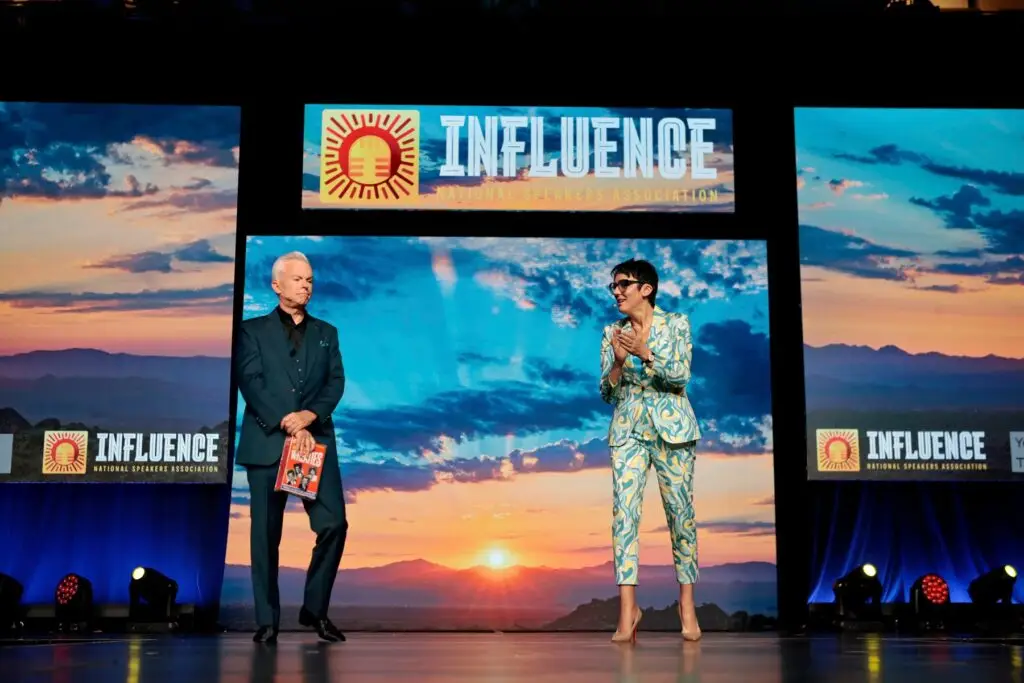
Let’s be honest. As an emcee, it is tempting to treat the microphone as your personal stage: share your stories, deliver your own takeaways, show off your talent. Especially if you are also a professional speaker. Guilty as charged.
Isn’t that why our crazy breed of stage-loving professionals climbs onto platforms in the first place? And yet the irony is that the spotlight is not meant for you.
Your job isn’t to outshine the stage. It’s to illuminate it for others.
Mike and I decided early that our parts would be short, concise and never about ourselves. Every introduction, every transition and every handoff was designed to put the spotlight where it belonged: on the speakers, the performers, the audience and the organization that trusted us with the job in the first place.
Being an emcee is about amplifying others, shaping the atmosphere and making the event feel memorable. Professional emcee, conference host or colleague guiding a group through a corporate event, the lesson is the same: be generous, be authentic, and remember it is not about you. It is a fine line between ego and responsibility. In this role, ego simply has no place.
2. You control the temperature of the room (and backstage)
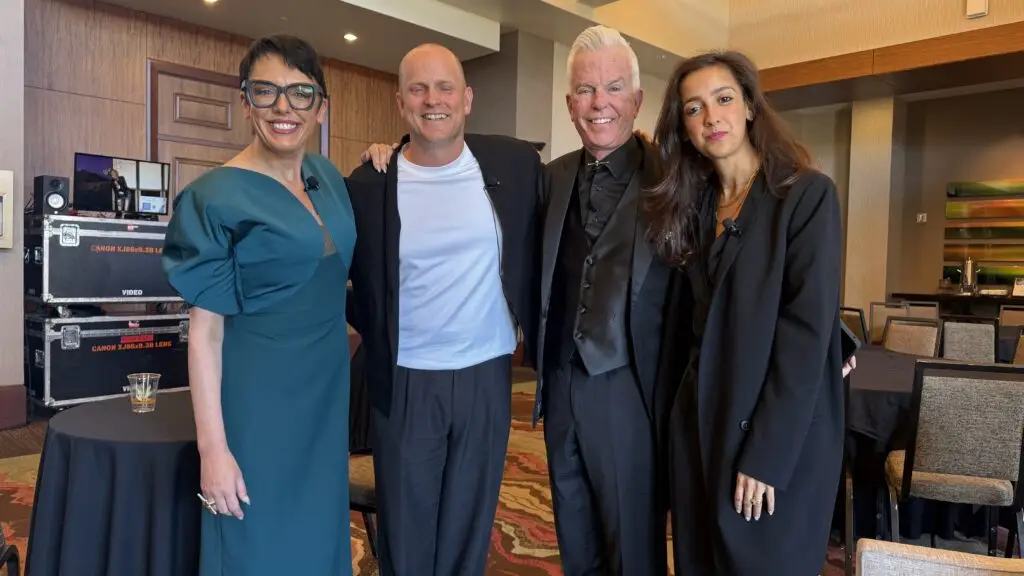
Mike and I were keenly aware that emcees set the tone in the ballroom and behind the curtain. Yes, you influence how participants feel in the room. You also carry a heavy responsibility backstage.
Conferences are high-pressure live environments with no second takes. An emcee’s role is to keep things calm, positive and free of unnecessary stress. When backstage is steady, the stage flows better for everyone.
Meeting planners, AV teams and keynote speakers often look to the emcee as the barometer of calm. So you carry more than transitions and timing. You set the emotional tone of the event, and you project trust and professionalism that ground both the audience and the people who depend on you. Lose your composure and the ripple effect can shake confidence across the board. Stay steady and you become the invisible backbone of the event, the person who lets everyone else perform at their best because someone is guarding the flow on stage and the emotions behind the scenes.
3. Above all, protect the meeting host and planner
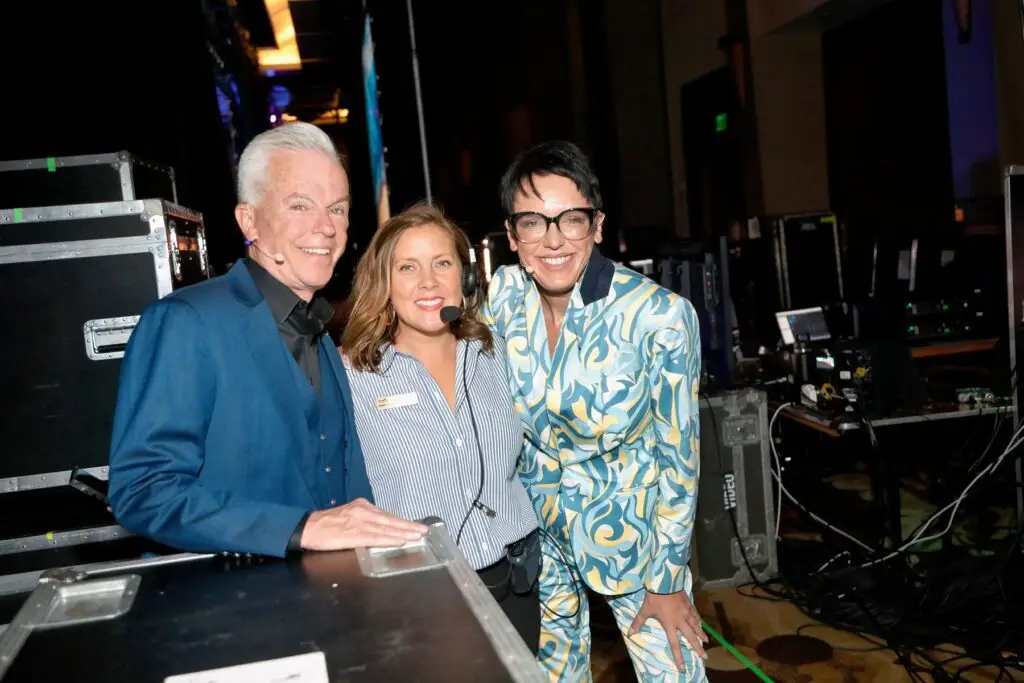
For meeting hosts and planners, the event is rarely just the three or four days participants experience. Their work started months, sometimes years, earlier, stitching together every element of the program. By the time the curtain rises, they are carrying countless moving parts: attendees, hotel staff, AV technicians, catering, sponsors, exhibitors, executives and every other stakeholder with expectations and demands. The pressure comes from all sides, and it is relentless.
That is why one of the emcee’s most important responsibilities is to shield the host and planner from unnecessary burdens. Be their safety net: the one who calms the chaos, absorbs friction and makes sure the audience never sees the stress behind the curtain. Protect their reputation, uphold their credibility and keep complaints and criticism off their backs. When you safeguard the host and planner, you are not supporting two individuals. You are protecting the heartbeat of the entire event.
4. Respect the demands of speakers, but don’t add more
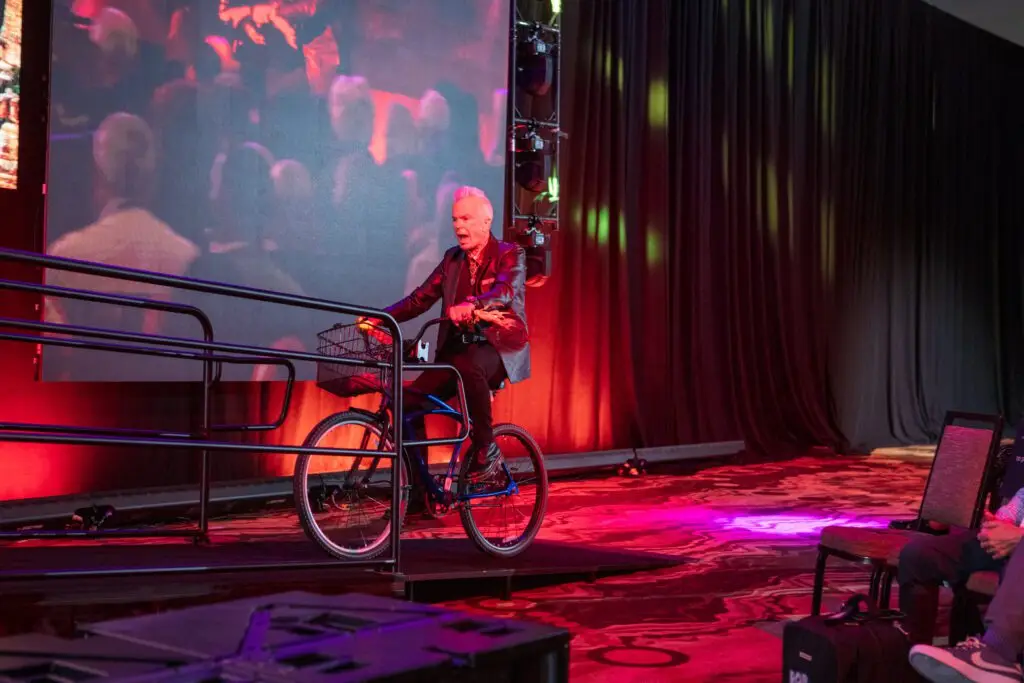
Speakers arrive with plenty of requests: slides, music, lighting cues, special effects. That is part of the craft, and it can overwhelm meeting professionals already juggling endless details.
The emcee should act as a buffer, absorbing complexity instead of adding to it, and should keep asking whether their own “brilliant” idea is worth the strain or whether the energy is better spent on the speakers.
Want fireworks? A wind machine? Maybe a hologram? Tempting. Trust me, I am often the first to say yes. But the real question is: how much are you adding to the meeting professional’s already long list of worries? Originality has value, never at the cost of logistics or sanity. So pause and ask yourself (and the host) whether the effort, time and production value are truly worth it. In other words, be gracious with your meeting planner. They already carry a mountain of responsibilities. Do not pile on effects unless they genuinely serve the moment, the audience and the event.
5. Humor is a tool, not a weapon
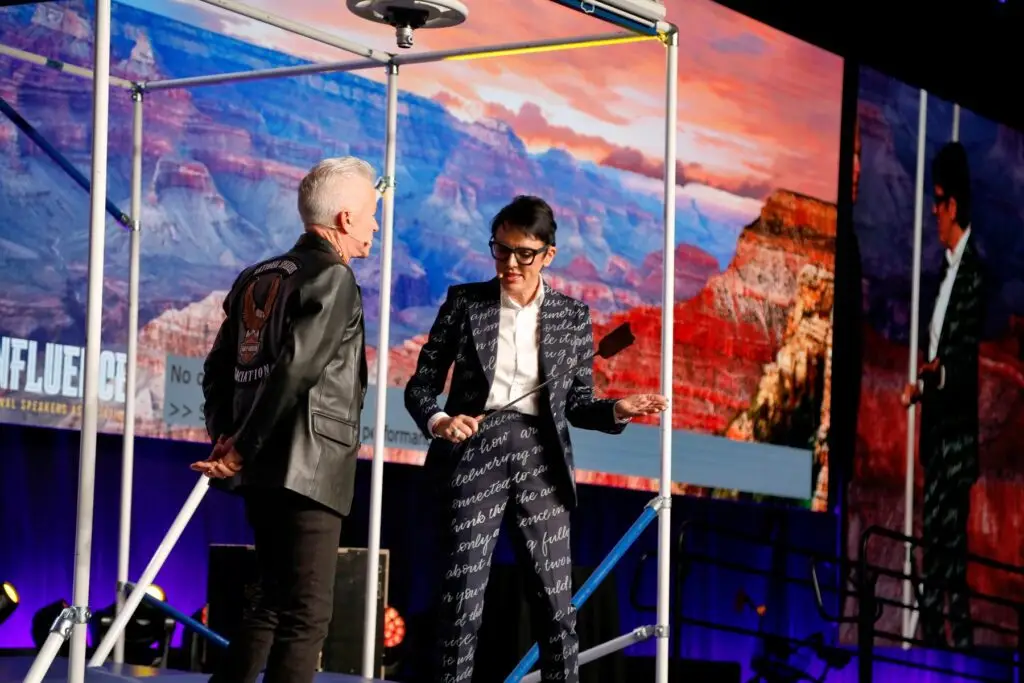
Humor can reset the energy after a data-heavy, analytical presentation, but it has to be used wisely. For us, the only acceptable targets were ourselves: Mike and me.
Self-deprecating humor breaks down barriers, creates comfort and lightens the mood without undermining the audience, the speakers or the organization that hired you. The best laughter feels shared and turns nobody else into the punchline.
You would not believe our first drafts. Naturally, we poked fun at anyone we could. The jokes were hilarious. We laughed until we cried. Then we stopped and reconsidered, because humor that punches outward risks crossing a line. It can alienate the very people you are meant to support and leave the host exposed to complaints. Make yourself the target instead and you protect the host’s credibility, uphold the organization’s reputation and spare the planners the fallout once the ballroom lights fade. Humor should bring joy, not baggage. That is why it has to be intelligent, safe and, above all, kind.
6. Connection is felt, not forced

One of the comments we heard most was how much people felt the genuine connection between Mike and me. On stage, I knew Mike, and Candice, our brilliant meeting director, had my back. That trust gave me confidence and freedom.
Yes, we are best friends, and it shows. We know each other’s rhythm, we trust each other and we play off each other easily. More importantly, we are brutally honest. If one of us doubted something would work, we said so, bluntly. Chemistry is not something you can fake.
Events are team sports. Putting two department heads or two executives together may make sense on paper, but what works on paper rarely becomes chemistry on stage. Real connection makes the audience lean in. Artificial connection makes them tune out. Look for the real bond, the kind that builds trust, tells the truth and creates presence. Audiences feel it instantly.
7. How do you prepare as an emcee? Script, rehearse, then be ready to improvise
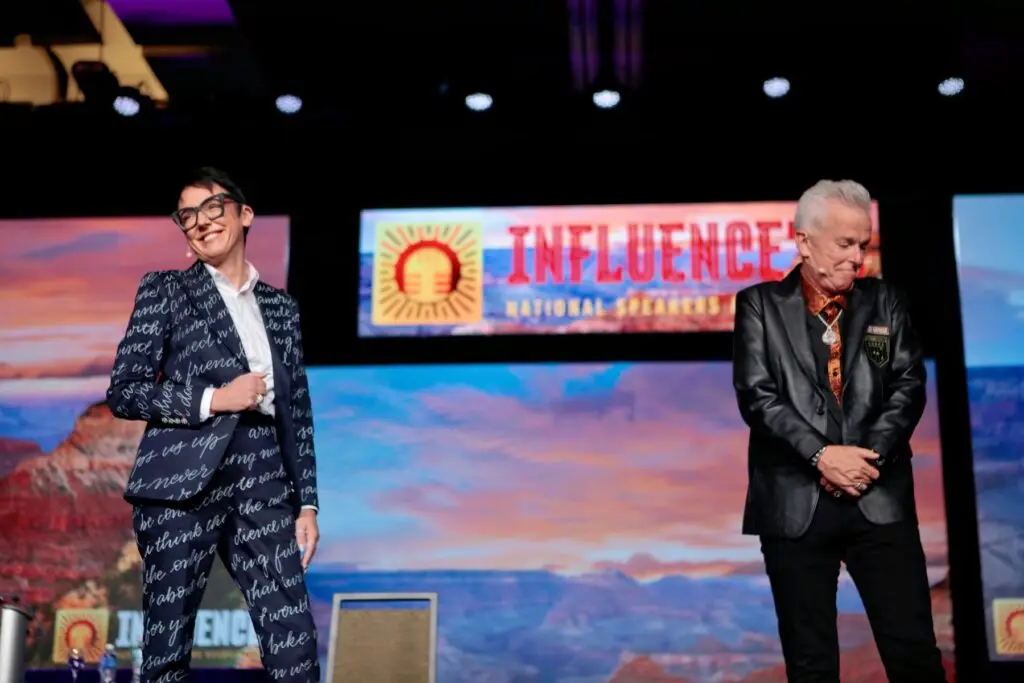
As keynote speakers, we rarely work from a script. We thrive on instinct, presence and reading the room. But winging it as emcees was not an option, because preparation is everything. We scripted, rehearsed and planned for every scenario we could think of. And then the magic often happened in the unscripted moments.
Only because we were so secure in our preparation did we have the freedom to improvise and turn spontaneous moments into the highlights people remembered. Preparation does not limit you. It liberates you.
Responding gracefully to the unplanned, whether a delayed speaker, a tech glitch or an unexpected standing ovation, is what separates a good emcee from a great one. That freedom only exists on a foundation of airtight preparation. The stronger your preparation, the more gracefully you can make chaos look like choreography.
8. Create an experience beyond words
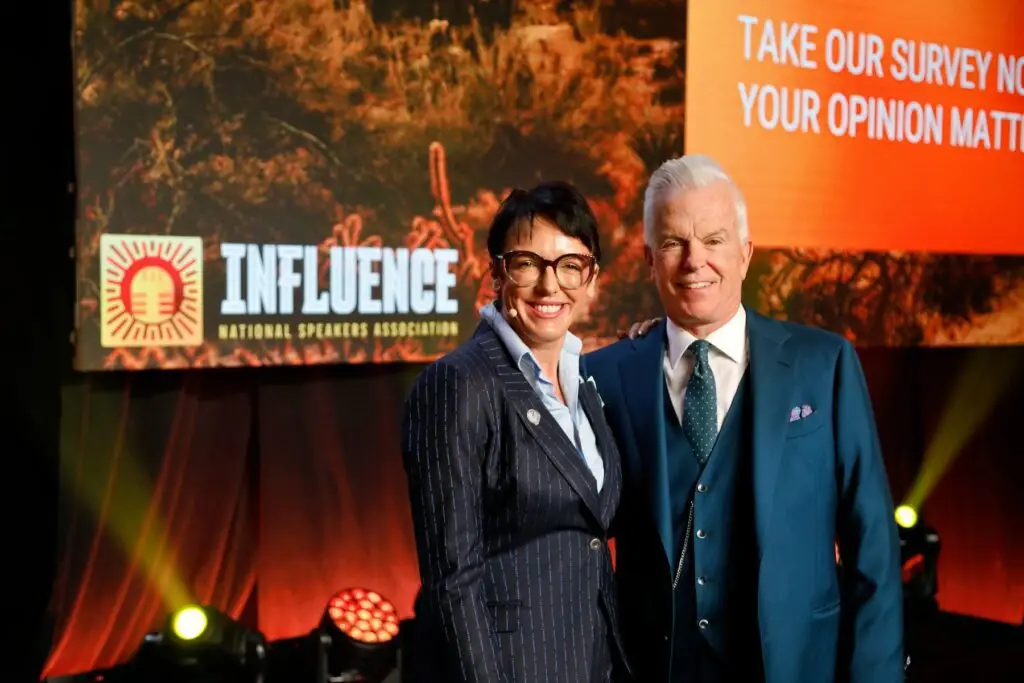
We thought about every detail, down to our wardrobe. One day traditional and conservative, the next casual and creative. Accessories had meaning. Being an emcee is not only about words. It is about shaping how people feel across the entire event.
And we did not do it alone. Our talented meeting director amplified every choice. Every song we walked on to, every slide behind us, every transition cue and every visual had intentional meaning. Nothing was random. It was curated to support how participants felt from start to finish.
In corporate settings, this matters even more. Audiences are diverse (executives, employees, clients, partners) and they often evaluate both the event and the organization behind it. Every visual, every phrase and every detail feeds their perception. Nothing you do as an emcee is neutral: every choice either strengthens or erodes how the event and the organization are seen. The walk-on music, the slides, the lighting, even the pauses between your words become silent signals that reinforce or weaken the brand. In high-stakes environments, details are not details. They are the experience.
9. Ego management is daily work
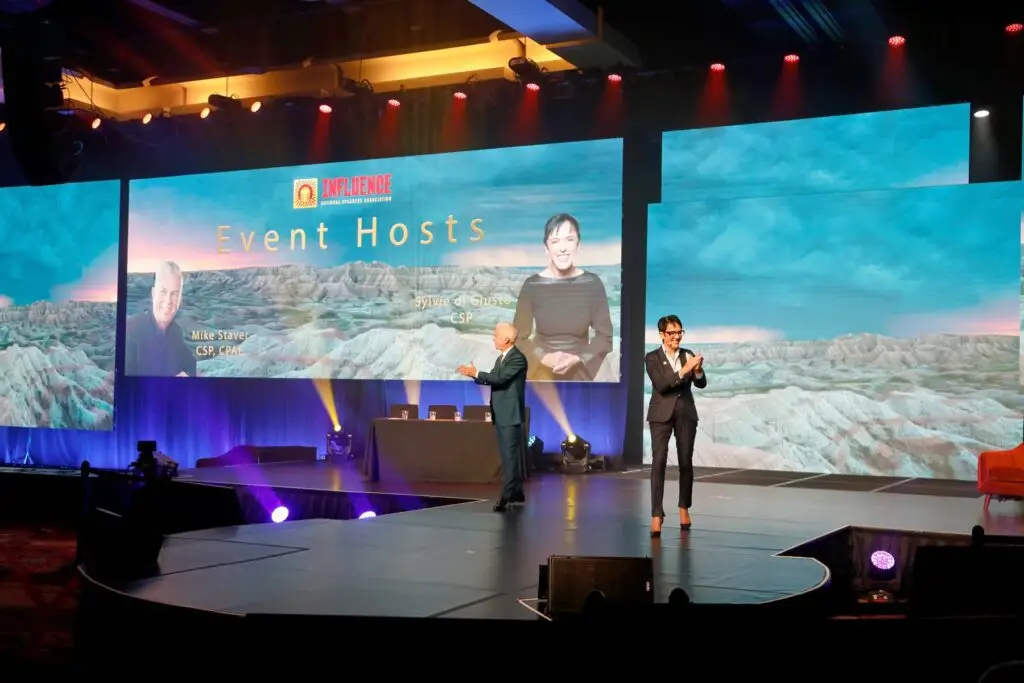

Traditional emcee advice is all about stagecraft, polish and presence. The harder skill is resisting the temptation to compete with the speakers. It is learning when to step back gracefully, to amplify instead of outshine, and to measure your impact not by applause but by how smoothly the next speaker takes the stage.
We had nothing to prove. Our egos were not in this, and that gave us the freedom to make the stage belong to others.
Mike and I knew we were not, and never aimed to be, picture-perfect emcees. We leaned into authenticity instead: our quirks, our style and our honesty, because what looks perfect on paper rarely feels perfect on stage. We were not chasing flawless delivery or manufactured polish. We were committed to being real, even if that meant a little unpredictability. It is a daily walk along a fine line that demands awareness, restraint and maturity every time you step up to the microphone, and the courage to let imperfection become a strength.
What makes an emcee for corporate events unforgettable?
The greatest gift of this experience was sharing it with my friends Mike and Candice. We trusted each other, supported each other and created something meaningful together. You cannot script that. You treasure it.
At its heart, emceeing is about human connection. When someone beside you knows your strengths and covers your blind spots, the audience feels the trust. If you are on the planning side, read how to handle the moment right before a speaker walks on in introducing a presenter, and how to choose your opening and closing keynote.
If you are building your own speaking career, start with how to become a keynote speaker, read what it really takes to become a CPAE Hall of Fame speaker, and have a look at my Speaker Mastermind and Retreat.