This photo was taken during my induction on July 29, 2025. It is less about the award I was about to receive and more about the community that lifted me to that stage: the friends, mentors and peers who inspired me, challenged me and believed in me when it mattered most.
The CPAE Hall of Fame is not a title that is easily earned. It is the highest lifetime honor awarded by the National Speakers Association (NSA), recognizing speakers who have reached the top of the profession through their message, delivery, experience, professionalism and influence.
As David Horsager, CSP CPAE, explains: “CPAE and CSP are the gold standard of speaking. They’ve been voted on by their peers as being excellent and the best to work with, providing the greatest transformation in this industry.” With only around 170 individuals worldwide holding the CPAE designation, it is a rare achievement.
For aspiring speakers, that points to an important truth. A Hall of Fame speaker is not defined by one performance or one stage trick. The recognition comes from consistency, professionalism and influence on audiences and on the industry over time. It is the discipline of showing up with excellence when no one is watching, the integrity of honoring commitments to clients and colleagues, and the humility to learn from every stage, large or small. And the path does not only lead upward. It leads outward: toward your peers, toward the next generation and toward the wider speaking community.
What does excellence look like to Hall of Fame speakers?

One of the most meaningful moments of the night was congratulating my dear friend Brian Walter. Brian has been a Hall of Fame speaker for years, and that evening he received the Cavett Award, the highest recognition the National Speakers Association bestows. It honors excellence on stage and an extraordinary dedication to serving the association and the industry beyond it.
Excellence in the speaking world is not applause or recognition. It is being seen by your peers as someone who raises the standard for everyone.
What struck me most was that every person in the video inspired me with their own version of excellence: higher standards, stretching beyond what feels comfortable, contributing to the profession in meaningful ways. Excellence is never about one person. It is a collective of voices, each raising the bar in its own way.
Marilyn Sherman, CSP CPAE, said, very generously: “I don’t know anybody who does so much to elevate the art of a keynote speech, and I don’t know how she does it, but she has definitely raised the bar.” For David Horsager, CSP CPAE, it is my ability to connect with and engage an audience: “I have hired her for our elite Trusted Leader Summit, and I put her on the stage right away the first day because I knew she would connect with them, engage with them, and give them an experience.” And Phil M. Jones, CSP CPAE, noted: “There are lots of people who are like someone else. There is nobody like Sylvie, and that is a true, true gift.”
For speakers who want to follow this path, the takeaway is clear: originality matters. In a crowded marketplace, being polished is not enough. You have to be unmistakably yourself. Excellence is measured not only by what you deliver on stage but by how much of yourself you are willing to bring: your values, your perspective, your quirks and your truth. Audiences can tell when someone is performing and when someone is present, and only the second creates lasting influence. Resist imitation, invest in finding and refining your own voice, and have the courage to use it. True excellence is contributing something only you can offer, so the audience feels it experienced something rare and irreplaceable.
How do Hall of Fame speakers push the boundaries of the keynote?

Mike Staver is more than a colleague. He is a friend, a supporter, a truth-teller and a champion of possibilities. When he served as Chairman of the Board for NSA, he gave me the opportunity to launch my immersive experience, without fully knowing what it would be. For that belief and that friendship, I will always be grateful.
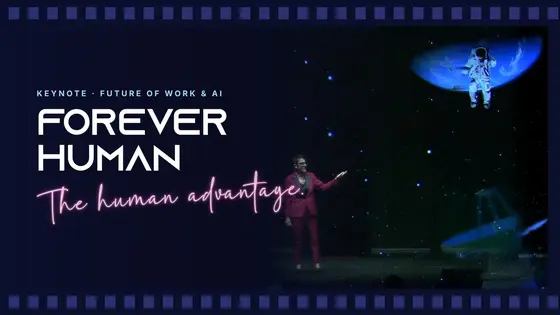
One thing my peers consistently highlight is my innovative approach to keynote presentations. As Mike Staver, CSP CPAE, describes it: “The moment we all knew was when the lights went down and she popped up on the stage in magenta and fish and elephants and things started flying around the stage, and we were like, ‘I use a flip chart. This is awesome.'”
What a gift he gave me back then, as Chairman of NSA, to bring this new and unknown magic to our community.
Jonathan Wee, CSP CPAE, noted: “How beautifully it comes across on stage, it’s just a remarkable piece of work. So even that speech alone should put her in the CPAE Hall of Fame.” And Lenora Billings-Harris, CSP CPAE, added: “Because she helped us know what we could do if we applied ourselves and really pushed our imagination.”
Innovation, for me, has never been about flashy visuals or gimmicks. It is about stretching the boundaries. Every single time. As Steve Spangler, CSP CPAE, put it: “She is innovation. And so we get to see it in action from her standing on stage and creating this amazing experience.”
It’s not about being better than someone else. It’s about being different. So different that the world has to watch and notice.
For fellow speakers, the lesson is this: innovation is not technology for its own sake. It is using tools and creativity to engage the audience, create lasting memories and make ideas unforgettable. Be intentional. Ask what problem you are solving for your audience, how you want them to feel and what you want them to carry out of the room. Balance matters too: pair the timeless art of storytelling with the timely tools of technology so neither overshadows the other. Experiment boldly, then evaluate honestly. Did the innovation support the message or distract from it? Did people engage more deeply, or were they just entertained for a moment? Build relevance and resonance first, then add creative tools as amplifiers, never as substitutes.
Why do authenticity, generosity and presence matter so much?

I am thankful that my peers recognize the technical side of my work. But they also point to the deeper qualities that make a Hall of Fame speaker: authenticity, generosity and presence.
Mark Scharenbroich, CSP CPAE, one of my biggest role models and the Hall of Fame speaker who introduced me at the induction ceremony, said: “She just brings a light of love to every room she walks into.” Steve Spangler, CSP CPAE, put it this way: “Sylvie is more interested than interesting.”
For these CPAE speakers, the value is not only in captivating an audience, but in a genuine desire to connect with and lift the people around you. As David Horsager, CSP CPAE, shared: “I trust Sylvie di Giusto, not just to deliver, but who she is as a person.”
If you are striving for the Hall of Fame, remember that authenticity is not optional. It is the ingredient that turns a presentation into an experience and a transaction into a relationship. It means aligning what you say with who you are, so your values, tone and delivery match. It means sharing stories of vulnerability, admitting mistakes and letting the audience see the human behind the expertise. That is not a stylistic choice. It builds credibility, emotional resonance and loyalty over a lifetime. A practical test: for every story, slide or stage decision, ask, “Does this reflect who I really am, and does it serve my audience?” If the answer is yes, you are on the right path.
How do you become a Hall of Fame speaker?

Patience is one of the most important qualities when it comes to the Hall of Fame. If you wait for it, play politics or try to force the timing, you will be disappointed. My path was pure serendipity. On the evening Phil M. Jones, this year’s show host and one of my dearest friends, called me with the news, I happened to be sitting in the very restaurant where we first met years ago. Beyond the hard work, the dedication and the planning, moments like that remind me you cannot script everything. You have to trust the process, and the moment.
My induction is not only a personal achievement. It reflects my commitment to lifting the speaking profession as a whole, and that is what I am most proud of. Along the way I learned that it is not about being better than someone else. It is about being different.
Lenora Billings-Harris captured it: “She helped us know what we could do if we applied ourselves and really pushed our imagination.” Mark Scharenbroich added: “We’re all sitting back going, ‘Oh my god.’ It was like that is excellence times a billion.” And Steve Spangler: “Just benchmark after benchmark after benchmark.”
So here is the takeaway for other speakers: the Hall of Fame is not a finish line. It is a responsibility. Every new inductee carries the task of moving the profession forward, thinking outside the box and daring to try what has never been done. It means setting new standards that sound wild at first and eventually become the benchmarks others follow. Greatness is not only the spotlight you stand in. It is the boundaries you break and the standards you leave behind.
5 lessons from Hall of Fame speakers for aspiring speakers

So you want to be inducted into the Hall of Fame one day? Wonderful. But there is no shortcut, no application form and no check you can write. It takes decades of practice, discipline and growth, and the willingness to be judged by the people who know this profession best. The tribute video holds lessons for anyone on the speaking path.
1. Consistency beats charisma
One great keynote does not make a career. Sustained excellence and professionalism do. For emerging speakers, that means showing up the same way for a room of 30 as for an arena of 3,000. It means habits of preparation, rehearsal and delivery that hold up under pressure. Consistency also builds trust with event planners, who know exactly what they get every time they hand you a microphone.
2. Innovation has a purpose
New tools and formats are only valuable if they deepen the audience’s experience. A Hall of Fame speaker does not chase the latest gimmick. They bring together technology, stories and experiences in ways that serve the message. Ask yourself: does this choice clarify or distract? Does it add value for the audience, or just noise?
3. Authenticity is magnetic
Being real lasts longer than any script. The most memorable speakers are not the ones who perform perfectly, but the ones who bring their whole selves to the stage: flaws, humor, vulnerability and all. Audiences crave human connection, and authenticity lets trust form instantly. Embrace what makes you distinct instead of imitating others.
4. Generosity multiplies influence
A Hall of Fame speaker lifts their peers and the profession, not just themselves. Generosity shows up in mentoring younger speakers, sharing insights, crediting collaborators or simply being approachable backstage. The more you give, the more your influence grows, not through self-promotion but through the impact you leave on others.
5. Excellence is a long game
Many people see the applause. Few see the decades of work behind it. Hall of Fame speakers did not arrive overnight. They built their reputations over years of learning, adapting, failing and trying again. Play the long game, honor the process and remember that recognition is the byproduct, not the goal.
Want to go deeper? Read what it really takes to become a CPAE Hall of Fame speaker, meet the CPAE class of 2025 and the female Hall of Fame speakers I admire, and if you are building your own career, start with how to become a keynote speaker or join my Speaker Mastermind and Retreat.