What is a keynote speaker, really?
A keynote speaker is the person who delivers the central talk of an event: the one that carries its theme, sets its tone and gives everyone in the room a shared idea to take home. Most keynotes run 45 to 60 minutes, open or close a conference, and are built around one clear message, told through stories, expertise and delivery.
That’s the dictionary version. Here’s the one I’ve learned from more than 900 keynotes in over 25 countries: a keynote speaker is the person an event trusts with the moment everyone will remember. Fifty people or 5,000, it doesn’t matter. The keynote is where an event stops being a schedule and starts meaning something.
Before almost every booking, planners ask me the same handful of questions. What does a keynote speaker actually do? How is a keynote different from every other talk on the agenda? How long should it run, what will it cost, and how on earth do you pick the right one for your stage? Fair questions, all of them. Let’s go through them one by one, the way I would if we were sitting across from each other over coffee.
KEY TAKEAWAYS
- A keynote speaker delivers the central talk of an event and anchors its theme. The word comes from music, where the keynote is the note that sets the key for everything else.
- Most keynotes run 45 to 60 minutes, open or close the event, and speak to the whole audience at once.
- Most professional keynote speakers charge between $5,000 and $30,000, plus travel. Celebrities charge (a lot) more.
- Pick your keynote speaker for fit, not fame: your theme, your audience, proof they’ve done it before, and a real willingness to customize.
- The best keynotes never come off the shelf. They’re built around your organization, your people and your theme.
What does a keynote speaker do at an event?
A keynote speaker turns your event’s theme into something the whole room experiences together. A breakout speaker teaches part of your audience a skill. A keynote speaker gives everyone the same idea at the same moment, and that shared moment becomes the reference point for every hallway conversation that follows.
In practice, I think of the job in four parts:
- Carry the theme. Your event has a theme on the banner. The keynote is where it stops being a slogan and becomes a point of view people can agree with, argue with and use.
- Set the tone. An opening keynote sets the energy and the big questions for the days ahead. A closing keynote pulls everything together and sends people home with something to act on.
- Connect the room. Sales, operations, finance and the new hire in row twelve all hear the same story. For one hour, they’re one audience, and that almost never happens anywhere else in their year.
- Leave a mark. The applause isn’t the test. The test is whether people are still quoting it three months later.
What happens inside a 60-minute keynote?
From row twelve, a great keynote looks effortless. Trust me, it isn’t. A professional keynote is engineered, the way a film is edited: every minute has a job, and anything that doesn’t serve the one idea your audience should take home gets cut.
Here’s roughly how I build my own keynotes, and how most of the strong ones I’ve watched from the planner’s chair were built too:
| Minutes | What happens | Why it matters |
|---|---|---|
| 0 to 3 | The opening: a story, a question or a moment that makes the room lean in | Audiences decide within minutes whether to listen or to check their phones |
| 3 to 10 | The tension: what is at stake for this audience, in their words | People only care about an answer once they feel the problem |
| 10 to 40 | The idea: one central message, unpacked in three or four parts, each carried by a story and proof | One idea remembered beats ten ideas forgotten |
| 40 to 50 | The turn: what changes on Monday morning, made concrete for this industry and this room | Inspiration without application evaporates by the coffee break |
| 50 to 60 | The close: the line, image or moment the room will repeat, plus Q&A if planned | The ending is what people quote in the hallway and the survey |
Most of the customization happens in the middle and in the turn. The stories may be mine, but the examples, the language and the “what this means for you” belong to your audience. If a speaker can’t tell you how they’d rebuild minutes 10 to 50 for your event, what you’re being offered is a recording with a pulse.
Where does the word “keynote” come from?
It comes from music. The keynote is the note that sets the key of a piece, and every other note relates back to it. I love that image, because it’s exactly what a keynote speaker does for an event: everything else on the agenda relates back to the key that one talk sets.
What are the types of keynote speakers?
Most keynote speakers fall into one of five types, and the good ones often blend two:
| Type | What they bring | Best for |
|---|---|---|
| Motivational | Energy, personal story, a call to action | Kickoffs, closing sessions, teams after a tough year |
| Industry expert | Deep knowledge of your sector | Association conferences, sector summits |
| Thought leader | A framework or point of view on where things are heading | Leadership meetings, strategy offsites |
| Celebrity | Name recognition and attendance draw | Large public-facing events, gala dinners |
| Experiential | A keynote designed as an experience, not just a talk | Events that want to be talked about long after |
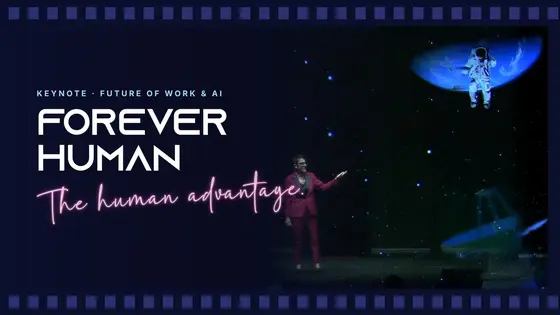
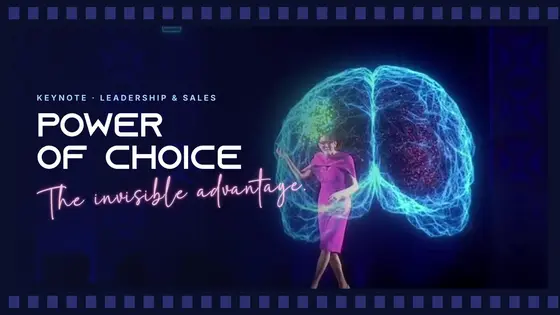
As for me, I sit somewhere between thought leader and experiential. Forever Human answers the question every audience is asking me about AI right now. The Power of Choice uncovers the small daily decisions that separate the replaceable from the indispensable. And both can be delivered as an immersive 3D experience, where animations share the stage with me.
How is a keynote speaker different from other speakers?
Think of it this way: the keynote is the one talk the whole event is built around. Everyone else on the agenda plays a supporting role.
| Role | Audience | Length | Purpose |
|---|---|---|---|
| Keynote speaker | Everyone, main stage | 45 to 60 min | Anchor the theme, inspire, unite |
| Breakout speaker | A smaller group | 45 to 90 min | Teach a specific skill or topic |
| Guest speaker | Varies | 15 to 30 min | Add a perspective to a program |
| Emcee | Everyone, all day | Whole event | Host, connect sessions, keep the energy and the schedule |
| Panel moderator | Everyone or a track | 30 to 60 min | Draw insights out of several experts |
And yes, a motivational speaker can be a keynote speaker. Many are. The difference is the role, not the person: “keynote” tells you where the talk sits in your program, “motivational” tells you its style.
Some speakers wear more than one hat. I’m often booked as emcee and keynote speaker at the same event, which gives the program one voice from the first welcome to the last applause.
What keynote formats can you book in 2026?
“Keynote” doesn’t mean one person, one lectern and a slide deck anymore. Here are the formats planners book most often, and what each one asks of you:
| Format | What it is | Choose it when | What it needs from you |
|---|---|---|---|
| In-person keynote | The classic: speaker and audience in the same room | The event is about connection and energy | A stage, sound, a confidence monitor, a good introduction |
| Virtual keynote | Delivered live from a studio to a remote audience | Your audience is spread out or travel is off the table | A tech check, a producer on your side, interaction built in every few minutes |
| Hybrid keynote | One audience in the room, one online, at the same time | You stream the main stage | A plan for the online audience, who otherwise watch a party through a window |
| Immersive keynote | The talk is staged as an experience, with visuals that share the stage with the speaker | You want the session people still talk about next year | A darker room, an early conversation with your AV team, a little more lead time |
| Keynote plus emcee | The same person hosts the program and delivers the keynote | You want one voice and one thread through the whole event | One briefing instead of two, and a run of show shared early |
| Keynote plus workshop | A main-stage keynote followed by a smaller, hands-on session | You want the idea to turn into practice the same day | A breakout room and a clear group size |
Whatever the format, the job doesn’t change: one idea, one room, one moment everyone shares. The format only changes how that moment reaches people. I deliver my keynotes in person, virtually or as an immersive 3D experience, and the brief I work from is the same for all three.
How long is a keynote speech?
Most keynotes run 45 to 60 minutes, questions included. On a packed agenda, some events ask for 30. And when someone asks for 90, it’s usually a workshop in disguise. Want Q&A? Plan it inside the slot, not after it. A keynote that runs over eats the coffee break, and believe me, nobody forgives that.
How much does a keynote speaker cost?
Honest answer: it depends on experience, demand, topic and the type of event. Here are the typical 2026 ranges planners see, according to National Speakers Bureau:
| Tier | Typical fee (USD) | Who you get |
|---|---|---|
| Entry level | $1,500 to $5,000 | Early-career speakers, first-time authors, local experts |
| Mid range | $5,000 to $15,000 | Established professionals with a proven track record |
| Professional | $15,000 to $30,000 | Career speakers, bestselling authors, recognized innovators |
| Celebrity | $30,000 to $100,000+ | Household names, sports and entertainment stars |
On top of the fee, budget for travel and accommodation. Customization, a recording license or a format like an immersive 3D experience can add to it. And please don’t shop on price alone. The cost of a keynote is the fee. The cost of the wrong keynote is your audience’s entire day.
How is a keynote speaker booked?
Booking a keynote speaker takes five steps, and most planners only budget time for the first one. Here’s the path from “Is she available?” to the stage, and roughly when each step happens:
- Availability check (6 to 12 months out). You share the date, city, audience and theme. The speaker’s team confirms availability and the fee, and can usually put a short courtesy hold on your date while you decide.
- Fit call (within a week or two). A short conversation with the speaker about your goals and your people. Pay attention here: this is where you find out whether they listen or just pitch.
- Agreement and deposit. The contract confirms the date, fee, travel terms and what’s included, such as recording rights or a book signing. The deposit locks in your date.
- Preparation call (4 to 8 weeks out). The deep dive: your audience, your culture, your theme, the run of show. This is the call that turns a good keynote into your keynote.
- Logistics and tech (1 to 2 weeks out). Introduction, AV checklist, travel, arrival time, green room. The best speakers show up early enough to sit in on the session before theirs.
You can book directly with a speaker’s team or through a speaker bureau. The steps are the same either way. What changes is who holds the paperwork, not who does the work. Curious how that looks with me? Here is how to hire me as your keynote speaker.
How do you choose the right keynote speaker?
Choose for fit, not fame. These five questions will shrink your list fast:
- Does their message match your theme? Not loosely. Specifically. Ask them how they’d connect the two, and notice how quickly they answer.
- Have they spoken to audiences like yours? Industry, size and seniority all matter. A room of 40 CFOs is not a room of 2,000 sales reps.
- Can you watch them live, uncut? A two-minute highlight reel shows you the best two minutes. Ask for a full keynote recording, and watch the middle, not just the ending.
- Will they customize? A great keynote speaker studies your organization and your people before writing a single word.
- What do planners who booked them say? Ask for references. Then actually call one.
Still building your shortlist? Here’s how I’d go about it, from budget to contract: how to find a keynote speaker. And these are the top keynote speakers I’d look at first.
What are the red flags when hiring a keynote speaker?
Before I ever stepped on a stage, I spent nearly two decades on the other side of the table, in corporate HR and leadership development, booking speakers and signing off on them. These are the warning signs I learned to spot, mostly the hard way:
- The demo reel is all applause and no content. Standing ovations can be edited in. Ask for an uncut recording of a full keynote.
- They spend the first call talking about themselves. A speaker who asks you nothing about your audience won’t customize for it either.
- One talk for every industry, unchanged. You can spot “off the shelf” from a mile away: the same examples, the same jokes, the same closing slide, no matter who’s in the room.
- Vague answers about what’s included. You should know, in writing, what the fee covers: travel, preparation calls, recording rights, books, a second session.
- No references from planners. Audience testimonials are nice. A planner who booked them and would happily book them again is proof.
- Inspiration without application. If you can’t say what your people will do differently after that hour, neither can they.
What should you tell your keynote speaker before the event?
Here’s something most planners don’t expect: the biggest lever on a keynote’s quality isn’t the speaker’s talent. It’s the brief you give them. The best keynote speakers will ask for all of this anyway, so sending it early simply buys you more of their preparation time. A strong speaker brief answers eight questions:
- Who’s in the room? Roles, seniority, industry, how many, and how they honestly feel about the event this year.
- Why this event, why now? What’s happening in your organization or industry that made you plan it.
- What’s the theme, and what does it really mean? The banner line, plus the story behind it.
- What should people think, feel and do afterwards? One sentence each. It’s the most useful paragraph you’ll ever send a speaker.
- What comes before and after the keynote? Your speaker should build on the sessions around them, not repeat them.
- Which words, names and topics matter, and which should be avoided? Internal language, recent changes, sensitivities.
- Who should the speaker talk to? Five minutes with a leader, or with two people from the audience, is worth hours of research.
- How will you measure success? A survey question, a behavior, a number. Say it up front.
I send every planner a short questionnaire for exactly this, and I read every single answer before I adapt a story.
What does a keynote speaker do before and after the event?
The hour on stage is just the part you see. Before it, a professional keynote speaker:
- holds a planning call with you to understand your goals, your audience and your theme
- researches your organization, industry and the challenges your people face
- customizes stories, examples and language for your room
- coordinates the introduction, the AV and the run of show with your team
After it, the best ones stay for conversations, check in with you on what landed, and sometimes give your audience resources to keep the idea alive. And if you’re the one handing over the stage, your first 60 seconds count too. Here’s what I’ve learned about introducing a presenter, so those seconds work for the speaker and for you.
How do you know if a keynote worked?
Applause is a poor measure. People clap for almost anything that ends on time. A keynote worked when the idea outlives the hour, and you can check that at three moments:
| When | What to look for | How to capture it |
|---|---|---|
| The same day | People quote the keynote in later sessions, at lunch and on social media | Ask session moderators what they heard; watch the event hashtag |
| The week after | The keynote scores high in your survey, and the open comments repeat its key message | Add one question: “What will you do differently because of the keynote?” |
| Three months later | Leaders still use its language in meetings, and teams can name one change it triggered | A short pulse check with a few attendees, or a follow-up from the speaker |
If you set a success measure in your brief, share the results with your speaker. The good ones genuinely want to know, and it makes your next booking, with them or anyone else, so much better.
Why do keynote speakers matter more in the age of AI?
Any attendee can ask a chatbot for the ten biggest trends in their industry before breakfast. Information isn’t scarce anymore, so a keynote that only delivers information has lost its reason to exist.
What a machine can’t do is stand in a room, read it, and change course because the people in it need something different. A keynote is one of the last places where a whole organization shares the same live moment: the same story, the same pause before the punchline, the same idea on the way out. And the more our work moves onto screens, the more that shared moment is worth.
It also changes what you should be booking. In 2026, the question isn’t “Who knows the most about AI?” It’s “Who can help my people see what makes them hard to replace?” That question sits at the heart of my keynote Forever Human, and honestly, it’s the question I’d ask of any speaker you’re considering.
Looking for a keynote speaker for your next event?
Everyone’s racing to automate. I help organizations, and the people inside them, become the ones they won’t replace.
- Two keynotes, Forever Human and The Power of Choice, each customized to your audience and theme
- Delivered as an immersive 3D experience, or as a traditional or virtual keynote, in English or German
- 900+ keynotes, 25+ countries, audiences from 10 to 10,000
- Speaker Hall of Fame (CPAE) and seven industry awards
Frequently asked questions
What is the meaning of keynote speaker?
A keynote speaker is the person who delivers the main talk of an event, the one that carries its central theme. The term comes from music, where the keynote sets the key for everything else.
What is the difference between a keynote speaker and a motivational speaker?
“Keynote” describes the role: the central talk on the main stage. “Motivational” describes the style: energy, personal story and a call to action. Plenty of motivational speakers deliver keynotes, but a keynote can just as well be expert-led, strategic or experiential.
How long does a keynote speech last?
Most keynotes run 45 to 60 minutes, questions included. On a packed agenda, a 20- to 30-minute slot can work too.
How much does it cost to hire a keynote speaker?
Most professional keynote speakers charge between $5,000 and $30,000 plus travel. Entry-level speakers start around $1,500, and celebrities can charge $100,000 or more.
When should you book a keynote speaker?
Six to twelve months ahead for most events, and earlier if your conference falls in peak season. Popular speakers book out first, and booking early leaves time to customize.
Does a keynote speaker open or close an event?
Either, and some events have both. An opening keynote sets the tone and the questions; a closing keynote ties everything together and sends people home with something to act on.
Can a keynote speaker also emcee the event?
Yes, if they’re experienced at both. One person hosting the program and delivering the keynote gives your event a single, consistent voice.
What should you look for in a keynote speaker?
Fit with your theme and audience, proof they have spoken to similar groups, a full recording you can watch, willingness to customize, and references from planners who booked them.
Is a keynote address the same as a keynote speech?
Yes. Keynote address, keynote speech, keynote presentation, keynote talk: they all mean the central talk of an event. “Address” just sounds more formal, which is why you hear it at commencements and government events.
Do keynote speakers use slides?
Many do, but the best keynotes never depend on them. Slides should support the story, not carry it. Some speakers use none at all. In my immersive keynotes, visuals that share the stage with me take the place of slides.
Can a keynote be delivered virtually?
Yes. A virtual keynote needs more interaction, shorter segments and a technical rehearsal. Designed for the screen rather than squeezed onto it, it can be every bit as strong as an in-person one.
Do you pay a deposit to book a keynote speaker?
Usually, yes. A signed agreement and a deposit secure the date, and the balance is typically due shortly before or after the event. Terms vary by speaker, so ask early.
Can we record the keynote?
Often, yes, but recording rights are usually agreed in the contract, sometimes for an additional fee. Ask before the event, not at the soundcheck.
How much do keynote speakers customize?
It ranges from swapping your logo onto a slide to rebuilding the examples, stories and calls to action around your audience. Ask any speaker exactly what they’ll change, and when you’ll see it.