Why audiences now want a motivational female speaker
Audiences crave a motivational female speaker’s perspective because they want connection, authenticity and fresh viewpoints instead of the same old “rah-rah.” Women on stage often bring lived experience of exclusion, balance and bias, a definition of power built on influence rather than volume, and a conversational style that turns a keynote into a shared experience.
Have you noticed how conferences are starting to feel different? Something is shifting. People are no longer satisfied with the same old pep talks. They want connection, authenticity and perspectives they have not heard a hundred times. That is where women keynote speakers come in, with wisdom wrapped in relatability and inspiration grounded in lived experience.
It is not only what they say. It is how they say it, and what stays behind when they leave the stage. From reimagining leadership to rewriting the definition of success, women are changing what makes a motivational speaker unforgettable. I have watched this shift from both sides: as an audience member for decades, and now from the stage myself.
KEY TAKEAWAYS
- Female speakers model inclusive leadership because many have lived what it feels like when inclusion is missing.
- They replace the myth of the “perfect leader” with authenticity, and power through dominance with power through influence.
- Their stories of balance, nonlinear careers and unseen work make success feel human and reachable.
- They speak to the “invisible strivers” in the room and make them feel seen.
- Gender-diverse lineups tend to draw broader audiences and sponsors, and show young professionals what leadership can look like.
- Many women speakers turn keynotes into conversations, using humor, stories and questions that invite reflection.
Why do audiences want a motivational female speaker right now?
Here are the reasons I see, again and again, in the rooms where women hold the main stage.
011. Female speakers are role models for inclusive leadership
Inclusive leadership means creating an environment where everyone feels valued, respected and able to contribute their perspectives and talents. We all know this by now. It has become a guiding principle for forward-thinking teams. But who understands it best? Those who have experienced, or still experience, what it feels like when inclusion is missing.
Women speakers know what it means to feel excluded, underestimated or overlooked. We have gone through it for decades. The beautiful part is that we have also come out stronger. Many of us now stand on stage as living proof that those barriers can be overcome, and we have turned those challenges into lessons. Inclusion, resilience and collaboration are not ideals to us. They are achievable realities.
The absence of inclusion is not an oversight. It is a barrier to innovation, and no one understands that better than those who have been excluded.
022. Female speakers break the myth of the “perfect leader”
Let’s get real: the idea of the perfect leader is exhausting. Women on stage do not buy into it, and neither should you. Imposter syndrome, fear of failure, trouble setting boundaries, struggles with visibility, wavering confidence, balancing passion with patience, and of course the elusive work-life balance. You name it, we have been through it.
Those very imperfections are what make us relatable, resilient and inspiring. Each challenge shaped us and reminded us that leadership is not about being flawless. It is about being human. When a motivational female speaker says on stage, “I don’t have it all together, and that’s okay,” she is not diminishing her achievements. She is bridging the gap between aspiration and reality. Sharing missteps and moments of doubt is far more inspiring than a polished facade.
Leadership is not about having all the answers. It is about learning as you go, lifting others as you climb and being brave enough to show your true self. When women talk about turning failure into opportunity, audiences lean in because it feels real. By the end, leadership has become something anyone can embrace, flaws and all.
The myth of the perfect leader is one of the most dangerous lies we have ever told ourselves. It keeps real leaders from showing up as they are.
033. Female speakers redefine power
Ever been yelled at during a conference? You know the type: the speaker who equates shouting with authority, or thinks commanding an audience means dominating it. Ever had to scream in a chorus how you are going to “crush it” or “dominate the competition”? Exhausting, isn’t it?
Women speakers typically bring a different energy, one that relies on connection, empathy and authenticity instead of volume and bravado. Power is not something to wield over others. It is something that inspires and lifts people. True power lies in influence, not dominance. It is about impact, not control.
Audiences leave feeling encouraged, not pressured. Energized, not exhausted. These speakers plant seeds that keep growing after the event. They invite reflection, encourage collaboration and show that power works best when it is shared, so attendees leave with purpose and clarity instead of unrealistic demands.
And honestly, how effective is shouting? Nobody returns to the office and yells every morning that they will “be unstoppable” or “level up to greatness.” That energy may earn a quick round of applause, but it rarely turns into lasting change.
True power doesn’t yell. It resonates.
044. Female speakers prove that balance is real (and a myth)
Balance. The one thing everyone wants and nobody seems to get right. Work-life balance, emotional balance, balancing priorities: it sounds good in theory, but how do you actually pull it off? Moms, daughters, wives, friends, volunteers, caregivers, mentors, colleagues, community leaders, business owners, innovators and, oh yes, keynote speakers. Women wear a lot of hats. Guess who knows a little something about balance, or the myth of it?
Balance is not just a feel-good concept, and women speakers bring it to life with real examples audiences recognize. They have had to keep things moving when life and career felt more like a chaotic circus than a graceful dance. They have set boundaries, said no to what does not serve them and sometimes redefined what success looks like. And they will be the first to tell you that balance is not about doing it all. It is about doing what truly matters.
Yes, they share the messy truths behind the polished exterior: the sleepless nights, the missed moments, the impossible decisions that come with juggling all those roles. But they do not stop at the struggle. They show that balance, while never perfect, is absolutely doable, with stories of resilience, creativity and finding harmony in the chaos.
Balance is not about having it all. It is about knowing what to let go of and what to hold tight.
055. Female speakers bring emotional intelligence to the stage
For women speakers, emotional intelligence is not a buzzword. It is daily life. Many have spent a lifetime walking a tightrope of expectations: assertive but not too assertive, strong but approachable, confident but humble. That gives them a deep understanding of human emotion and an ability to read a room like few others.
They also bring what I call the dual perspective advantage. Having often worked in spaces where they had to consider both their own view and the dominant one (often male), they have learned to see several sides of any situation. That lens helps them connect with diverse audiences, address unspoken tensions and bridge divides with empathy and clarity.
On stage, they do not just talk about emotional intelligence. They live it. Their stories of tough decisions, personal and professional pressure and broken barriers are deeply relatable, and they show audiences how to listen better, understand more and respond more thoughtfully. In their hands, emotional intelligence becomes an everyday skill anyone can build.
Emotional intelligence does not solve problems. It reveals them, so you can solve them together.
066. Female speakers reimagine what success means
What does success really mean? Women speakers challenge audiences to look beyond money and titles. They share how they found fulfillment in unexpected places and show that success is personal and keeps evolving.
For many, success means a thriving career that complements a fulfilling personal life instead of overshadowing it. It can mean impact over status, meaningful change over titles, long-term sustainability over quick wins, and collaboration over competition: lifting others as you rise. Success becomes something bigger, a legacy of purpose, authenticity and shared growth.
Their talks often leave people asking, “Am I chasing what I truly value, or just what looks good on paper?” That question is a call to define success on your own terms.
If success is not fulfilling, was it ever success to begin with?
077. Female speakers are a blueprint for nonlinear success
Life rarely follows a straight line, and women speakers know it better than anyone. Their stories are full of twists, turns and pivots: plans that unraveled, detours that became opportunities, failures that became stepping stones. Those paths make success feel attainable and deeply human, and they give audiences permission to embrace their own uncertainty. It is okay to take the scenic route. Some of the deepest growth happens there.
By embracing the messy, unpredictable nature of their careers, they remind us that success is not a straight line but a collection of experiences. The lessons from setbacks, the courage found in the unknown and the wisdom gained from detours all add up to a more authentic kind of achievement. Success does not have to look perfect. It has to feel right.
My best roads were never straight lines. They were winding paths that led me to destinations I did not know existed.
088. Female speakers are catalysts for uncomfortable conversations
Women speakers do not shy away from the tough stuff. They have lived it. Many have had to speak up where their voices were not welcome or were dismissed outright, and that gives them a particular kind of courage. They take on uncomfortable truths like equity, privilege and the need for change, in a way that makes the audience feel safe enough to lean in and reflect.
What makes them stand out is how they mix honesty with hope. They do not only point out problems. They share stories of resilience and show what is possible on the other side, which inspires action without overwhelming anyone. Even the hardest conversations can spark real growth.
True change begins with discomfort.
099. Female speakers resonate with the invisible strivers
Women speakers have a gift for speaking directly to the people who often feel overlooked: the invisible strivers. The quiet, hardworking people who do not seek recognition but deserve it. They keep the wheels turning behind the scenes, create without applause and show resilience nobody notices.
A good speaker validates these unsung heroes and makes them feel seen. Every contribution matters, even when nobody celebrates it on a grand stage. Success is not titles or trophies. It is the impact we leave, the lives we touch and the quiet ripples we create.
They go further, too. They show how the invisible strivers are the backbone of real progress in families, workplaces and communities, and inspire audiences to look beyond the obvious leaders for wisdom and innovation. Recognition does not only come from the spotlight. It also comes from the quiet confidence of knowing your worth.
Leadership is not only about standing out. It is also about lifting up those who go unnoticed.
What is the business case for women on the main stage?
Events with gender-diverse lineups often draw larger audiences, spark better engagement and catch the attention of sponsors. Diversity does not just look good. It works.
Sponsors know that supporting events with a variety of voices, including women speakers, sends a message about shared values. It is good business, and a smart way to reach broader, more diverse audiences. When potential attendees see a lineup that reflects their world, they feel connected before they even arrive. Representation on stage tells everyone in the room that their voice matters.
Equally important is the effect on emerging professionals. When younger generations see women holding authority on stage, it changes their picture of what leadership looks like. Those moments build a pipeline of future talent who see themselves in relatable role models, and that visible representation drives cultural change across industries. When women step into the spotlight, they make room for the next wave of leaders to step forward with confidence.
Equality is not a favor. It is a competitive advantage.
From side roles to center stage
Once upon a time, women speakers were far more likely to moderate panels than headline them. They were the “safe” choice, invited to balance a lineup without being seen as the stars of the show. How times have changed. Today women are taking the main stage and leading the conversation.
That shift did not happen overnight. It has been driven by audiences hungry for authentic voices, perspectives grounded in lived experience and a relatability many women bring naturally. The move from supporting act to keynote reflects resilience, determination and an undeniable ability to connect. When a woman takes the main stage today, it is not about filling a quota. It is about a message that moves hearts and minds.
We did not just step into the spotlight. We built a bigger stage so others could follow.
Which perspectives does a female speaker bring?
The perspective of dual realities
For many people, life feels like a never-ending juggling act between career, family and the weight of other people’s expectations. Women speakers understand this first-hand. They have lived it, and many still do. Their stories about the chaos of a busy household alongside professional dreams, or ambition alongside self-care, hit home.
Their words resonate because they come from genuine experience: caregiving next to career goals, self-doubt next to determination, personal responsibilities next to professional ones. It is not abstract advice. It is lived wisdom, practical and inspiring at once, showing others how to find balance without losing themselves. The best women speakers do not just talk about overcoming challenges. They embody it, and their strategies work because they have been tested in real life.
Success is not about balance. It is about finding harmony in chaos, and women have practiced that art for a long time.
The perspective of the underdog
Who does not love an underdog story? Many women speakers live one every day, whether breaking into spaces historically dominated by men or turning skepticism into applause. They do not just tell you to keep going. They show you what persistence looks like.
It lands because everyone has felt the odds stacked against them at some point. Women speakers draw on their own experiences of being underestimated in formerly male-dominated industries, and instead of simply recounting the struggle, they show how it became a stepping stone. They do not skip the gritty parts, and they always point the way forward. Success is not luck. It is persistence.
Being underestimated was not a disadvantage. It was an opportunity to surprise the world.
The perspective of intersectionality
Audiences are more diverse than ever, and many women speakers bring a personal understanding of intersectionality: the way overlapping identities like gender, race and class shape life’s experiences and challenges. Instead of glossing over that complexity, they address it head-on and create conversations that feel authentic and inclusive.
When they share personal and collective stories, it is like pulling back the curtain on humanity: raw, real and relatable. Those stories build empathy across very different audience groups. They build bridges instead of walls, and every person in the room feels seen and heard. Because the modern world is complex, solutions cannot be one-size-fits-all, and this lens helps them speak to many realities at once.
What if the easiest solutions come from understanding the most complex identities?
The perspective of unseen work
We cheer for the wins, the big moments that make success look effortless. But what about the hours behind the scenes: the late nights, the sacrifices, the moments when giving up seemed easier? Women speakers are very good at pulling back the curtain on that unseen work.
They remind audiences that every big win is the result of countless small, consistent steps. Hard work rarely looks glamorous, and that is more than okay. Shifting the focus from results to process helps people value the road as much as the destination, which changes how they approach their work and their own growth.
Unseen work is where the real magic happens. Nobody claps for it, yet everyone in my audience benefits from it.
The perspective of breaking through bias
Bias is not always in your face, but it is always lingering somewhere in the room. Women speakers often share first-hand stories of these unspoken hurdles, from the sting of subtle microaggressions to the weight of systemic barriers. These are not abstract concepts. They are lived experiences, and that is why the stories land with such force. They are not only triumphant. They are human.
When women address bias openly, tough conversations start to feel possible and productive. They give audiences practical tools to identify and challenge bias in themselves, their teams and their environments. Bias limits potential, and breaking through it opens growth, innovation and opportunity for people and organizations alike.
If bias is a wall, remember that every wall can be climbed, cracked or torn down.
The perspective of the observer
There is something powerful about seeing the world from the sidelines. Many women speakers bring this observer’s view, shaped by years of being underestimated or deliberately overlooked. That outsider vantage point sharpens their eye for what others miss: the unspoken dynamics in a room, the small opportunities hiding in plain sight, the patterns that show where things are heading. They have learned to turn exclusion into insight.
Their advice feels fresh because it comes from watching real situations closely: what works, what does not and what could be reimagined. It invites audiences to step back, look at their own situation and find solutions that are not immediately obvious.
Not being at the center does not mean you are out of the action. Sometimes it means you have the clearest view.
The perspective of creativity born from constraint
Constraints do not have to hold you back. They can be the secret ingredient of creativity. Many women speakers show how limited resources and tight boundaries spark their most innovative ideas, and how challenges are often opportunities in disguise.
Whether it is leading creatively with a small budget or finding an unconventional solution, they show that innovation thrives under pressure. That shifts the story from scarcity to possibility and teaches audiences to see constraints as fuel for problem-solving.
True creativity is seeing potential where others see problems.
The perspective of shared struggles
It is deeply comforting to realize you are not alone. The best women speakers build that connection with personal stories that feel like they are talking directly to you, about imposter syndrome, about work-life balance, about glass ceilings.
Their stories build solidarity and community and remind audiences that no challenge is insurmountable. Countless others have faced the same struggles and come out stronger. Isolation turns into inspiration, and strength turns out to come from community.
What if the struggles we hide are the very things that connect us most?
What does leadership look like from a woman’s side of the stage?
Leadership is leading while being watched
For many of us, leadership is not just making decisions. It is making them while every move is scrutinized. Women leaders often find themselves under a microscope, where small missteps are amplified and successes are met with skepticism. That constant scrutiny has sharpened our precision and our resilience.
As women speakers, we have learned to treat the spotlight as an opportunity to show strength and authenticity, not as a burden. It is not about perfection. It is about showing up fully prepared and steady in the face of doubt. When we talk about leadership, we share hard-won strategies for thriving under pressure and turning judgment into motivation.
I often tell my audiences: “The question isn’t whether you’ll be judged. You will be; we all are. The real question is, how do you take that judgment and turn it into fuel for your growth? How do you use it to your advantage? How do you take all that scrutiny and turn it into a tool that sharpens your skills and amplifies your impact?” That is what great leaders do. They take what is thrown at them and make it work for them.
Why does this matter to your audience? Because we have been where they are. We have felt the weight of expectations and the double standards, and our stories offer practical tools for rising above criticism and leading with confidence.
Those who are watched most closely often leave the deepest impact, not despite the pressure but because of it.
Leadership is moving through uncharted territory
How do you lead when there is no map? Many women speakers have had to answer that question, often as the first woman in a role, a room or even an industry. We have been the “firsts” and the “onlys,” learning to thrive in spaces that were not designed for us. What we bring to the stage are lessons in adaptability and invention: creating opportunities where none existed, building new networks and turning discomfort into growth.
I was the first to implement e-learning initiatives in Fortune 100 companies decades ago, changing how employees learned and grew. I was the first to co-found an online certification school years ago, long before virtual education was mainstream. And today I am proud to call myself the first 3D immersive holographic keynote speaker, changing the way audiences experience a keynote. Each milestone taught me one lesson: when there is no path, you do not wait for one. You create it.
Has it been scary? Without a doubt. Did people tell me it was not possible? All the time. Was it doable anyway? Absolutely. That is the message I carry to every stage: bold leadership means leaning into the unknown and proving what is possible before anyone else can see it.
When there is no map, leaders do not wait. They become cartographers for those who follow.
Leadership is speaking without permission
Leadership does not always come with an invitation. Many of us have stepped into leadership without being asked, often in environments that did not expect us to take charge. We learned that waiting for permission only delays progress.
When women speakers take the stage, we often talk about initiative: creating opportunities instead of waiting for them, owning your voice even when it is inconvenient for others, and building platforms that lift other people’s success along with your own.
I live this in my own industry. As a proud, active member of my professional association, I regularly take the initiative to address challenges and suggest new solutions, from advocating for higher standards to creating resources for our craft. Fellow speakers often ask me, “Why do you do all of this?” My answer is always the same: “Rather than complaining about the problem, I choose to become part of the solution.”
Too many talented people hold back, waiting for validation that may never come. We teach audiences to stop asking “Can I?” and start saying “I will.”
Great leaders do not ask, “Am I ready?” They declare, “I’m here.”
Leadership is choosing impact over popularity
Leadership is not about being liked. It is often about making hard decisions that create meaningful change. Women speakers frequently share stories about the courage it takes to put long-term impact ahead of short-term approval, whether that means challenging the status quo or ruffling feathers. True leadership focuses on what is right, not what is easy.
I often share with audiences that, serving on several boards, I have faced these decisions first-hand. Whether driven by strategy, financial constraints or organizational priorities, they are rarely easy. We were criticized, questioned and met with resistance. And yet, looking back, those uncomfortable moments were the ones that moved the organizations forward. It is never the easy, fun or popular choices that create real progress. It is the ones that make us think bigger and act bolder.
Leadership is choosing the path that matters over the one that is easy.
Leadership is asking “Who isn’t in the room?”
Inclusion is a leadership imperative, not a buzzword. As women speakers, we are especially attuned to the voices that go unheard. We challenge audiences to ask whose input is missing, whose perspective is undervalued and how to create environments where everyone feels seen. Not to check boxes, but to build diverse teams and make decisions that reflect the realities of all stakeholders.
I cannot tell you how many rooms I have sat in asking myself, “Why isn’t [xyz] here?” or “What about their input?” Those moments taught me to surround myself deliberately with people who challenge me, not with those who always agree. Even when it is uncomfortable. Even when I know their views will not match mine. Because for the greater good, for the final solution, we need all voices at the table.
What if leadership starts with asking whose story is not being told, and why?
Leadership is recognizing the value of “no”
Saying yes to everything might feel like good leadership, but it is a recipe for burnout. Women speakers have learned the value of no: setting boundaries, protecting energy and focusing on what truly matters. We share how to identify priorities, make tough calls and let go of opportunities that do not fit. By saying no to the wrong things, we make room for the right ones.
“No is a full sentence.” That reminder hangs on the wall of my office and stares at me every single day. I do not have to explain myself when I say no to tasks that drain my energy, projects that do not fit my mission or people who do not respect my boundaries. It is a daily lesson in saying no to distractions, to unrealistic expectations and to opportunities that are “almost” the right fit. Saying no protects my time and energy for my goals, my vision and my impact.
When I share this, audiences understand that no is not a rejection. It is a redirection, a leadership tool that creates clarity and purpose. Boundaries are the foundation of sustainable leadership.
Leadership is not about doing it all. It is about choosing what deserves your all.
Leadership is unlearning what does not serve you
Sometimes the hardest part of leadership is not learning something new. It is unlearning what holds you back. Many of us have had to let go of habits and beliefs instilled by society, from over-apologizing to undervaluing our contributions, and rewrite our own story. Unlearning can be just as freeing as learning.
When I entered this industry, I was taught that a keynote should never be interactive, that engagement belonged in workshops and that a keynote was polished, one-way information. I learned that keynotes followed a rigid formula: stand still (or at specific corners of the stage), present slides and wrap up with a perfectly rehearsed close. Over time I realized these “rules” served neither me nor my audience, so I unlearned them. Today my keynotes are dynamic, immersive and deeply interactive because I dared to challenge those norms.
And while learning is crucial, I now keep a keen eye on what I let into my mind. Whenever I hear advice, I ask myself: “If everyone is running to the right, how can I go left?” Unlearning is not only rejecting the old. It is making room for the new and unexpected.
Sometimes the most powerful act of leadership is letting go of the habits that keep you small.
How do women speakers turn a keynote into a conversation?
Transforming keynotes into conversations
When a woman speaker steps on stage, she often does not just deliver a talk. She starts a conversation. It is not about standing above the audience and lecturing. It is about sitting with them, metaphorically, and saying, “Let’s figure this out together.”
Most of us have been stuck in sessions where the speaker drones on, disconnected from the crowd. A conversational tone flips that dynamic and makes the audience feel like participants. Instead of clinging to slides or notes, the best women speakers embrace the moment. They riff on audience reactions, crack the joke that is right for this room or pause to genuinely connect. That spontaneity makes people lean forward and remember how it felt, not only what was said.
A great keynote starts when the speaker listens as much as she talks.
Redefining expertise as lived experience
What makes someone an expert? Degrees and titles matter. But for many women speakers, expertise is rooted in life itself: insights you do not learn in a classroom, forged through real challenges and personal growth.
Would you rather hear about resilience from someone who memorized the theory or from someone who lived it? A woman speaker might share how balancing career and family taught her prioritization, or how facing imposter syndrome revealed her inner strength. These are not nice anecdotes. They are real-world lessons that stay with audiences and create camaraderie with anyone who has faced the same. And she has learned to thrive in spaces that were not designed for her, which adds another layer to everything she shares. People want to feel seen, and that kind of authenticity connects.
What if expertise is not about knowing it all, but about being brave enough to share it all?
Inviting reflection, not just applause
The best women speakers are not chasing a standing ovation. They are planting seeds. Instead of a mic-drop line, they would rather end with a question: “What does this mean for you?”
We have all seen flashy presentations designed to impress. A great speaker goes deeper and asks questions that stay with you after the applause fades: “What’s one thing you’ll do differently tomorrow?” or “What’s holding you back from the life you want?” Reflection is where change begins, and the best questions do not end a conversation. They start one.
If your keynote does not make people think about their own actions, was it worth delivering?
Using humor to disarm and educate
Laughter breaks down walls. A great woman speaker often uses humor to tackle big, messy topics without overwhelming the audience. Imagine a talk on workplace bias: instead of a dry lecture, she tells a hilarious story about her own experience, and the room laughs and nods. That laughter is a gateway to empathy.
Humor also makes ideas stick. A well-timed joke stays with people far longer than a slide full of statistics, and it lowers defensiveness so people approach difficult topics with an open mind. It does not undercut the seriousness of the subject. It makes the subject accessible.
Sometimes the best lessons are hidden in a laugh, as the audience’s reward for paying attention.
Turning data into a story
Data does not have to be boring. A great speaker takes cold numbers and breathes life into them with storytelling. Instead of announcing that “64.5899937% of people struggle with self-doubt,” she shares her own battle with imposter syndrome and how she overcame it. Suddenly the statistic is a story, and it sticks.
Weaving logic and emotion together makes complex ideas easy to understand and hard to forget. When people can see themselves in the data, they are far more likely to act on it. People do not remember spreadsheets. They remember stories.
Facts inform, stories inspire, and the best speakers merge the two.
Bringing humanity into technical topics
Technical talks can feel like a foreign language, but a great woman speaker has a knack for making them relatable. Take AI. Instead of explaining algorithms, she might share how AI helps her juggle work and home life. That personal touch turns something abstract into something relevant.
Her secret is empathy. She shows the audience why the topic matters to them and how it fits into their lives, bridging the gap between the expert and the everyday person. Complex subjects stop feeling intimidating and start feeling within reach, and when people feel connected to an idea, they engage with it.
What if understanding technology starts with understanding the people it serves?
Bridging the personal and the professional
Life does not come with neat divisions, and a great woman speaker knows it. She blends personal stories with professional insight to show how intertwined they are: how a personal setback taught her a skill she now uses at work, or how professional achievements shaped her personal growth. The message is that the audience’s own lives are full of lessons waiting to be found.
That takes vulnerability. By sharing the messiness of her own path, she gives others permission to embrace theirs, and reminds them that growth comes from persistence, not perfection. Authenticity is magnetic.
The most compelling lessons are the ones where life meets work.
Redefining the finish line
Goals are great, but they are not the whole story. Many women speakers frame success as a road rather than a destination and show audiences how to celebrate progress and stay open to what comes next. One achieved goal leads to unexpected opportunities. One failure becomes a turning point. Success is not about checking boxes. It is about a life of purpose and fulfillment that keeps evolving.
What if the finish line is not the end, but the start of something even better?
Why does the room listen differently when a woman takes the stage?
There is something magnetic about the way women command a room. Not by shouting the loudest or dazzling with over-the-top theatrics, but through connection. When a woman takes the stage, the atmosphere often shifts. The audience leans in, eager to hear her perspective, her stories and her truth.
What makes it so powerful is relatability. These speakers do not sugarcoat their experiences or dress up their achievements to look perfect. They share the raw moments that shaped them, whether overcoming a personal challenge, working in a male-dominated industry or simply balancing the demands of life, and that authenticity creates a bond that feels personal.
It is also about challenging perspectives. Women speakers often bring fresh, underrepresented viewpoints to the stage. They take apart outdated ideas of leadership and success and show that collaboration and empathy can be just as effective as traditional authority. Their presence invites audiences to see the world differently, not just listen.
The audience does not just hear me. They often see themselves in my story, and that changes everything.
Creating a collective energy
Something special happens when a speaker truly connects with an audience, and many women speakers have mastered it. Their words ripple through the room and turn individual attendees into a group ready to tackle challenges together. Suddenly you are not just at a conference. You are part of something bigger.
That connection is no accident. They tap into shared experiences, universal truths and a sense of common purpose, encourage reflection and spark collaboration, so people leave inspired and ready to act as a team. That is what turns an ordinary conference into an extraordinary one, and leaves attendees with a renewed sense of purpose and possibility.
A united audience is a powerful force for change.
What should you expect when you book a motivational female speaker?
The same thing you should expect from any keynote speaker: a message built for your audience, a partner who makes your life easier and a result you can see afterwards. Booking a keynote is not about filling time. It is about moving the needle: better conversations, smarter decisions and a stronger presence in the people who were in the room.
For my part, every keynote is designed with intention, refined for the audience and executed with a level of detail that puts planners at ease. I arrive early. I stay late. I rehearse. I flex. Some speakers take the stage. I take responsibility.
The research is interesting, too. A study analyzing male and female speakers’ word choices in TED Talks found clear differences in linguistic, psychological, cognitive and social language. A study in Instructional Science on the speaker gender effect found that learners achieved better outcomes when content was narrated by a female voice, regardless of the learner’s gender. And Know Your Best profiles women who changed the speaking industry.
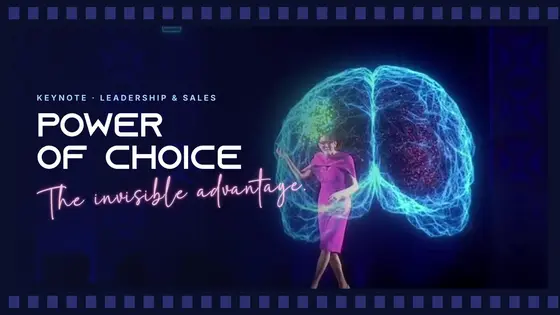
Looking for names? Browse my list of top women keynote speakers and 11 female Hall of Fame speakers. And if you are planning an event for women in leadership, see what I bring to women’s leadership events, or explore my keynotes The Power of Choice and Forever Human.
Frequently asked questions
Why are audiences asking for more female speakers?
Audiences want authenticity, connection and perspectives they have not heard many times before. Women speakers often bring lived experience of exclusion, bias and balancing many roles, plus a conversational, influence-based style. That combination makes their messages feel relatable and practical, not only inspiring.
How have female motivational speakers changed the speaking industry?
Their growing visibility has broadened the range of topics and voices on main stages, leading to richer conversations about leadership, success and change. It has also encouraged event organizers to build more balanced lineups and shown young professionals that leadership comes in many forms.
What makes a motivational female speaker successful?
The same qualities that make any speaker successful: authenticity, empathy, resilience and strong communication skills, combined with real expertise. The ability to turn personal stories into practical lessons, and to handle complex topics with both clarity and warmth, is what makes their messages last.
What challenges do women face in the speaking industry?
Many still meet gender bias, limited representation on main stages and stereotypes that question their authority or expertise. Some have to work harder for the same recognition, often while balancing significant personal responsibilities. Organizers who judge every speaker by the same criteria help change that.