
Overcoming imposter syndrome does not mean silencing doubt
Overcoming imposter syndrome does not mean silencing doubt forever. It means recognizing that the voice saying “you don’t belong here” is a learned response, not the truth, and moving forward anyway: owning your achievements, questioning the evidence, rewriting cultural scripts and building confidence one small win at a time.
You know that quiet, nagging voice. The one that says, “You don’t belong here.” For countless women, imposter syndrome is not a passing feeling. It is a persistent shadow that follows them into boardrooms, onto stages and through the defining moments of their careers.
The voice is not telling the truth. Confidence is not the absence of doubt. It is learning to move forward despite it. That is the work I do with women’s audiences at conferences, with stories, practical strategies and an unshakable belief in their potential. Here are the six lessons I come back to most.
KEY TAKEAWAYS
- Imposter syndrome in women is tangled with gender expectations. It is a cultural issue, not just a self-esteem one.
- Downplaying your wins is not humility. It is fear of being seen as arrogant.
- How you see yourself shapes how others see you, and how far you grow.
- Cultural scripts like “you can’t have it all” lose power when women see others break them.
- Emotional intelligence lets you question self-doubt instead of obeying it.
- Confidence is a skill: awareness, small wins and a supportive community build it.
011. Why does imposter syndrome hit women differently?
Imposter syndrome does not look the same for everyone. For women, it is often tangled up with social expectations and gender dynamics that amplify self-doubt. Picture this: a woman reaches a milestone, and instead of celebrating, she dissects whether she really earned it. Sound familiar? That is not just a self-esteem issue. It is a cultural one.
The constant pressure to prove yourself, especially in male-dominated spaces, makes it easy to second-guess your worth. Part of my job on stage is helping women see those doubts for what they are: learned responses to an unbalanced system, not a reflection of their abilities.
Then we rewrite the internal dialogue. Progress instead of perfection. Success does not have to mean flawless. It can mean resilient, determined and brave.
And there is a quieter gift in the room: shared experience. When women hear others describe the same battle, it creates solidarity. Finding out you are not the only one is often the moment self-doubt starts turning into self-belief.
What if imposter syndrome is not about you, but about the way society taught us to measure worth?
022. Own your achievements without guilt
Why do so many women downplay their wins? “It was a team effort.” “I just got lucky.” “Anyone could have done it.” We have all heard these lines. Many of us have said them. Me included, in the past.
Let us be honest: that is not humility. It is fear of being seen as arrogant or unlikable. Owning your success does not diminish anyone else’s contribution. Acknowledging your achievements is not bragging. It is being honest about the work you put in. (If you need words for it, I collected 25 ways to ask for recognition at work.)
Ambition also comes with guilt. Many women feel they are walking a tightrope between career goals and the expectation to be the perfect partner, parent or friend. Success does not have to look the same for everyone. It can, and should, be defined on your own terms.
So I ask a tough question: “Who benefits when you play small?” It reframes the whole thing. Owning your wins sets an example, and success becomes a ripple that lifts the women around you. It does not need to be explained or excused. It deserves to be celebrated.
033. How self-perception shapes professional growth
How you see yourself matters. If you do not believe you are capable, why would anyone else? Self-perception is the foundation of professional growth, and for many women, that foundation is shaky.
Self-doubt creeps into daily life in small ways. Hesitating to share an idea in a meeting. Second-guessing a decision you already made. These are not random moments. They are patterns, and patterns can hold you back for years.
Breaking them starts with self-awareness. Notice the negative thought and replace it. Instead of “I’m not qualified,” try “I bring a perspective that adds value.” And be careful with external validation. Praise feels good, but what happens when it is not there? Build internal validation by celebrating small wins and noticing how far you have come. Confidence is not having all the answers. It is trusting yourself to figure them out.
The mirror only shows what is outside. Your belief defines what is within.
044. Rewrite the cultural scripts
“You can’t have it all.” “Don’t be too ambitious.” “Stay in your lane.” These are not just words. They are limits placed on women’s self-belief, and they seep in quietly.
Culture enforces them in subtle ways: media stories of “strong women” who sacrifice everything, workplace norms that penalize assertiveness. The message is that ambition is risky and confidence can backfire. Those narratives are wrong.
Stories help rewrite them, especially stories of women who broke the mold and succeeded on their own terms. You do not have to fit anyone’s box to thrive. Representation matters here, too: seeing other women defy the script proves it is possible, and when women lift each other up, the old narratives lose their power. You can’t have it all? Watch me rewrite that script.
055. Use emotional intelligence to question self-doubt
Emotional intelligence is not a trendy phrase. It is one of the most practical tools for overcoming imposter syndrome. How often does a feeling of inadequacy spiral simply because you never stop to examine it?
I challenge my audiences to pause and ask: “Why do I feel this way? Is there actual evidence for it?” That small act of curiosity can stop self-doubt in its tracks and turn a moment of insecurity into self-awareness.
Self-compassion matters just as much. Being kind to yourself is strength, not weakness, and it quiets the inner critic. I often ask the room: “Would you ever talk to a friend the way you sometimes talk to yourself?” Emotional intelligence also strengthens your relationships, and those connections reinforce your confidence. Growth rarely happens in isolation. More on that in can emotional intelligence be learned?
066. Overcoming imposter syndrome for good: rewire your brain for confidence
Confidence is not a magical trait reserved for a lucky few. It is a skill, and it can be developed like any other.
Step one is awareness. Many women do not notice how often self-doubt shapes their decisions. Recognize the patterns, negative self-talk or perfectionism, and replace them with better habits. Instead of dwelling on a mistake, focus on the lesson and how it helps you grow.
Visualization helps, too. Imagine yourself nailing the presentation, acing the interview, handling the tough conversation with ease. It trains your brain to expect a positive outcome. And celebrate small wins. Confidence is built from tiny victories that prove, “I can do this.”
Finally, community. Surround yourself with supportive peers and mentors. Rewiring your brain for confidence is not something you have to do alone. It is not about erasing fear, and it is not about becoming someone else. It is about building the resilience to push forward anyway, and becoming your best self.
Further reading on overcoming imposter syndrome
- Overcoming workplace imposter syndrome, University of Michigan, Gerald R. Ford School of Public Policy: how imposter syndrome affects professional women, and ways to counter it at work.
- Imposter syndrome predominantly affects women, Entrepreneur: why women are disproportionately affected, the underlying causes and possible solutions.
Planning a women’s leadership event or conference? Here is what I bring as a women’s keynote speaker, and why audiences crave a female speaker’s perspective.
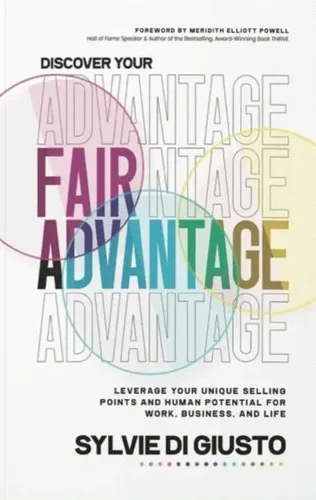
Discover Your Fair Advantage
Every woman I meet after a keynote has something that sets her apart, and most of them hide it. Discover Your Fair Advantage is my guide to finding those differences and putting them to work, so you stop downplaying your strengths and start getting chosen for them.
Frequently asked questions
What are the first steps to overcoming imposter syndrome?
Start by noticing the voice and naming it: “This is imposter syndrome, not a fact.” Then ask for evidence. Is there real proof you do not belong? Write down your wins, talk to women who feel the same, and replace “I’m not qualified” with what you actually bring to the table.
Why do women experience imposter syndrome more often?
Self-doubt in women is often amplified by cultural expectations: pressure to prove themselves in male-dominated spaces, messages that ambition is risky, and penalties for assertiveness. Many women learn to downplay their achievements to avoid seeming arrogant, which feeds the feeling of being a fraud.
How can a motivational speaker for women help with career stagnation?
A good speaker helps women recognize the patterns that keep them small, such as staying quiet in meetings or crediting luck for their success, and gives them practical strategies to own their achievements, spot growth opportunities and take bold steps toward their next role.
How do I set boundaries without feeling guilty?
Remember that every “yes” to something unimportant is a “no” to something that matters. Guilt often comes from expectations to be the perfect colleague, partner or parent. Define success on your own terms, protect the time that serves it, and say no kindly and clearly, without long explanations.