Why planners book a female keynote speaker
Planners book female keynote speakers because their audiences want connection, authenticity and perspectives they have not heard a hundred times. Women on stage often bring lived experience of exclusion, bias and balancing many roles, a definition of power built on influence rather than volume, and a conversational style that turns a keynote into a shared experience. Gender-diverse lineups also tend to draw broader audiences and sponsors.
Have you noticed how conferences are starting to feel different? People are no longer satisfied with the same old pep talks. They want speakers who sound like real life, not like a motivational poster. That is where women keynote speakers come in, with inspiration grounded in lived experience.
I have watched this shift from both sides: for decades as an audience member, and now from the main stage myself. Here is what I see, and what it means for you if you are choosing who opens or closes your event.
KEY TAKEAWAYS
- Female keynote speakers model inclusive leadership because many have lived what it feels like when inclusion is missing.
- They replace the myth of the “perfect leader” with authenticity, and power through dominance with power through influence.
- Their stories of balance, nonlinear careers and unseen work make success feel human and reachable.
- Gender-diverse lineups tend to draw broader audiences and sponsors, and show young professionals what leadership can look like.
- Choose a female speaker the way you choose any speaker: for the message your audience needs, not to balance a lineup.
Why are planners booking more female keynote speakers?
These are the reasons I see, again and again, in the rooms where women hold the main stage.
011. They model inclusive leadership
Inclusive leadership has become a guiding principle for forward-thinking teams. But who understands it best? Those who have experienced, or still experience, what it feels like when inclusion is missing. Women speakers know what it means to feel excluded, underestimated or overlooked, and many of us now stand on stage as living proof that those barriers can be overcome. Inclusion, resilience and collaboration are not ideals to us. They are achievable realities.
The absence of inclusion is not an oversight. It is a barrier to innovation.
022. They break the myth of the “perfect leader”
Let’s get real: the idea of the perfect leader is exhausting. Imposter syndrome, fear of failure, trouble setting boundaries, wavering confidence, the elusive work-life balance. You name it, we have been through it. When a female keynote speaker says, “I don’t have it all together, and that’s okay,” she is not diminishing her achievements. She is bridging the gap between aspiration and reality, and audiences lean in because it feels real.
033. They redefine power
Ever been yelled at during a conference? Ever had to scream in a chorus how you are going to “crush it”? Exhausting, isn’t it? Women speakers typically bring a different energy, built on connection and empathy instead of volume and bravado. Audiences leave encouraged, not pressured. Energized, not exhausted. And honestly, nobody returns to the office and yells every morning that they will “be unstoppable.” That kind of applause rarely turns into lasting change.
True power doesn’t yell. It resonates.
044. They make success feel human
Women wear a lot of hats, and they will be the first to tell you that balance is not about doing it all. It is about doing what truly matters. Their careers are rarely straight lines either: plans that unraveled, detours that became opportunities, failures that became stepping stones. Those stories give audiences permission to define success on their own terms and to ask, “Am I chasing what I truly value, or just what looks good on paper?”
055. They bring emotional intelligence to hard conversations
Many women have spent a lifetime walking a tightrope of expectations: assertive but not too assertive, strong but approachable. That builds an unusual ability to read a room and see several sides of a situation. It also gives them the courage to take on uncomfortable truths like equity, bias and the need for change, in a way that makes the audience feel safe enough to lean in. They mix honesty with hope, so the hardest conversations spark growth instead of defensiveness.
066. They speak to the invisible strivers
Every audience has them: the quiet, hardworking people who keep the wheels turning behind the scenes and rarely get applause. Women speakers have a gift for making them feel seen. They show how these people are the backbone of real progress, and remind everyone in the room that recognition does not only come from the spotlight.
Leadership is not only about standing out. It is also about lifting up those who go unnoticed.
What is the business case for women on the main stage?
Events with gender-diverse lineups often draw larger audiences, spark better engagement and catch the attention of sponsors. When potential attendees see a lineup that reflects their world, they feel connected before they even arrive.
The effect on emerging professionals matters just as much. When younger generations see women holding authority on stage, it changes their picture of what leadership looks like. And the role itself has changed: not long ago, women were far more likely to moderate a panel than headline the event. Today they open and close conferences, not to fill a quota, but because their message moves the room.
Equality is not a favor. It is a competitive advantage.
Which perspectives does a female keynote speaker bring?
- Dual realities. Caregiving next to career goals, self-doubt next to determination. Their advice works because it has been tested in real life.
- The underdog. Many have broken into spaces once dominated by men and turned skepticism into applause. They do not just tell you to keep going. They show you what persistence looks like.
- The observer. Years of being underestimated sharpen the eye for what others miss: the unspoken dynamics in a room and the patterns that show where things are heading.
- Creativity born from constraint. Small budgets and tight boundaries often spark the most inventive ideas, and these speakers teach audiences to see constraints as fuel.
- Breaking through bias. First-hand stories of subtle and systemic hurdles, plus practical tools to recognize and challenge bias in teams and organizations.
- Unseen work. They pull back the curtain on the late nights and small, consistent steps behind every big win.
What does leadership look like from my side of the stage?
Here is what I bring to the stage myself as a female keynote speaker, and why it lands with audiences who have felt the same.
Leading while being watched
Women leaders often find themselves under a microscope, where small missteps are amplified and successes are met with skepticism. I often tell my audiences: “The question isn’t whether you’ll be judged. You will be; we all are. The real question is how you take that judgment and turn it into fuel for your growth.” Those who are watched most closely often leave the deepest impact, not despite the pressure but because of it.
Moving through uncharted territory
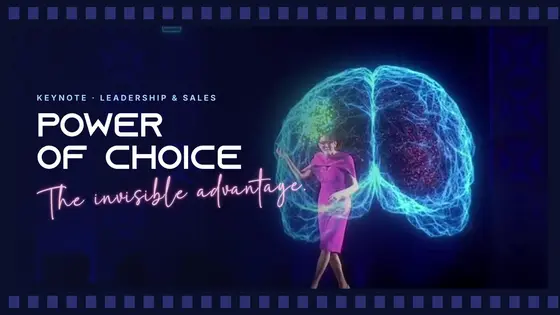
Many women speakers have been the “firsts” and the “onlys.” I was the first to implement e-learning initiatives in Fortune 100 companies decades ago, I co-founded an online certification school long before virtual education was mainstream, and today I am proud to be the first 3D immersive holographic keynote speaker. Did people tell me it was not possible? All the time. Each milestone taught me the same lesson: when there is no path, you do not wait for one. You create it.
Speaking without permission
Leadership does not always come with an invitation. In my own professional association, I regularly take the initiative to address challenges and suggest new solutions. Fellow speakers ask me why I do all of this. My answer is always the same: “Rather than complaining about the problem, I choose to become part of the solution.” We teach audiences to stop asking “Can I?” and start saying “I will.”
Recognizing the value of “no”
“No is a full sentence.” That reminder hangs on the wall of my office and stares at me every single day. Saying no to the wrong tasks, projects and “almost right” opportunities protects time and energy for what matters. When I share this, audiences understand that no is not a rejection. It is a redirection.
Unlearning what does not serve you
When I entered this industry, I was taught that a keynote should never be interactive and should follow a rigid formula. Over time I realized these “rules” served neither me nor my audience, so I unlearned them. Today my keynotes are dynamic, immersive and deeply interactive. Whenever I hear advice now, I ask myself: “If everyone is running to the right, how can I go left?”
How do women speakers turn a keynote into a conversation?
When a woman speaker steps on stage, she often does not just deliver a talk. She starts a conversation. Instead of lecturing from above, she says, in effect, “Let’s figure this out together.” In practice that looks like this:
- Expertise as lived experience. Would you rather hear about resilience from someone who memorized the theory or from someone who lived it?
- Humor that disarms. A well-timed story about her own experience with bias does more than a slide full of statistics, and it lowers defensiveness.
- Data turned into story. People do not remember spreadsheets. They remember stories, especially ones they can see themselves in.
- Humanity in technical topics. Take AI: instead of explaining algorithms, she shows why the topic matters to the people in the room.
- Reflection, not just applause. The best women speakers would rather end with a question, “What will you do differently tomorrow?”, than with a mic drop.
The audience does not just hear me. They often see themselves in my story, and that changes everything.
How do you choose the right female keynote speaker?
The same way you choose any keynote speaker. A woman on your main stage should be there because her message is right for your audience, not to balance a lineup.
- Start with the outcome. What should people think, feel or do differently after the session?
- Look for a clear point of view. Generic “empowerment” talks fade by lunch. A distinct message stays.
- Watch full-length video, not just a sizzle reel, and listen for how she handles the room.
- Ask how she customizes. The best speakers learn your industry, your people and your current challenges.
- Talk to past clients. Ask what changed after the event, not only whether people liked it.
For my part, every keynote is designed with intention, refined for the audience and executed with a level of detail that puts planners at ease. I arrive early. I stay late. I rehearse. I flex. Some speakers take the stage. I take responsibility.
The research is interesting, too. A study analyzing male and female speakers’ word choices in TED Talks found clear differences in linguistic, psychological and social language, and research on the speaker gender effect found that learners achieved better outcomes when content was narrated by a female voice.
Looking for names? Browse my list of top women keynote speakers and my female Hall of Fame speakers. Planning an event for women in leadership? See what I bring to women’s leadership events as a female keynote speaker, or explore my keynotes The Power of Choice and Forever Human. New to booking? Start with what a keynote speaker actually does and costs.
Frequently asked questions
Why do planners book female keynote speakers?
Because their audiences want authenticity, connection and perspectives they have not heard many times before. Women speakers often bring lived experience of exclusion, bias and balancing many roles, plus a conversational, influence-based style that makes their messages feel relatable and practical. Gender-diverse lineups also tend to draw broader audiences and sponsors.
How have female keynote speakers changed the speaking industry?
Their growing visibility has broadened the range of topics and voices on main stages, leading to richer conversations about leadership, success and change. Women who once moderated panels now open and close conferences, and that visibility shows young professionals that leadership comes in many forms.
What makes a female keynote speaker successful?
The same qualities that make any speaker successful: a clear message, real expertise, empathy and strong delivery. The ability to turn personal stories into practical lessons, and to handle complex topics with both clarity and warmth, is what makes the message last after the event.
How do I find the right female keynote speaker for my event?
Start with the outcome you want for your audience, then look for a speaker with a distinct point of view on that topic. Watch full-length video, ask how she customizes her keynote for your industry, and talk to past clients about what changed after the event.