13 innovation keynote speakers worth booking
A note on selection and order: I have personally seen every speaker here present. That is my bar for including anyone. They are listed alphabetically by last name, not ranked, because this is a curated selection rather than a leaderboard. And yes, I have included myself.
Lisa Bodell
The simplifier. Best for: Organizations where complexity, not a lack of ideas, is what kills innovation
Lisa founded FutureThink and has spent two decades helping companies like Google, Pfizer and SAP innovate, and her conclusion is refreshingly blunt: most organizations do not need more ideas, they need fewer obstacles. Her famous exercise asks teams to “kill a stupid rule,” and her point about AI is just as sharp: automate a complicated process and you only get bad work faster. For rooms buried in meetings, approvals and busywork, Lisa clears the path.
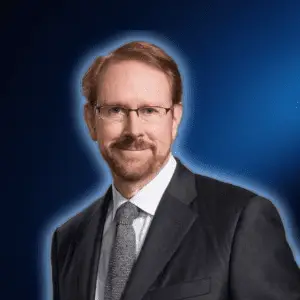
Daniel Burrus
The anticipator. Best for: Leaders who want to innovate toward certainties instead of guessing
Daniel’s most useful idea for innovation is also his simplest: some trends are hard facts about the future, and you can build on them with confidence. Once leaders see which changes are certain, they stop waiting for disruption and start pre-solving the problems it will bring. That turns innovation from a gamble into a plan. For executive teams that need strategy rather than inspiration alone, Daniel is the anchor.

Dan Chuparkoff
The AI translator. Best for: Organizations where AI is the innovation everyone talks about and few people actually use
Dan spent decades building technology at Google, Atlassian and McKinsey, and he knows the difference between an AI pilot and a team that works differently. He shows audiences what AI does well, where it still falls short and how to combine it with their own expertise. The innovation he cares about happens at the desk, not in the lab. For teams that need to move from curiosity to practice, Dan closes the gap.
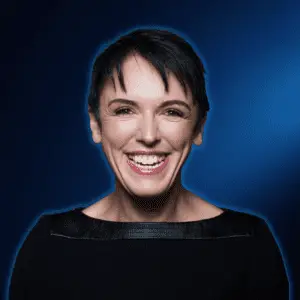
Sylvie di Giusto
The human edge. Best for: Events that want the keynote itself to feel like the future
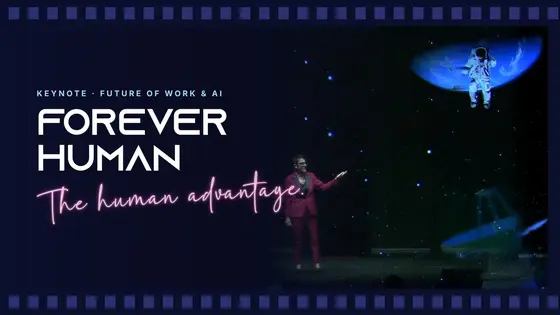
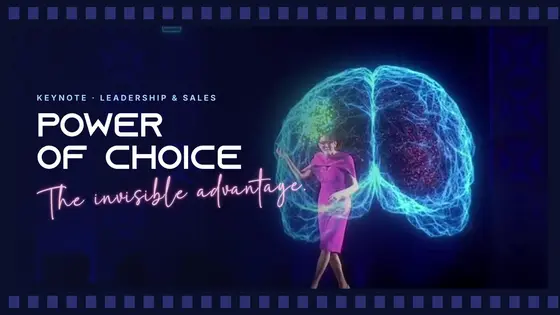
Full disclosure: that is me. My argument is that innovation is not a technology project. It is a series of human choices about what to keep, what to drop and what to try first, and in an AI era those choices matter more than ever. I deliver my keynotes as immersive 3D experiences or in a traditional format, so for many rooms the innovation is something they see happen on stage, not just hear about.
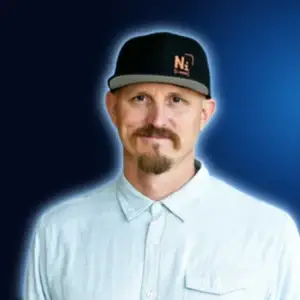
Mick Ebeling
The builder. Best for: Audiences who need proof that “impossible” is usually a decision, not a fact
Mick runs Not Impossible Labs, and his stories are hard to forget: the EyeWriter, which let a paralyzed graffiti artist draw again with his eyes, and a 3D-printed prosthetics lab in war-torn South Sudan. His philosophy is Commit, Then Figure It Out: say yes to the breakthrough before you know how. For rooms stuck in analysis and approvals, Mick is a jolt of momentum backed by things he actually built.

Shawn Kanungo
The disruptor. Best for: Leadership teams that need to disrupt themselves before someone else does
Shawn spent years as an innovation expert at Deloitte and now advises executives on disruptive trends and generative AI. His book The Bold Ones is a playbook for the moment most organizations dread: when the thing that made you successful starts holding you back. He is energetic, current and fluent in culture as much as technology. For audiences who sense the ground shifting under their business model, Shawn names the shift and the move.
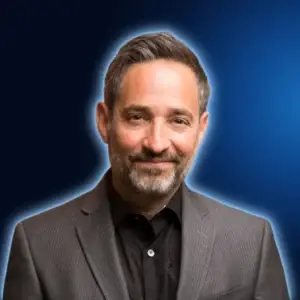
Josh Linkner
The everyday innovator. Best for: Organizations that want innovation from everyone, not only the R&D team
Josh built and sold five tech companies, and he still plays jazz guitar, which explains a lot about his approach. His Big Little Breakthroughs idea is that innovation is not a rare flash of genius but small creative acts repeated daily, and he gives people a practical framework to do exactly that. Audiences leave believing they are creative, often for the first time. For broad employee audiences, Josh is the most accessible voice on innovation I know.
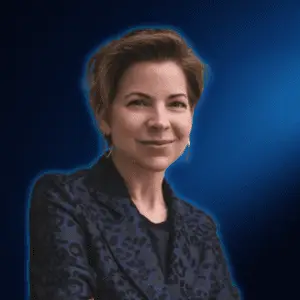
Kate O’Neill
The tech humanist. Best for: Leaders who want innovation that serves people, not just metrics
Kate asks the question many innovation programs skip: better for whom? As the “Tech Humanist,” she helps organizations make technology decisions that are both strategically smart and good for the humans on the other end. Her framing keeps teams from innovating for its own sake and points them toward meaningful, lasting value. For values-driven organizations and thoughtful executive rooms, Kate is the steady hand.
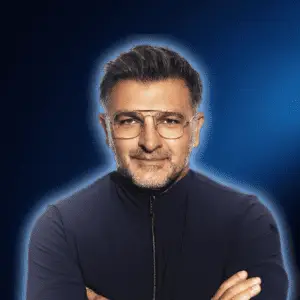
John Sanei
The futurist. Best for: C-suite audiences ready to rethink who they are, not just what they sell
John is a futurist who works on the layer beneath innovation: identity. His point is that organizations cannot reinvent their products while clinging to an outdated idea of themselves. His talks are expansive and a little philosophical, in the best way, with a global perspective and real optimism about human potential. For leadership teams facing a reinvention rather than an upgrade, John opens the bigger conversation.
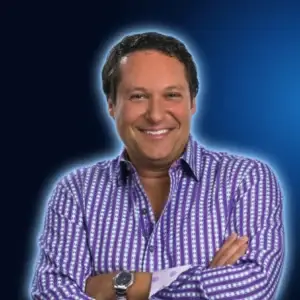
Stephen Shapiro
The problem framer. Best for: Teams that generate plenty of ideas but too few that matter
Stephen led a 20,000-person innovation practice at Accenture, and his core lesson is counterintuitive: stop asking for ideas and start asking better questions. He teaches teams to frame challenges precisely, innovate where they differentiate and look for answers outside their own industry. It is innovation as a discipline, not a brainstorm. For organizations tired of suggestion boxes that go nowhere, Stephen brings method.
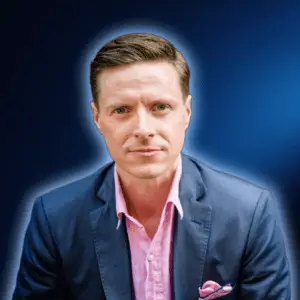
James Taylor
The creativity multiplier. Best for: Creative, marketing and product teams who worry AI will flatten their originality
James works on the raw material of innovation: creativity. His SuperCreativity approach shows how people and AI can collaborate to generate bigger, bolder ideas without losing what makes the work original. He is reassuring for audiences who feel their craft is under threat, and practical about how to use the new tools. For teams whose innovation depends on fresh thinking, James turns a threat into a collaborator.
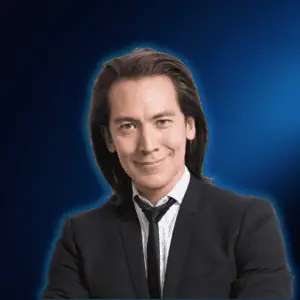
Mike Walsh
The organization redesigner. Best for: Executives who suspect their operating model, not their ideas, is the real bottleneck
Mike looks at innovation from the top of the org chart down. He studies how intelligent technology rewires leadership, decision-making and the economics of a business, and what that means for how companies should be designed. His message is that bolting new tools onto old structures is not innovation. For boards and senior leaders planning a real transformation, Mike shows what the redesigned organization looks like.
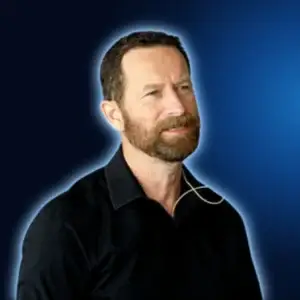
Duncan Wardle
The imagination coach. Best for: Audiences who want to leave with creative tools they can use on Monday
Duncan spent about 25 years at Disney, finishing as Vice President of Innovation and Creativity, helping teams across Pixar, Lucasfilm and Marvel find new ideas. On stage he is playful by design: he gets audiences out of their seats and teaches simple creative tools that break the habit of saying “we have always done it this way.” For rooms that need energy and a toolkit, not another lecture, Duncan delivers both.