The Next Executive Crisis Isn’t AI. It’s Attention. | AI and Attention Span
For most of corporate history, organizations worried about access to information. Executives invested heavily in research, analytics, reporting systems, and market intelligence to ensure their teams had enough data to make informed decisions. Information scarcity was the dominant challenge. That era is over.
Artificial intelligence has dramatically reversed the equation. Information now appears instantly, continuously, and in overwhelming quantities. Dashboards refresh in real time. AI tools summarize reports in seconds. Predictive systems generate alerts, recommendations, and forecasts faster than any human team could process. The emerging challenge is no longer information. It is attention.
The relationship between AI and attention span is quietly becoming one of the most important leadership issues inside modern organizations. As artificial intelligence accelerates the flow of data, insights, and communication, human focus becomes increasingly fragmented. Meetings multiply, notifications intensify, and decision cycles shrink. Employees move rapidly between screens, conversations, and tasks without sustained concentration.
For CEOs, this shift represents more than a productivity concern. It represents a strategic risk. Organizations that fail to address the consequences of shrinking attention spans will struggle with slower decision quality, fragmented execution, and diminished innovation. Companies that actively protect and design for human focus, on the other hand, gain a powerful competitive advantage. The future of leadership will not be defined only by how effectively executives deploy artificial intelligence. It will be defined by how effectively they manage AI and attention span across their organizations.
KEY TAKEAWAYS
- AI and attention span are becoming a major strategic leadership challenge
- Artificial intelligence increases information volume faster than humans can process
- Workplace attention fragmentation reduces decision quality and innovation
- CEOs must actively design environments that protect focus
- Organizational culture influences how attention is allocated
- Leaders who manage attention effectively gain strategic advantage
- AI should amplify human judgment rather than overwhelm it
- Protecting attention is becoming a CEO level responsibility
The Hidden Cost of Infinite Information
Artificial intelligence promises extraordinary efficiency. Automated analysis, predictive models, and intelligent assistants enable organizations to process vast amounts of information quickly. However, every technological advance introduces behavioral consequences.
The relationship between AI and attention span illustrates this clearly. When information flows continuously, employees feel pressure to react continuously. Emails, dashboards, alerts, collaboration tools, and AI-generated insights all compete for attention simultaneously. What once appeared as productivity begins to resemble fragmentation.
Employees shift rapidly between tasks without finishing the previous thought. Meetings interrupt analysis. Messages interrupt strategy discussions. Notifications interrupt deep work. The human brain becomes trapped in a loop of micro responses rather than sustained thinking.
For CEOs, this fragmentation produces measurable consequences. Strategic initiatives slow down because teams cannot maintain focus long enough to execute complex work. Innovation suffers because creativity requires uninterrupted thinking. Decision-making deteriorates because leaders respond to signals rather than analyzing patterns. Understanding AI and attention span means recognizing that the greatest threat of information overload is not confusion. It is distraction.
Why Artificial Intelligence Accelerates Attention Loss
Artificial intelligence changes how quickly organizations operate. Reports that once required weeks now appear instantly. Market intelligence updates continuously. Customer feedback arrives in real time. Predictive systems highlight potential risks before problems emerge. While these capabilities improve visibility, they also compress the rhythm of decision-making.
Executives and employees alike begin feeling pressure to respond immediately. If information appears instantly, why not decisions? This is where the relationship between AI and attention span becomes critical.
Humans evolved to think in cycles of reflection and action. Artificial intelligence operates in continuous cycles of analysis and output. When organizations attempt to match the speed of machines, attention becomes fragmented. Instead of deliberate thinking, people begin reacting.
The danger is subtle. Teams appear busy and responsive, yet the quality of thinking declines. Important signals disappear within noise. Strategic decisions compete with operational alerts for the same mental bandwidth. CEOs who recognize this pattern early understand that the problem is not artificial intelligence itself. The problem is the unmanaged interaction between AI generated information and human attention.
The Strategic Risk CEOs Cannot Ignore
Shrinking attention spans create risks that extend far beyond productivity. Organizations rely on sustained focus for several critical capabilities.
Complex problem solving requires extended concentration. Innovation emerges from deep thinking rather than fragmented multitasking. Long-term strategy depends on reflection rather than reaction. When AI and attention span collide without intentional leadership, these capabilities begin to erode. Teams move quickly but think shallowly. Decisions become reactive rather than strategic. Communication increases while clarity decreases.
The long term consequences can be severe. Executives may notice slower strategic execution, declining creativity, and increasing operational noise. Employees may feel constantly busy yet unsure which priorities truly matter. Companies that fail to address attention fragmentation often misdiagnose the problem. They blame employee engagement, remote work, or cultural shifts. In reality, the underlying issue may be attention architecture.
Why Attention Is Becoming a Leadership Asset
In the age of artificial intelligence, attention is emerging as a strategic resource. Just as organizations manage capital, talent, and technology, they must now manage focus.
The relationship between AI and attention span reveals an important insight. Information will continue expanding indefinitely. Human cognitive capacity will not. This means organizations must design systems that help people allocate attention effectively.
Executives who treat attention as an organizational asset gain several advantages. Teams make clearer decisions because they are not overwhelmed by noise. Employees engage more deeply with strategic initiatives. Innovation improves because individuals have time to think rather than react. Companies that ignore attention management experience the opposite. Fragmentation spreads across departments. Priorities compete with alerts. Strategic thinking becomes rare.
For CEOs, the question is no longer whether attention matters. The question is whether the organization is designed to protect it.
Ten Actions CEOs Can Take to Protect Organizational Attention
CEOs cannot eliminate the information environment created by artificial intelligence. They can, however, design cultures and systems that support focus rather than destroy it. Here are some ideas to help leaders manage the relationship between AI and attention span inside their organizations.
- 1. Define Organizational Priorities With Radical Clarity
Attention follows clarity. When priorities are ambiguous, employees respond to whatever appears most urgent. CEOs must communicate a small number of strategic priorities repeatedly and consistently. Clarity reduces cognitive noise. Employees no longer wonder what deserves their attention because leadership has already defined it.

- 2. Reduce Organizational Signal Noise
Many organizations generate excessive communication. Reports, dashboards, alerts, and updates flood employees with signals that compete for attention. Executives should evaluate which information streams truly support decision-making and eliminate those that do not.

- 3. Design Work Rhythms That Allow Deep Thinking
Innovation requires uninterrupted focus. CEOs should encourage work structures that allow employees to dedicate time to strategic thinking without constant interruptions. This may include meeting-free blocks, focused project cycles, or quiet work periods.

- 4. Separate Urgent From Important Information
Artificial intelligence highlights anomalies and patterns quickly, yet not every signal requires immediate action. Leaders must establish clear frameworks distinguishing urgent issues from important but non-urgent ones.

- 5. Train Leaders to Filter Information
Managers often amplify information overload by forwarding alerts, messages, and reports to their teams without filtering them. Leadership training should emphasize information curation as a critical management skill.

- 6. Protect Decision Time
Important decisions require reflection. CEOs should encourage executives to pause before responding to every signal generated by AI systems. Thoughtful delay can improve judgment significantly.

- 7. Encourage Intentional Communication
Employees often default to rapid communication through messages, emails, and collaboration tools. While fast communication improves responsiveness, it can fragment attention. Organizations should encourage concise, purposeful communication rather than constant updates.

- 8. Model Focus at the Executive Level
Employees observe how leaders allocate their attention. When executives constantly respond to alerts and messages, teams assume similar behavior is expected. CEOs who demonstrate thoughtful focus signal that deep work is valued.

- 9. Align AI Tools With Human Attention
Artificial intelligence should enhance decision-making rather than overwhelm it. Executives must ensure AI systems present insights clearly rather than generating endless streams of alerts. Technology must serve attention, not compete with it.

- 10. Treat Attention as a Strategic Resource
Organizations that succeed in the age of artificial intelligence treat attention with the same seriousness as financial capital. They measure where focus is directed and adjust systems accordingly. When leaders manage AI and attention span intentionally, the entire organization becomes more effective.

The Leadership Opportunity Ahead
Artificial intelligence will continue transforming how organizations operate. Data will expand, automation will accelerate, and predictive systems will influence decisions across every industry. Yet the ultimate competitive advantage may not belong to companies with the most technology. It may belong to those with the clearest attention.
CEOs who understand the dynamics between AI and attention span recognize that leadership in the AI era involves more than deploying powerful tools. It involves protecting the human capabilities that technology cannot replace. Focus, judgment, reflection, and creativity all depend on sustained attention. Without it, even the most advanced artificial intelligence cannot produce meaningful outcomes.
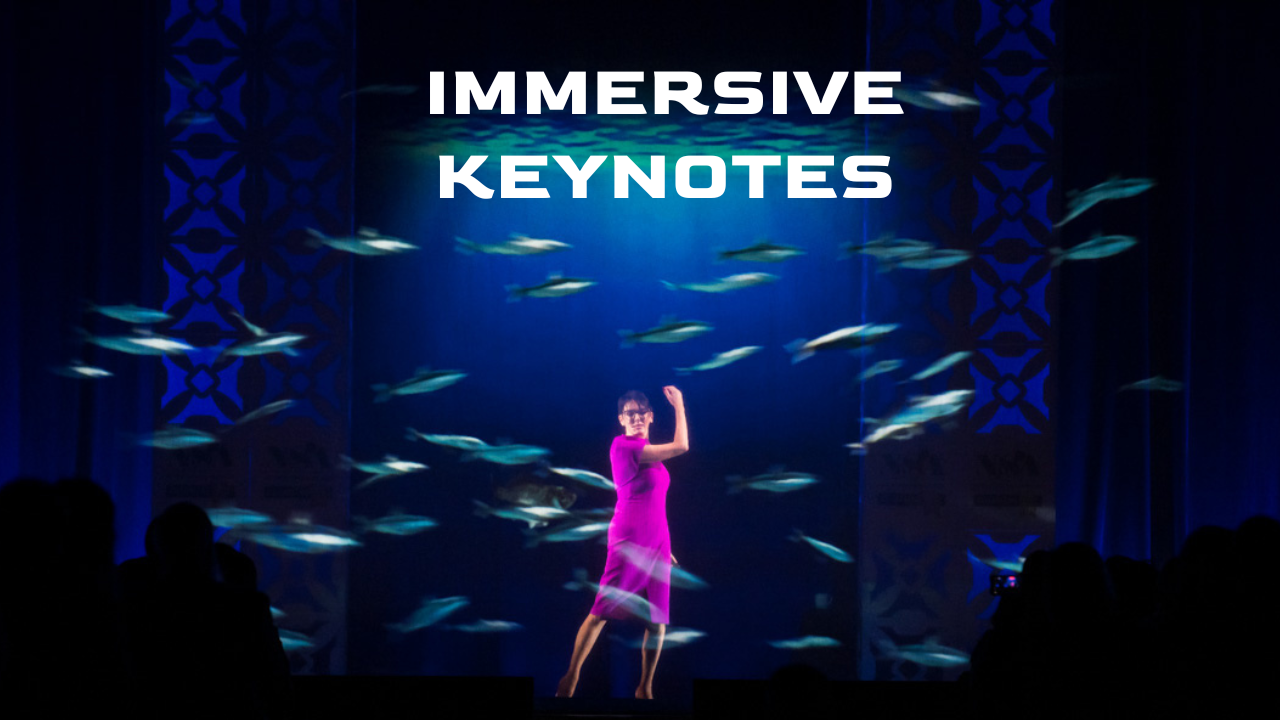
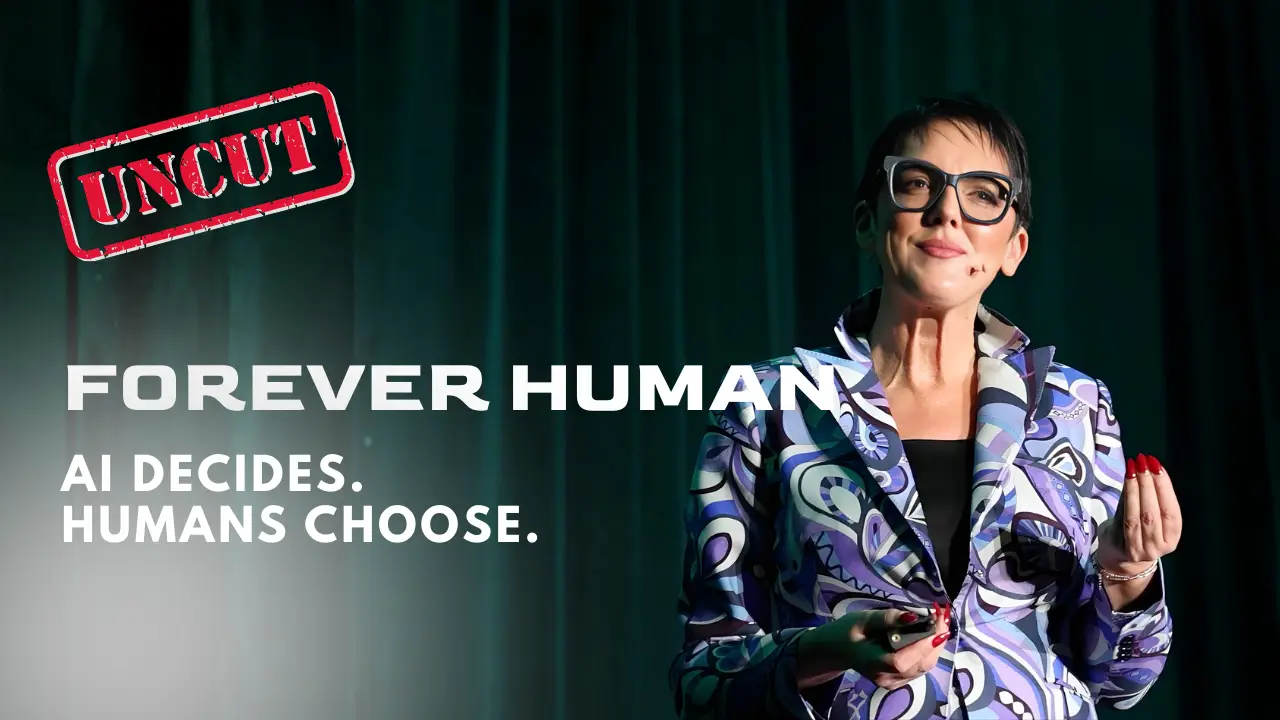
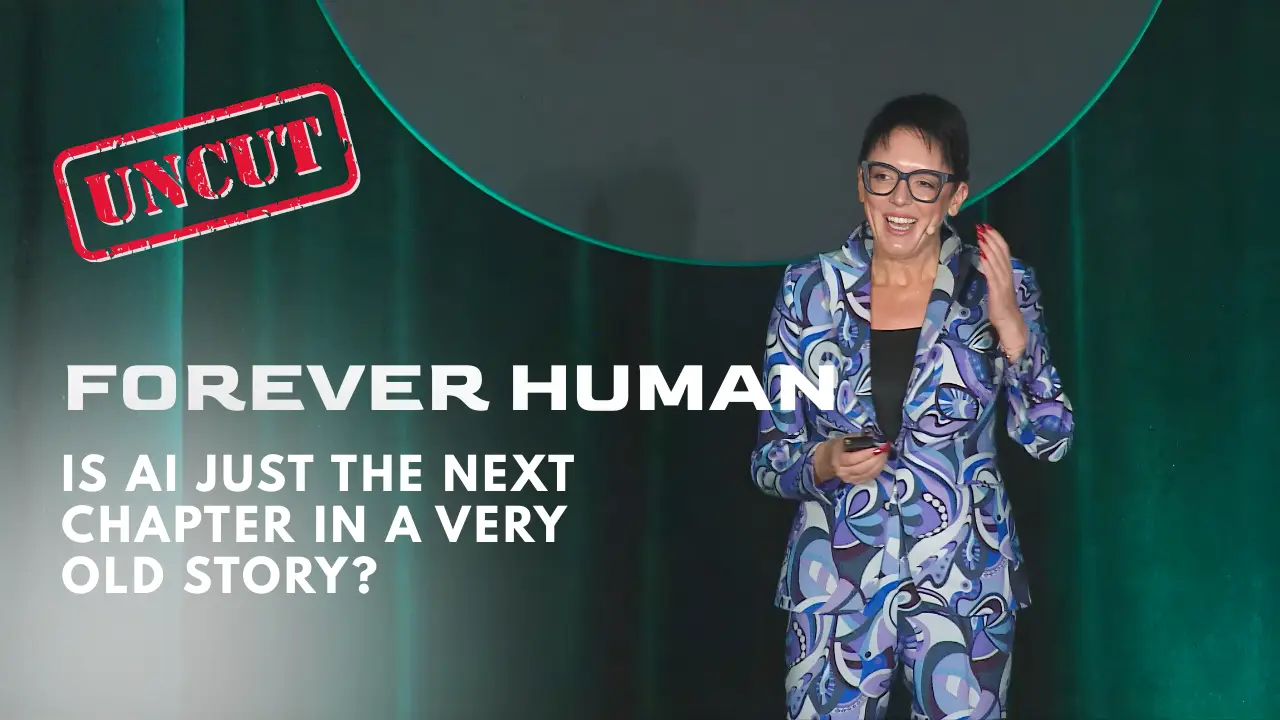
In her immersive keynote Forever Human, Hall of Fame keynote speaker Sylvie di Giusto explores one of the most overlooked consequences of artificial intelligence: its impact on human attention. As AI accelerates the flow of information across organizations, leaders face a new responsibility, protecting focus so teams can think clearly, make better decisions, and act with intention. Understanding the connection between AI and attention span is quickly becoming a defining leadership capability in the AI era.
Hall of Fame keynote speaker Sylvie di Giusto explores the human consequences of artificial intelligence. While many speakers focus on technology itself, Sylvie focuses on what technology does to people, how it changes attention, perception, decision-making, and leadership. Known for pioneering immersive 3D keynote experiences, she helps executives understand how human behavior evolves as AI reshapes the workplace. Her message is simple: this is not a technology talk, it is a people talk. Sylvie is represented globally by the speaker management agency cmi. To inquire about her availability, reach out to her team.