Can emotional intelligence be learned?
While some people may be naturally inclined to have higher emotional intelligence, it is essential to note that emotional intelligence is not an innate trait and can be developed and improved over time. Emotional skills can be learned and practiced, just like any other skill. With focus and effort, you can increase your emotional intelligence and become more emotionally intelligent. By doing so, you can develop stronger relationships, improve communication skills, and become more resilient in facing life’s challenges.
What Are the Signs You Are An Emotionally Intelligent Professional?
Professionals with high emotional intelligence may exhibit behaviors such as active listening, self-awareness, empathy, and the ability to manage emotions. They also tend to be better equipped to recognize other people’s feelings, understand how those feelings affect others, and express their emotions appropriately. In addition, emotionally intelligent professionals often possess a strong sense of self-confidence and can regulate their emotions to respond thoughtfully rather than impulsively. Ultimately, those with high emotional intelligence are better able to control their emotions, manage relationships, and navigate difficult conversations. Here are some signs of emotional intelligence:
- Self-awareness: A clear understanding of one’s emotions, strengths, weaknesses, values, and motivations.
- Self-regulation: The ability to manage and control one’s emotions, impulses, and behavior in a positive way.
- Empathy: The ability to understand and share the feelings of others.
- Social skills: Effective communication, conflict resolution, and building and maintaining positive relationships.
- Motivation: A drive to improve oneself and achieve one’s goals while considering the impact of one’s actions on others.
- Emotional expression: The ability to articulate emotions and respond appropriately in different situations.
- Adaptability: The ability to adapt to changing situations and adjust emotions and behavior accordingly.
- Resilience: The ability to recover from emotional setbacks and healthily handle stress.
- Self-confidence: A strong sense of self-worth and the ability to express oneself positively.
- Positive outlook: A tendency to approach life with optimism and view challenges as opportunities for growth.
Why is Emotional Intelligence so Important?
Overall, having a greater level of emotional intelligence can help you become more successful in your relationships and personal and professional goals and improve your overall mental health. By developing this ability, you can learn to manage your stress levels more effectively and make better decisions leading to short-term and long-term positive outcomes. Only by truly understanding yourself and developing strategies to cultivate your emotional intelligence can you improve your ability to make meaningful connections with others and become more successful in any area of your career and life.
- Improved communication: Emotionally intelligent professionals are better equipped to understand the emotions and perspectives of others, leading to improved communication and more effective collaboration.
- Stronger relationships: Professionals with high emotional intelligence tend to build better relationships with their colleagues, leading to a more positive and supportive work environment.
- Better leadership: Emotionally intelligent leaders are better equipped to motivate and inspire their team, handle conflicts, and make fair and ethical decisions.
- Increased job satisfaction: Emotionally intelligent professionals are often more self-aware and better understand what they need to be happy and fulfilled at work.
- Improved stress management: Professionals with high emotional intelligence are better equipped to handle stress and emotional challenges in the workplace.
- Enhanced creativity and innovation: Emotional intelligence fosters a supportive and collaborative work environment, encouraging creativity and innovation.
- Better decision-making: Emotionally intelligent professionals can consider their decisions’ emotional impact and take a holistic approach to problem-solving.
- Increased performance: Professionals with high emotional intelligence tend to be more motivated, resilient, and have a positive outlook, leading to improved performance and job satisfaction.
How to Learn Emotional Intelligence or Improve Your EQ
Here are ten ways that will help you learn to be more emotionally intelligent and improve your workplace performance. The questions will help you determine where you are in terms of your emotional intelligence.
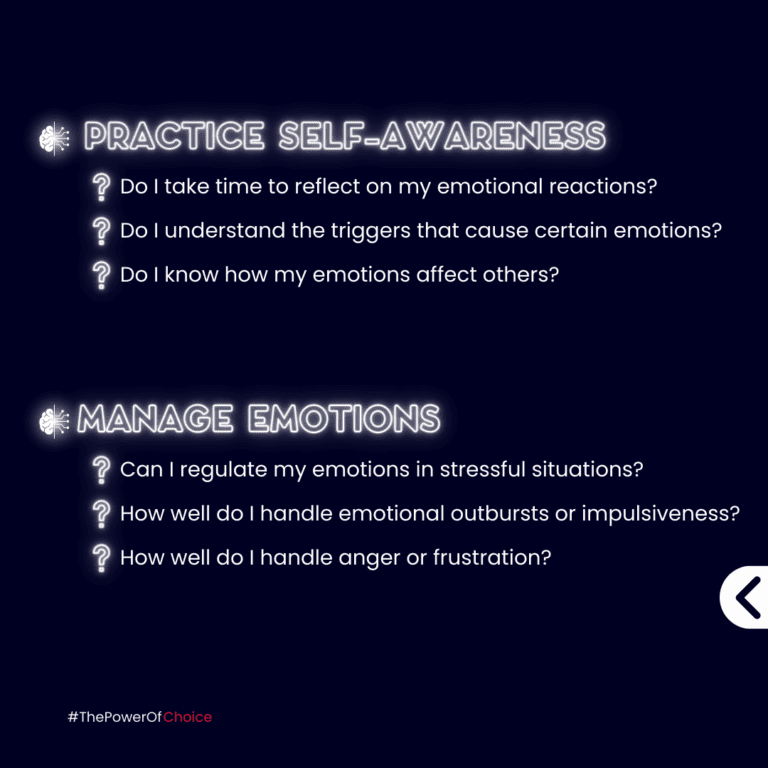
1. Practice self-awareness
- Am I aware of my emotions and how they impact my thoughts and behaviors?
- Do I take time to reflect on my emotional reactions?
- Can I accurately identify the emotions I’m feeling at a given moment?
- Do I understand the triggers that cause me to feel certain emotions?
- How well do I handle negative emotions such as anger or frustration?
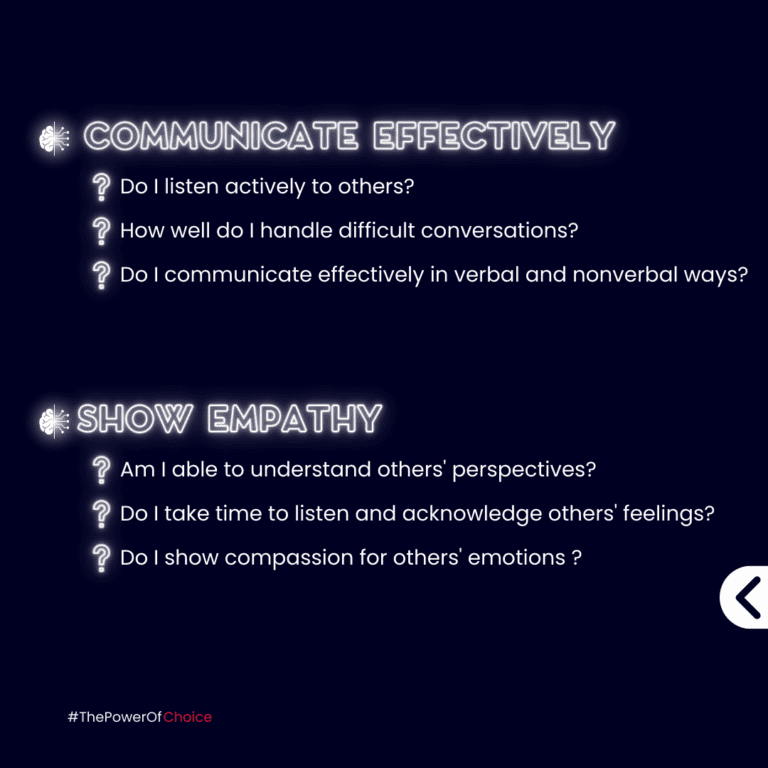
2. Embrace empathy
- Am I able to put myself in others’ shoes and understand their perspectives?
- Do I take time to listen and acknowledge others’ feelings?
- Do I show compassion for others’ emotions and experiences?
- Can I understand and respond appropriately to emotional cues from others?
- How well do I handle conflicts with others and maintain empathy in those situations?
3. Manage emotions
- Can I regulate my emotions effectively in stressful or challenging situations?
- Do I have strategies for managing intense emotions?
- How well do I handle negative emotions such as anger or frustration?
- Am I able to stay calm and composed in the face of adversity?
- How well do I handle emotional outbursts or impulsiveness?
4. Communicate effectively
- Am I able to express my feelings assertively and clearly?
- Do I listen actively to others and understand their perspectives?
- Can I handle conflict and disagreements constructively and respectfully?
- How well do I handle difficult conversations or emotionally charged situations?
- Do I communicate effectively in both verbal and nonverbal ways?
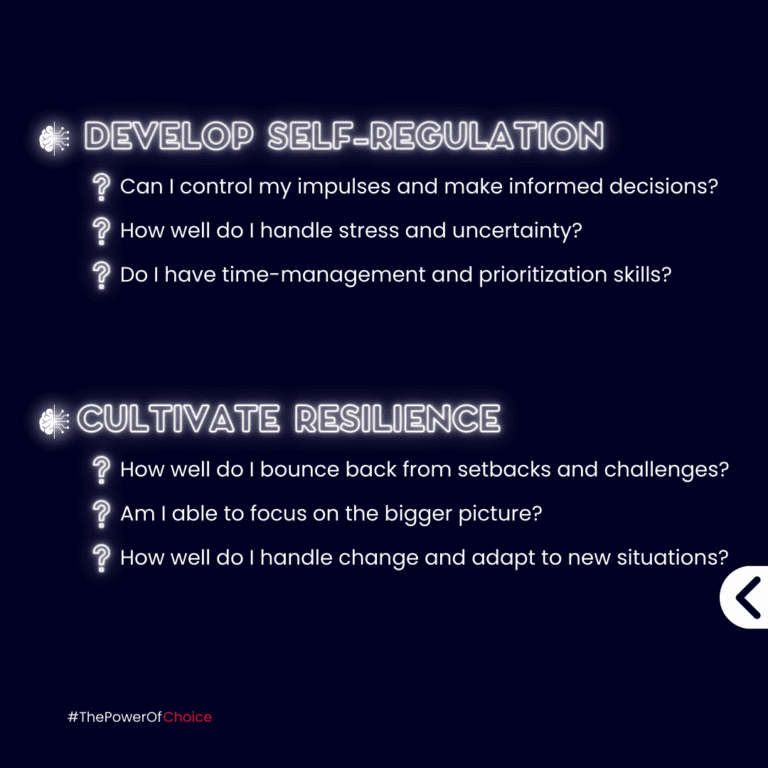
5. Develop self-regulation
- Can I control my impulses and make informed decisions?
- Do I act with thoughtfulness and consideration before making decisions?
- How well do I handle stress and uncertainty?
- Can I remain calm and focused in challenging situations?
- Do I have effective time-management and prioritization skills?
6. Cultivate resilience
- How well do I bounce back from setbacks and challenges?
- Do I have a positive outlook and engage in self-care practices?
- Can I effectively manage stress and maintain a healthy work-life balance?
- Am I able to maintain perspective and focus on the bigger picture?
- How well do I handle change and adapt to new situations?
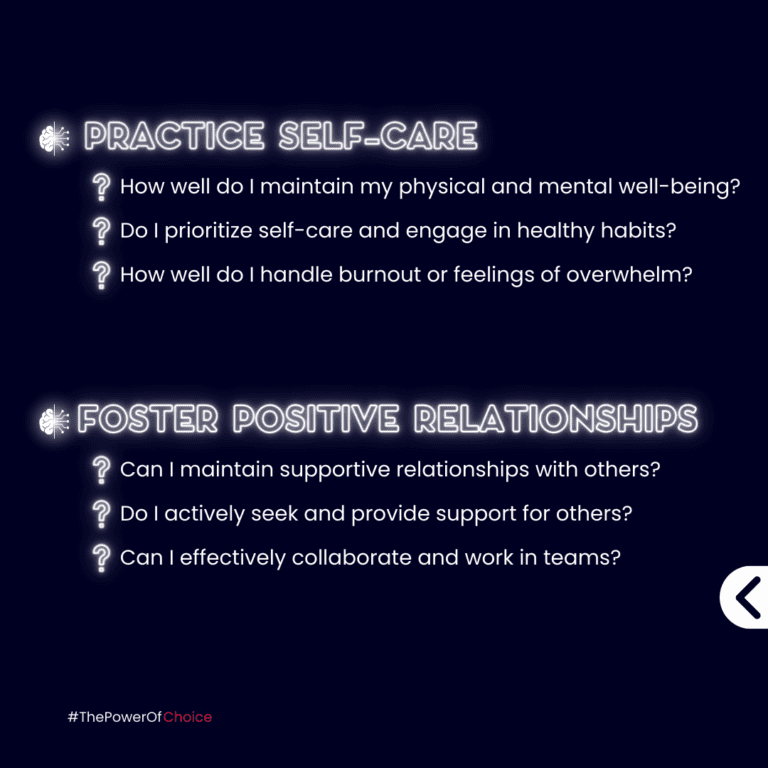
7. Practice self-care
- How well do I maintain my physical and mental well-being?
- Do I prioritize self-care and engage in healthy habits?
- Can I manage stress and maintain a healthy work-life balance?
- Do I make time for hobbies, interests, and relaxation?
- How well do I handle burnout or feelings of overwhelm?
8. Foster positive relationships
- Can I build and maintain supportive and respectful relationships with others?
- How well do I handle conflicts with others and maintain positive relationships?
- Do I actively seek and provide support for others?
- How well do I handle criticism or negativity from others?
- Can I effectively collaborate and work in teams?
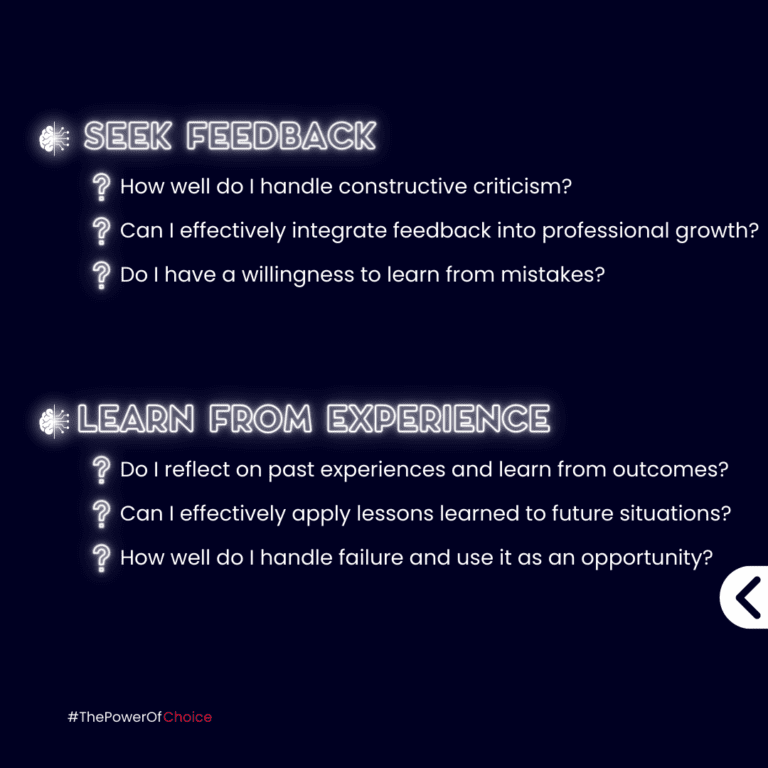
9. Seek feedback
- Am I open to receiving feedback from others and learning from it?
- How well do I handle constructive criticism?
- Can I effectively integrate feedback into personal and professional growth?
- Do I actively seek feedback from others to improve continuously?
- Do I have a growth mindset and a willingness to learn from mistakes?
10. Learn from experience
- Do I reflect on past experiences and learn from both positive and negative outcomes?
- How well do I handle setbacks and challenges?
- Can I effectively apply lessons learned to future situations?
- Do I have a growth mindset and continuously strive for personal and professional development?
- How well do I handle failure and use it as an opportunity for growth and learning?
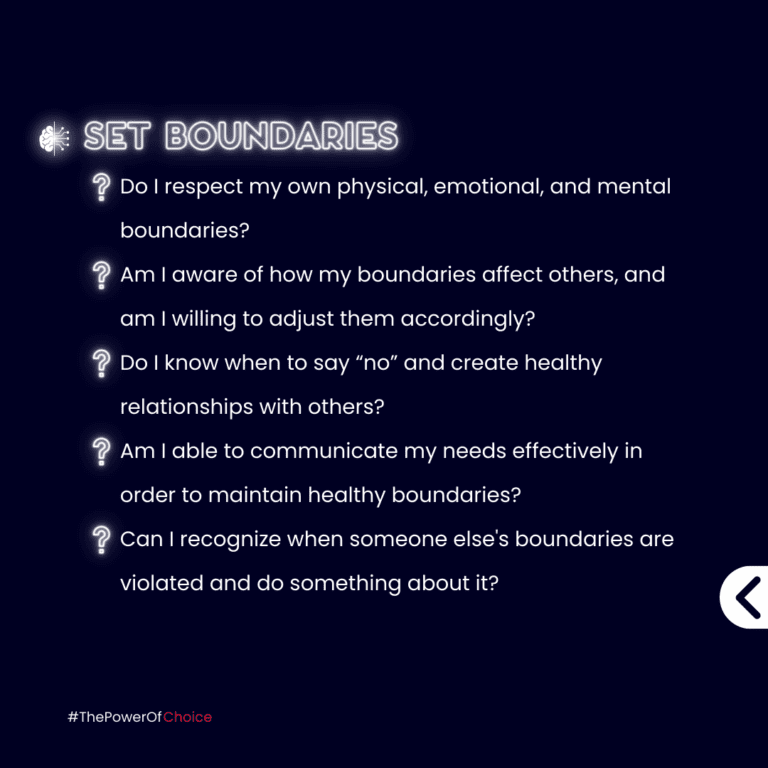
11. Set Boundaries
- Do I respect my own physical, emotional, and mental boundaries?
- Am I aware of how my boundaries affect others, and am I willing to adjust them accordingly?
- Do I know when to say “no” and create healthy relationships with others?
- Am I able to communicate my needs effectively in order to maintain healthy boundaries?
- Can I recognize when someone else’s boundaries are violated and do something about it?
Can Emotional Intelligence Be Learned in a Nutshell


PS: Interested in more content like this? Make sure to follow me on Instagram. It’s where I visualize and publish my thoughts daily. I hope to see you there.