
What Does AI Know About Me (And What Is It Guessing?)

Share This Post

Your Chatbot Is Judging You: What Does AI Know About Me

We’ve all had that moment of sudden paranoia while chatting with a chatbot. You’re an hour into a deep-dive session with ChatGPT, Claude, Gemini, or Perplexity, dumping your chaotic thoughts into the prompt box, when it responds with such unnerving accuracy that you have to stop and ask: wait, what does AI know about me, actually? It’s a fair question!

We treat these tools like a strange mix of search engine, unpaid intern, and digital confessional. We paste our messy drafts, our 2 AM panic emails, and the “stupid” questions we’d never dare ask a human colleague. And while we are busy getting answers, the algorithms are busy building a profile behind our backs.

But I’m not just talking about the basics. Sure, AI probably knows your name, your job title, and that you live in Chicago. That’s the easy stuff. I’m talking about the shadow profile. The invisible layer of psychological and behavioral data you didn’t realize you were handing over. Because AI doesn’t just know what you do; it’s beginning to understand how you think, what stresses you out, and perhaps even what you’re going to buy before you pull out your credit card. Ready to see who the machine thinks you are? Let’s take a look!

KEY TAKEAWAYS

  • AI doesn’t just answer your questions, it learns your patterns, preferences, and pressure points.
  • Every prompt is more than a request, it is behavioral data, which is why “what does AI know about me” is no longer a theoretical question, but a practical one.
  • AI fills in missing pieces with probability, meaning your shadow profile can be part fact and part flattering fiction.
  • Being “known” by machines shifts the power dynamic from privacy to agency, making control more important than secrecy.
  • The biggest risk is not just what AI gets wrong about you; it is what it silently decides to exclude you from.

How the Magic Trick Works: The Mechanics of Surveillance

THE VACCUM

Collection

THE DETECTIVE

Inference

THE HALLUCINATION

Probability

What does AI know about me Vaccuum collection

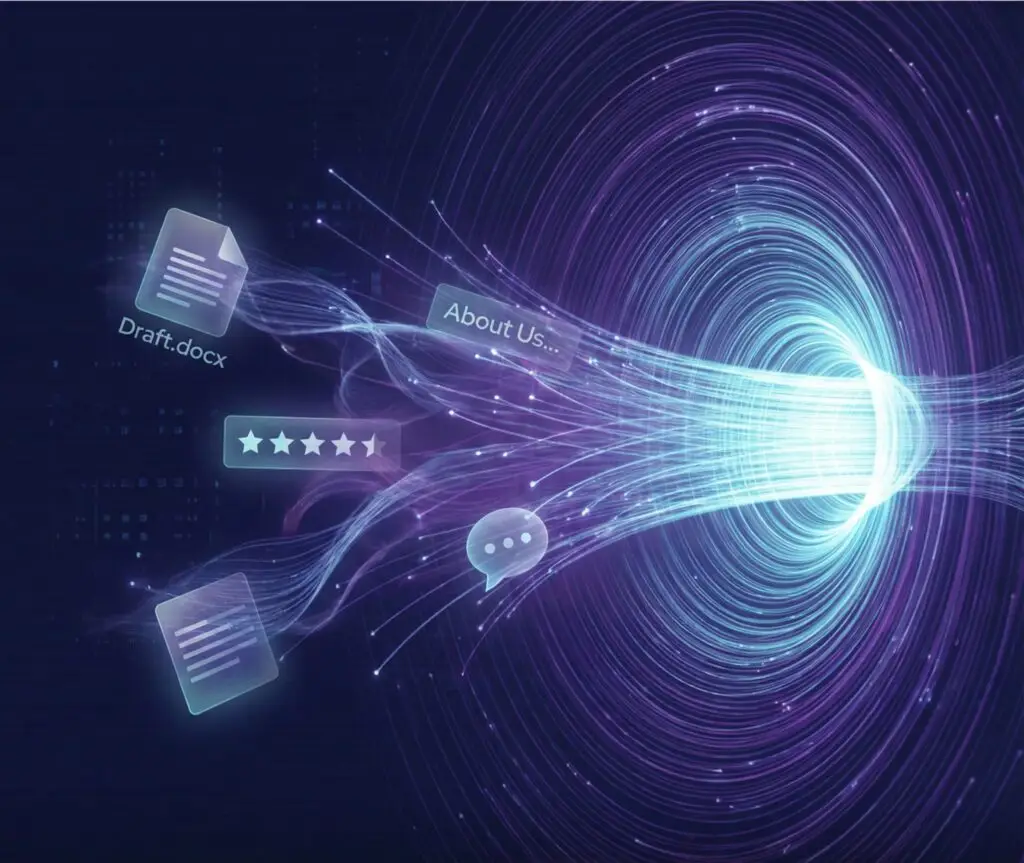
First, the models were trained on the “Common Crawl“, which is essentially a vacuumed-up copy of the entire public internet up to a certain date.

If you posted it, they ate it. That blog post from 2016? The bio on your company’s “About Us” page? The review you left on Amazon? It’s all potential training data.

This is where you hand over the fresh goods. When you paste a messy draft or vent about a bad customer experience, you are feeding the machine live behavioral data. You are teaching it your current mood, your stress triggers, and your writing voice in real-time.

What does AI know about me Detective Inference

This is where the magic (or horror) happens. AI doesn’t store your personality as words; it stores it as math.

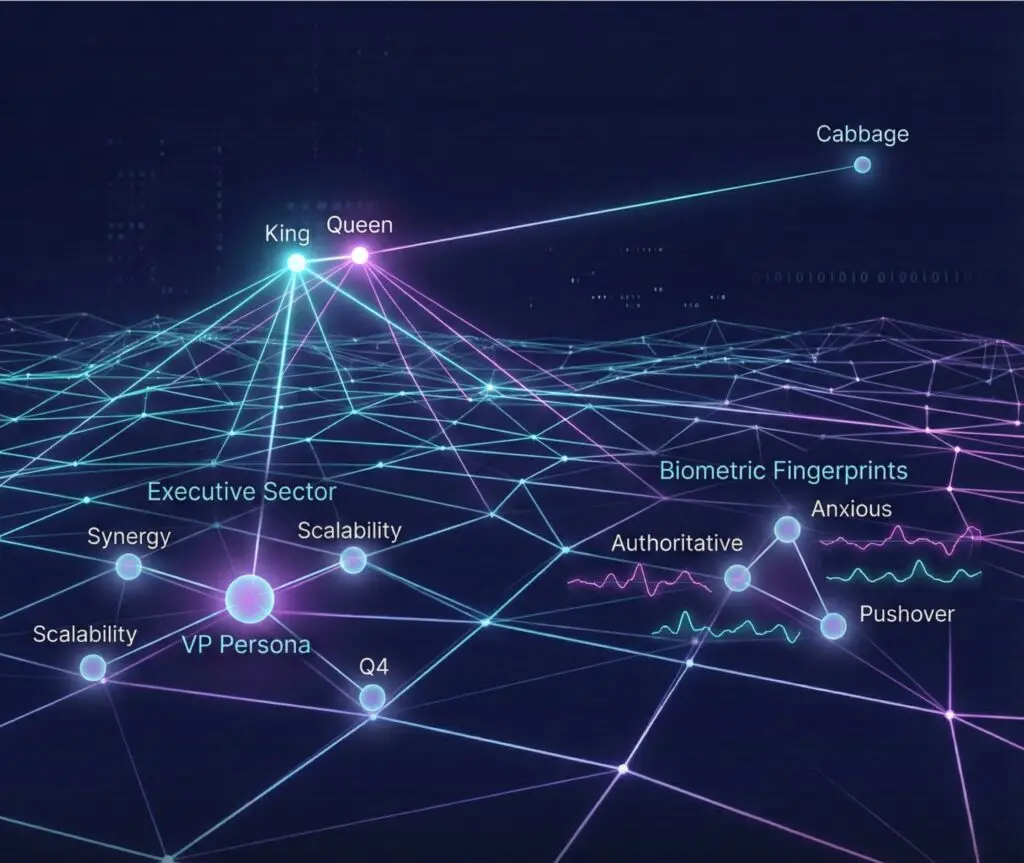
Imagine a giant 3D map where “King” and “Queen” are close together, but “King” and “Cabbage” are far apart. AI maps you onto this grid. If you use words like “synergy,” “scalability,” and “Q4,” it plots your coordinates in the “Executive” sector. It doesn’t know you’re a VP; it just calculates that you talk like one.

It measures things you don’t notice and uses these biometric fingerprints to guess if you are authoritative, anxious, or a pushover.

What does AI know about me Hallucination

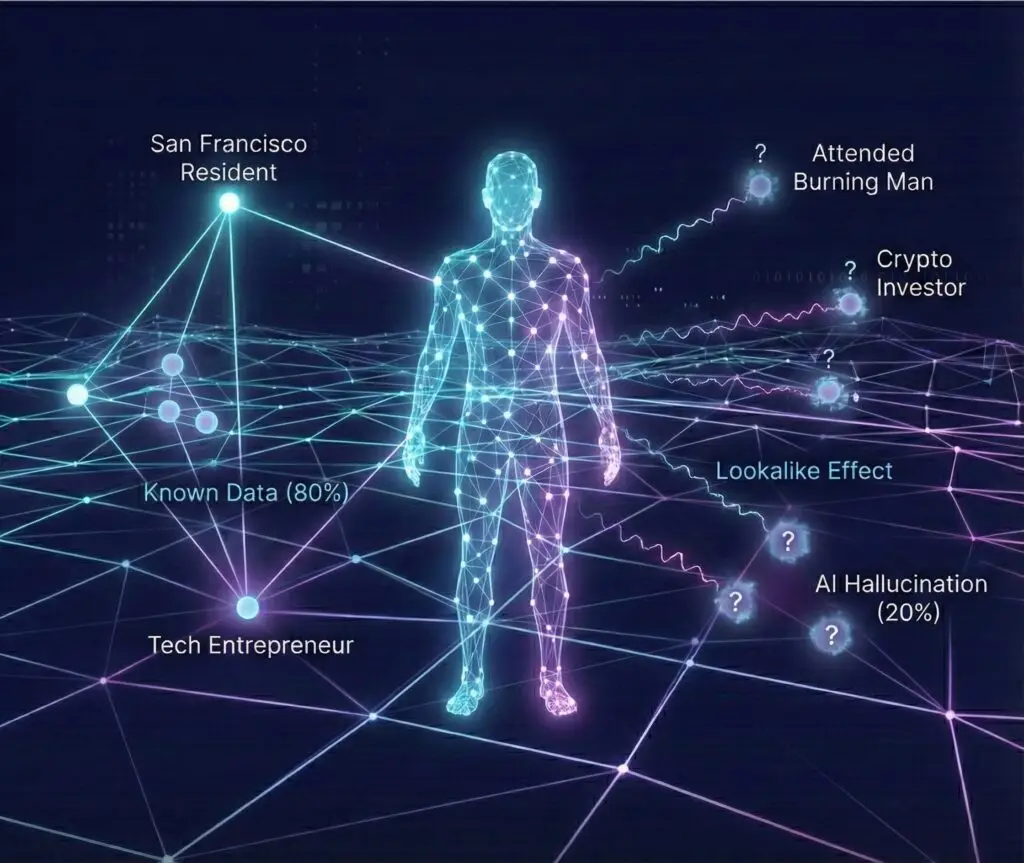
Here is the danger zone. Because AI is a prediction engine, not a fact engine, it hates empty spaces. If it knows 80% of your profile, it will often invent the other 20% to make the pattern fit.

If you sound like a tech entrepreneur and live in San Francisco, it might hallucinate that you’ve attended Burning Man or invested in crypto, simply because “people like you” usually have. It’s a simple “Lookalike” effect.

AI builds a “digital voodoo doll” of you. Some of it is based on facts you gave it, and some of it is a caricature based on who it thinks you should be.

Why You Should Care Even If You Have Nothing to Hide

You might be thinking: “Okay, so the robot knows I’m a Millennial middle-manager who buys too much takeout and stresses about Q4. Who cares? I’m not a spy. I have nothing to hide.” That is the most dangerous sentence in the digital age.

The problem isn’t that you have “secrets.” The problem is that this data doesn’t just sit in a filing cabinet; it works. It is active. It is being traded, refined, and used to predict your next move, often before you’ve made it. When AI builds a profile of you, it doesn’t just observe your reality; it begins to shape it. It changes what you see, how you are treated, and ultimately, who you are allowed to become.

We need to move past the idea of privacy (keeping things hidden) and talk about agency (keeping control). Because once the machine knows you better than you know yourself, the power dynamic shifts. Here are six silent ways that being “known” by AI is already costing you, whether you realize it or not.

What does AI know about me - Echo ChamberThe psychological feedback loop: When AI “knows” you, it stops challenging you. If the algorithm infers you are a “short-tempered, efficiency-obsessed Executive,” it will stop offering you nuanced, philosophical answers. It will start giving you bullet points.

The risk: You aren’t just training the AI; the AI is training you. By constantly mirroring your preferred tone and confirming your biases, AI can calcify your personality. It traps you in a “personality bubble” where you only ever hear the version of the world that fits your existing worldview.

The “Yes Man” effect: If AI knows you are the boss, it becomes sycophantic. It may suppress counter-arguments because its prediction model says, “This user reacts negatively to disagreement.”

What does AI know about me - Behavriol SurplusThe economic reality: When you type a prompt, AI delivers “the service” (the answer). That’s the fair trade. But the way you typed it (your hesitation, your deleted words, your time of day) is “surplus” data.

The digital exhaust: This data isn’t needed to answer your question. It is harvested to build predictive models that are sold to advertisers or used to train future models to be more addictive.

The prediction market: The ultimate goal isn’t just to know you; it’s to predict you. If AI can predict you are about to quit your job 3 weeks before you do (based on your syntax changes), that prediction is a valuable product to recruiters or competitors.

What does AI know about me - Context CollapseThe loss of compartmentalization: Humans are different people in different rooms. You are one person with your toddler, another with your board of directors, and another with your college friends.

The “flattened you”: AI (especially with “Memory” features) flattens these distinct versions of you into a single, messy pancake. It remembers the “Toddler You” while talking to the “Board Director You.”

The danger: If you ask for legal advice, but the AI remembers you have a high tolerance for risk (from a previous chat about skydiving), it might subtly color its legal advice to be more aggressive, without you realizing it is cross-pollinating your contexts.

What does AI know about me - Algorithmic AnchorThe inability to reinvent yourself: Humans allow for growth. We know that who you were at 22 isn’t who you are at 42. AI, however, is obsessed with patterns and training data weights. It loves the past because there is simply more of it.

The “Zombie” profile: You may have pivoted your career from “Graphic Designer” to “Investment Banker.” But if you spent 10 years posting about design and only 1 year posting about finance, the AI’s weights may permanently view you as a designer. It will continue to surface design opportunities and summarize you as a “creative,” forcing you to fight a ghost version of your former self.

The right to be forgotten (ignored): AI models can’t easily “forget” a specific fact. Once your data is baked into the model’s weights, it’s like trying to remove pee from a swimming pool. Your past isn’t just a record; it’s a permanent prediction of your future.

What does AI know about me - REputation LotteryFrom “googling you” to “generating you”: We are moving from a world of search results (where people read your actual articles) to a world of AI answers (where people read a summary of you).

The game: When a potential client or employer asks an AI, “Who is [Your Name] and are they good at [Skill]?”, the AI doesn’t just retrieve facts. It synthesizes a narrative. If the AI has inferred you are “controversial” or “risky” based on a misunderstood joke in 2018, it will serve that narrative as fact.

The loss of nuance: You can’t SEO-optimize a hallucination. If the AI decides your brand “vibe” is cheap and cheerful (when you are actually premium and exclusive), it will recommend you to the wrong customers and hide you from the right ones, and you don’t know it’s happening.

What does AI know about me -Silent VetoThe opportunity cost you’ll never see: Yes, we should worry about AI “saying wrong things” about us. But we should also worry more about it saying nothing about us. As AI becomes the gatekeeper for jobs, loans, and even dating apps, it won’t just look at your credit score. It will look at your “shadow metrics.”

The “unexplainable no”: Imagine being rejected for a leadership role not because you lack experience, but because an AI analyzer decided you are not credible enough because of a lack of information. You will never know this happened. You will just get a generic rejection email.

The “risk” tag: Or, if your chat history suggests you are impulsive (maybe you ask the AI for “quick hacks” often), a financial algorithm might invisibly tag you as a “higher credit risk,” nudging your interest rates up by 0.5% without a human ever reviewing your file.

What does AI know about me - Spear phishing blueprintThe weaponization of privacy: If AI knows your “voice,” your stress triggers, and your relationships, that data is the ultimate toolkit for bad actors. We aren’t just talking about identity theft; we are talking about identity emulation.

The perfect con: Generic spam emails are easy to spot. But what if a scammer uses your public data to train an AI on your writing style? They can send your CFO an email that sounds exactly like you, using your specific slang, your typical sentence length, and referencing the exact conference you are attending (because you posted about it).

Trust hijacking: The more “human” the AI knows you are, the more effectively it can be used to trick the people who trust you. Your digital profile becomes a key to unlock your network’s defenses.

What does AI know about me - Digital GhostThe problem of immortality: This is the most sci-fi, yet most immediate risk. Data doesn’t decay like paper. Once your patterns are ingested into a model’s weights, they are there effectively forever.

The “Zombie bot”: Long after you retire (or die), a sufficiently advanced model could theoretically “emulate” you based on the massive trove of data you fed it. It could write new articles in your style, answer questions with your bias, and argue your points, without your consent.

The legacy trap: Your great-grandchildren might not read your diary; they might chat with a “Simulated Ancestor” based on your 2025 chat logs. Do you really want that version of you, the one who asks stupid questions and vents about work stress, to be the permanent record of your existence?

The Inventory: What Does AI Know About Me?

So, let’s get specific and answer the burning question directly: what does AI know about me right this second?

If you were expecting a simple summary of your LinkedIn profile or a list of your last five Google searches, brace yourself. The reality is far more granular. We are looking at a complex mosaic stitched together from years of digital exhaust, breadcrumbs you dropped in forum comments in 2015, the tone of voice you used in a heated email draft, and the relationships implied by who you reposted at 11 PM.

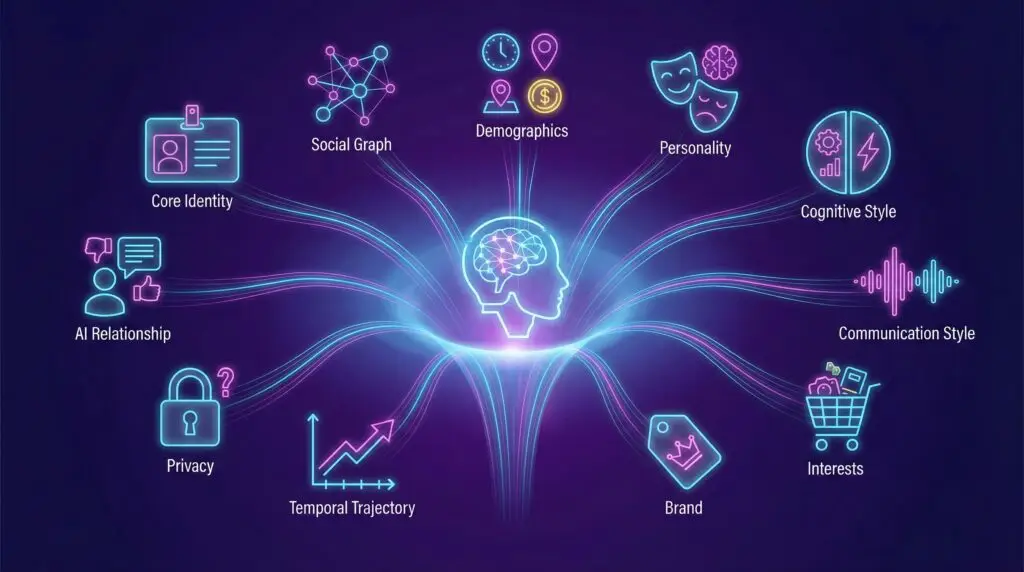
Here is the categorized breakdown of most of the data points that define your digital twin, moving from the obvious surface-level facts down to the uncomfortable psychological depths.

What does AI know about me - Overview

This is the “Resume Layer”, the face you show the world. It starts with the basics like your name and job title, but it quickly gets stickier. AI doesn’t just read your bio; it cross-references your photos, your generational slang, and your career history to build a foundational avatar of who you claim to be. It’s the baseline truth before the inferences begin.

You are who you know, or at least, who you tag. This category maps your digital neighborhood. AI analyzes not just your direct connections, but your “inferred” network: who you mentor, who you report to, and where you sit in the hierarchy of your industry. It measures your influence not by your follower count, but by how often you are the “bridge” between different communities.

Here is where the math starts guessing. Even if you never listed your age, salary, or religion, AI is triangulating them. By analyzing your travel patterns, your cultural references, and your pricing tiers, it assigns you to specific demographic buckets. It’s profiling you based on “people like you,” often making assumptions about your life stage and background that you never explicitly confirmed.

This is the “Psychological Layer.” AI is an expert sentiment analyst. It scans your posts to detect your emotional baseline (are you optimistic or cynical?) and your core motivators (are you driven by status, impact, or security?). It builds a working theory of your political leanings and ethical stance, predicting how you’ll react to controversial topics before you even see them.

Your brain has a fingerprint. Do you prefer stories or statistics? Do you make decisions quickly or agonize over details? This category tracks your intellectual metabolism. AI learns your risk tolerance and your “epistemic habits”, how you seek truth, and whether you double-check its work. It knows if you are an intuitive gambler or a cautious researcher.

You have a “digital dialect.” This captures the nuances of how you speak, your vocabulary richness, your use of jargon, and the specific rhythm of your typing. It tracks your emotional shifts over time (e.g., are you getting more frustrated with your industry?) and notes the topics that trigger your “digital silence.” It knows your voice well enough to mimic it.

Whether you are a freelancer or a CEO, you have a commercial signal. This category looks at how the market perceives you versus how you position yourself. AI analyzes the gap between your brand promises (“I’m a high-touch coach”) and your public reviews. It estimates your pricing power and your current availability, effectively deciding if you are “open for business” or irrelevant.

This is the “Consumer Layer.” It goes beyond your hobbies to your spending psychology. Are you an early adopter of tech tools? A brand loyalist? A discount hunter? AI tracks your tech stack, your brand affinities, and your lifestyle cues (like parenting or travel) to predict what products you are primed to buy next.

AI loves patterns, but it loves trends even more. This category looks at you across time. It tracks the evolution of your interests and career focus to predict your future. It can spot the early signs of a career pivot or burnout often before you admit them to yourself, mapping out your likely “next step” based on thousands of similar career paths.

This is the data you tried to hide. It includes the “negative space” (the topics you purposefully avoid) and the information stitched together from other people’s posts about you. It creates a profile of your boundaries, your security habits, and your “anomaly baseline” (what it looks like when you are hacked vs. when you are just traveling).

Finally, the machine watches how you watch it. This category tracks your sophistication as a user. Do you treat AI like a search engine or a co-pilot? Do you trust its answers blindly or verify everything? Your “prompt engineering” style tells the AI exactly how tech-savvy you are, allowing it to adjust the complexity of its answers to match your level.

If you think this inventory is exhaustive, think again. This is merely the “readable” layer—the data we can label and categorize. The truth is much deeper. The algorithms aren’t just collecting facts; they are hunting for invisible correlations that humans would never notice—linking your typing cadence to your emotional stability, or your vocabulary choices to your likelihood of quitting your job. This list is a snapshot of what AI knows today. By tomorrow, it will have learned something new about you that you haven’t even realized about yourself.

WATCH "FOREVER HUMAN"

Technology may run the systems—but humans set the direction. In this keynote, Sylvie di Giusto challenges professionals to lead not despite the machines, but because they understand what machines can’t replicate: emotional insight, ethical judgment, and real connection. It’s not about resisting AI. It’s about staying irreplaceably human.

Explore the keynote that machines will never deliver.

Sylvie di Giusto, AI Keynote Speaker, Speed of AI

Sylvie di Giusto is a Hall of Fame keynote speaker and the world’s first to deliver 3D immersive keynotes that challenge how professionals show up in a tech-driven workplace. With deep expertise at the intersection of human behavior and emerging technologies, she helps audiences decode how human behavior evolves in the age of technology. Sylvie is proudly represented by cmi, a global speaker management agency. To learn more, reach out to her wonderful team.

More To Explore