How AI and Trust Are Reshaping Credibility in the Digital World
Trust used to be easier. You saw someone speak. You met them in person. You read an email and assumed a human wrote it. A photo looked real because, well, someone had taken it. Today, that assumption no longer holds.
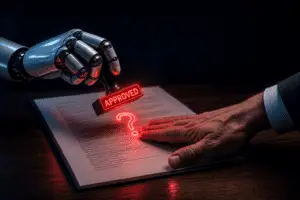
Artificial intelligence can now generate emails, clone voices, create videos, edit images, and produce entire presentations that look and sound convincingly human. Which means something subtle but powerful is happening beneath the surface of business relationships. We are entering a world where AI and trust are becoming deeply connected. And in that world, the question people quietly ask is no longer: “Is this impressive?” The real question is: “Is this real?”
KEY TAKEAWAYS
- AI and trust are becoming inseparable in professional relationships
- Deepfakes, automation, and generated content increase skepticism
- Clients increasingly question what is authentic and what is AI-generated
- Transparency is becoming a new credibility signal
- Trust is shifting from polish to authenticity
- Leaders and professionals who embrace the human fingerprint will stand out
When Everything Can Be Generated, Everything Becomes Questionable
Artificial intelligence is extraordinarily good at producing content. Emails. Photos. Videos. Voice recordings. Reports. Entire strategies. What once required hours of human work can now appear instantly. And while that efficiency is impressive, it also introduces a new challenge. When anything can be generated, it becomes harder to know what is genuine. The very signals we once relied on to evaluate credibility, polish, professionalism, even expertise, are now easier than ever to simulate.
A perfectly written message might have been drafted by AI. A headshot might be AI-generated. A testimonial video might be cloned. A product photo might be synthetic. Even insights, strategies, and thought leadership can now be produced in seconds, making it increasingly difficult to distinguish original thinking from automated assembly.
Individually, none of these tools are necessarily problematic. In fact, many of them are incredibly useful. But collectively, they create a new dynamic between AI and trust. When the cost of producing something convincing drops close to zero, the value of believing it changes as well.
Clients, colleagues, and teams begin to question what they see. Not because they are cynical, but because the technology now makes skepticism rational. In many ways, AI is quietly shifting the burden of proof. Instead of assuming authenticity, people increasingly look for signals that something is real, human, and authentic.
The Quiet Skepticism Growing in Every Industry
This shift is subtle, but it is happening everywhere. A client reads a beautifully written proposal and wonders, “Did they write this, or did AI?” A recruiter sees a polished LinkedIn profile and wonders, “Is this person actually this accomplished?” A consumer watches a testimonial video and wonders, “Is this voice even real?”
But the skepticism goes deeper than content alone. People are beginning to question signals they once trusted instinctively. A perfectly edited photo might be synthetic. A confident voice on a video call might be cloned. A polished article might have been assembled in seconds by a machine that never experienced the ideas it describes. This is the new reality of AI and trust. Perfection used to signal professionalism. Now it sometimes signals automation.
What makes this shift particularly powerful is that trust rarely collapses dramatically. It erodes quietly. A small moment of doubt here. A subtle hesitation there. A question that lingers longer than it used to. Over time, these micro‑moments of skepticism accumulate. And when people sense that something may not be authentic, trust begins to weaken. Not dramatically. Quietly.
Why Authenticity Suddenly Matters More
Here’s the fascinating paradox. As artificial intelligence becomes more capable of producing flawless outputs, audiences are increasingly drawn to things that feel human. Not perfect. Human. A presentation where the speaker forgets a line and laughs. An email that sounds like an actual person wrote it. A conversation where someone pauses, thinks, and responds honestly instead of delivering a scripted answer.
These small signals matter because they remind us that there is still a human behind the interaction. They signal presence. Attention. Responsibility. When someone hesitates before answering, adjusts their thinking in real time, or reacts emotionally in a conversation, we instinctively recognize something machines cannot replicate: genuine human engagement.
There is another reason authenticity is becoming more valuable. AI tends to optimize for smoothness. It removes friction, uncertainty, and imperfection. Yet those very imperfections are often the signals that create credibility. A slightly messy explanation can reveal original thinking. A spontaneous comment can show real understanding. A moment of vulnerability can build connection faster than a perfectly polished statement. In other words, the qualities that once looked unpolished may soon become the most trusted signals of all.
In the conversation around AI and trust, authenticity is becoming one of the most powerful credibility signals available. Not because technology is failing, but because the more sophisticated machines become, the more people search for evidence that a real human mind is still involved.
Trust Is No Longer Built by Polish Alone
For years, professionalism often meant polishing everything. Perfect decks. Perfect language. Perfect visuals. The more refined something looked, the more credible it appeared.
But in an environment shaped by artificial intelligence, polish alone no longer guarantees credibility. In fact, extreme polish can sometimes trigger the opposite reaction. When everything sounds flawless, others quietly begin to wonder whether the work reflects genuine thinking or automated assembly.
People want to know: Who did the thinking? Who checked the work? Who stands behind the outcome? This shift reflects a deeper change in how credibility is evaluated. In the past, perfection signaled competence. Today, authenticity signals trust. Clients and colleagues are increasingly interested in the process behind the output. They want to understand who interpreted the information, who challenged the assumptions, and who ultimately decided that the result was worth standing behind. This is where AI and trust intersect most clearly. Clients don’t just want impressive results anymore. They want to know there is a human behind the decision.
In many ways, artificial intelligence is quietly redefining what professionalism looks like. It is no longer about producing the most polished output. It is about demonstrating ownership of the thinking behind it. The professionals who explain their reasoning, acknowledge the tools they used, and confidently stand behind their conclusions often earn more trust than those who simply present something that looks perfect.
Transparency Is Becoming a Trust Signal
Interestingly, something simple is emerging as one of the most powerful ways to build trust today: transparency. Professionals who openly acknowledge how they use technology often gain credibility rather than lose it. When people feel that nothing is being hidden from them, their natural skepticism softens. Transparency signals confidence. It tells others that the professional is comfortable explaining how the work was done and is not trying to disguise the role technology played.
Saying something like, “I used AI to help draft this, but I reviewed it and adjusted the conclusions,” or “We used AI to analyze the data, but the strategy decisions were made by our team,” signals confidence. It reframes AI from something mysterious into something practical. Instead of wondering what part was automated, clients understand where technology helped and where human judgment took over.
Transparency also restores something that automation quietly removes: accountability. When professionals explain their process, they reveal who evaluated the information, who interpreted the results, and who ultimately took responsibility for the final outcome. That clarity helps people relax because they know a real person is standing behind the work.
It shows that the professional understands both the power and the limitations of technology. They are not pretending the tool is smarter than it is, and they are not pretending they did everything manually either. That balance communicates maturity and credibility.
In the relationship between AI and trust, honesty is becoming a competitive advantage. As more work becomes automated, the professionals who openly explain their thinking, their tools, and their decisions will increasingly stand out as the ones people feel comfortable trusting.
What This Means for Professionals and Leaders
The rise of artificial intelligence does not eliminate trust, but it does change how trust is built. In a world where images can be generated, voices cloned, and messages automated, people begin searching for signals of authenticity. That means professionals who stand behind their thinking, show their reasoning, and communicate transparently will increasingly stand out. Because when everything can be automated, the most valuable signal left is still human accountability. Here are some practical principles to keep in mind.
- 1. Be transparent about how you use AI
Trying to hide AI involvement often creates more suspicion than simply acknowledging it. When professionals openly explain how AI supports their work, clients feel included rather than misled. Transparency matters because uncertainty is the fastest way to weaken trust. When people are left guessing whether something was written, analyzed, or generated by a machine, doubt fills the gap.
Being clear about where AI helped and where human judgment took over removes that uncertainty. It shows confidence in both your process and your thinking. Instead of worrying about being judged for using AI, professionals who disclose it demonstrate maturity and control. If transparency is missing, however, the opposite can happen. The moment someone discovers that AI was involved but never mentioned, trust can drop quickly because it feels like something was hidden.
- 2. Always add your human interpretation
AI can generate content, but insight should still come from you. Explain why a recommendation matters, what you noticed in the data, or what your experience suggests. This step is crucial because raw AI output rarely carries meaning on its own. It presents possibilities, patterns, or summaries, but it does not decide what truly matters.
Your interpretation is where value appears. When professionals explain how they think about the information, they demonstrate expertise, judgment, and accountability. Without that human layer, work can start to feel interchangeable. If everyone can generate the same AI output, the differentiator becomes the person who explains it best and translates it into real decisions.

- 3. Show your reasoning
People trust decisions more when they understand the thinking behind them. Walk clients or colleagues through the process, not just the outcome. When people only see the final answer, they may question whether the conclusion was carefully considered or simply generated by a tool.
Showing the reasoning changes that dynamic. It reveals the path that led to the decision, the questions that were asked, and the assumptions that were challenged. This transparency strengthens credibility because it demonstrates that a human mind evaluated the information. Without this explanation, decisions can feel opaque, which makes it easier for doubt to creep in.

- 4. Let your personality show
Perfect language can feel artificial. Small moments of humanity, humor, or personal perspective remind people they are interacting with a real person. These signals become increasingly important in a world filled with automated content.
Personality communicates presence. It shows that someone is engaged, thinking, reacting, and responding in real time. When communication becomes too polished or too uniform, it can unintentionally resemble AI-generated text. Allowing natural tone, voice, and perspective to appear in conversations or writing reassures people that there is genuine human engagement behind the message.

- 5. Stand behind the outcome
Technology can assist your work, but responsibility remains human. Leaders and professionals who clearly take ownership of decisions strengthen trust. When someone confidently says, “This is the recommendation I stand behind,” it signals accountability.
That sense of ownership matters because AI can generate suggestions, but it cannot carry responsibility for consequences. Clients and colleagues want to know that someone evaluated the recommendation and is willing to defend it. Without that ownership, decisions may appear automated, which can weaken confidence in the outcome.

- 6. Protect the human moments
Conversations, listening, and genuine interactions remain powerful trust builders. In a digital environment, these moments often carry even more weight. When so many interactions happen through automated messages, dashboards, or AI-assisted communication, direct human dialogue becomes more meaningful.
Leaders and professionals who intentionally create space for real conversations strengthen relationships that technology alone cannot replicate. Listening carefully, asking thoughtful questions, and responding personally creates signals of attention and care. Without these moments, interactions can begin to feel transactional rather than relational, which slowly weakens trust over time.
The Real Competitive Advantage in the Age of AI
Artificial intelligence will continue to improve. It will generate better text, more convincing videos, and more sophisticated analysis. But one thing will remain difficult to automate: human accountability. The willingness to say, “I stand behind this.”
That is why the conversation around AI and trust is not really about technology. It is about credibility. Because in a world where almost anything can be generated, people are still looking for something simple: someone they can trust.
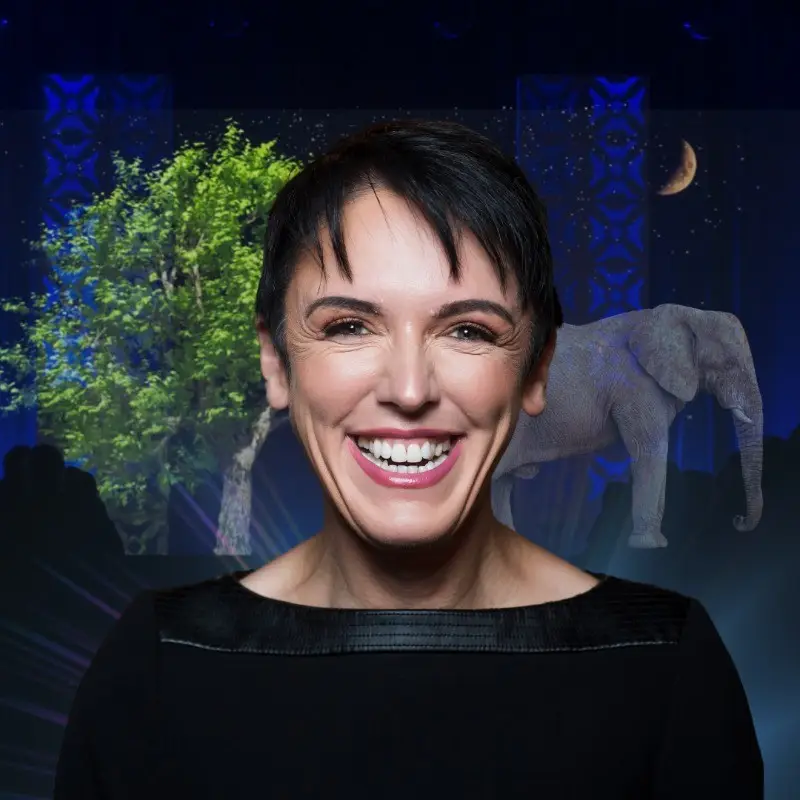
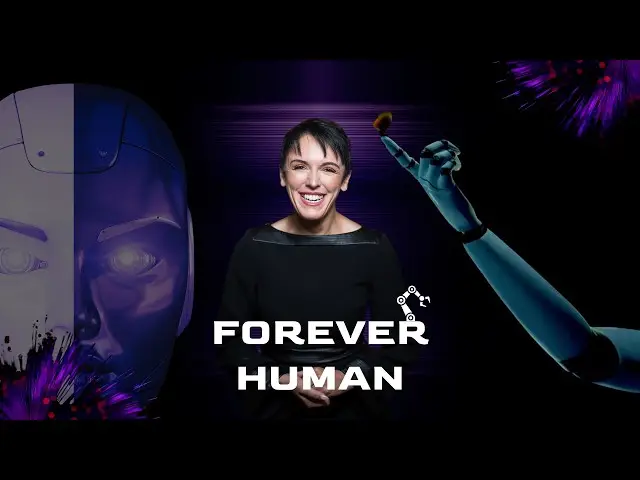
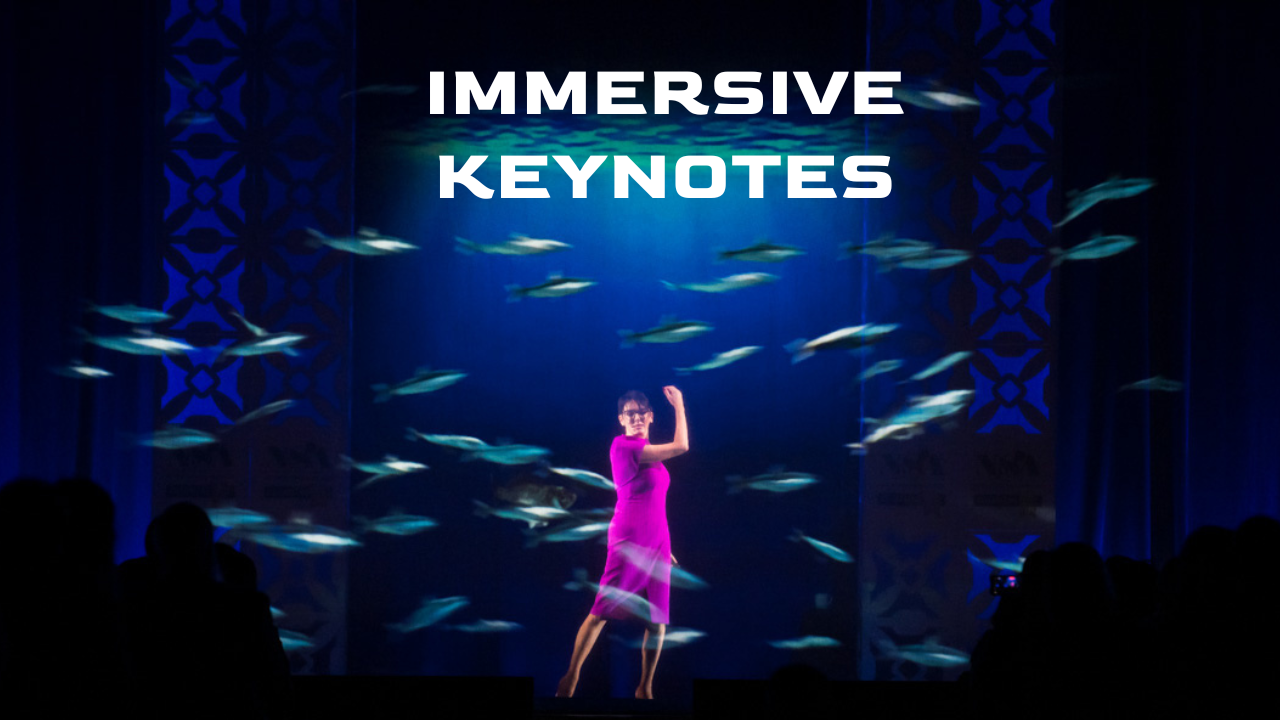
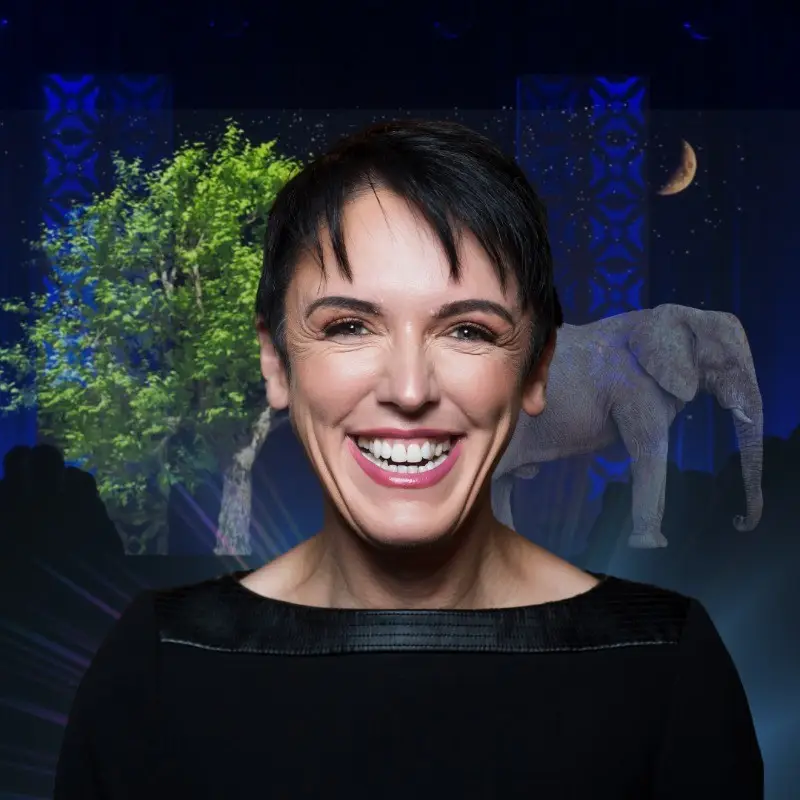
In Forever Human, Hall of Fame keynote speaker Sylvie di Giusto takes audiences inside the reality of leadership in an AI-driven world. Through a powerful immersive (or traditional) experience, she reveals how artificial intelligence is changing expectations, shaping perception, and influencing how leaders support their teams and make decisions. Organizations that explore these ideas prepare their leaders not only for technological change, but for the human transformations happening alongside it.
Hall of Fame keynote speaker Sylvie di Giusto is known worldwide for her groundbreaking 3D immersive keynote experiences that challenge leaders to rethink perception, leadership, and decision-making in an AI-driven world. Her work explores how human behavior intersects with emerging technologies, helping organizations understand how people think, decide, and collaborate as the workplace continues to evolve. Sylvie is proudly represented by the global speaker management agency CMI. To inquire about her availability, reach out to her wonderful team.