Insurance Broker Skills for the Future: What to Build Now Before the Disruption Catches Up
Talk to almost any senior broker right now, and a version of the same observation will surface. The continuing education renewal still feels like a formality. The questions on it have not changed meaningfully in a decade. The certificate prints, the renewal goes through, and the broker walks out feeling that the credential no longer maps to the work the next ten years will require. The certificate is current. The skills it certifies are not.
The skills that built the last twenty-five years of broker careers, submission processing, comparison shopping, claims liaison, or market knowledge, are increasingly being absorbed by software at machine speed. The skills that will distinguish the brokers who lead the industry over the next decade are different and usually not found in the licensing curriculum, the broker association seminars, or most brokerage internal training.
Five of them compound disproportionately over the next decade. These insurance broker skills for the future are not exotic. They are simply not what the existing infrastructure is trained for, and the brokers who recognize this and start building them now will become the trusted voices the rest of the industry calls on when the disruption matures.
KEY TAKEAWAYS
- Insurance broker skills for the future are not on the licensing exam. The exam tests for the previous era.
- Five skills compound disproportionately: explainability, climate fluency, capital structure literacy, systems thinking, and moral framing.
- Each skill is buildable through small daily practice. Thirty minutes per day for two years is the bar.
- The transactional skills the licensing exam tests for are necessary but no longer sufficient. They are the floor.
- The compounding window is now. The advantage gets smaller as the rest of the industry catches up.
- The brokers who treat the exam as the ceiling will be replaced by software. The ones who treat it as the floor become the trusted voices of the next decade.
- Insurance broker skills for the future are built through reading climate research, talking to adjacent specialists, and practicing model challenge, not through broker seminars alone.
The Skills Gap Hiding in the Renewal Certificate
Walk into any education classroom for insurance brokers right now, and the curriculum has barely shifted since the early 2010s. Submission protocols. Coverage analysis. Carrier appetite. Compliance basics. The fundamentals are not wrong, but they are not enough. The broker who completes that curriculum and walks out feeling current is current against the wrong benchmark. The benchmark has moved, and the curriculum has not moved with it.
The brokers noticing this first are not the new licensees. They are the senior brokers and broker managers who have been in the industry long enough to see when a baseline shift is structural rather than cyclical. They watch algorithmic underwriting absorb the comparison work. They watch carrier appetite data stream openly through APIs. They watch climate-driven coverage gaps emerge faster than the licensing curriculum can incorporate. They renew on time. They feel the gap anyway.
Insurance broker skills for the future require admitting the gap exists. The licensing infrastructure is necessary but no longer sufficient. The brokers who will lead the industry through the next decade are the ones who treat the exam as the floor and build the ceiling on their own time, deliberately, before the disruption forces the gap into common visibility.
The next era is built on skills the exam does not measure, and possibly you have to build them on your own time.
Sylvie di Giusto
Skill #1: Explainability That Outpaces the Model
Explainability is the first skill that compounds, and it is the single most defensive against AI commoditization. The broker who can walk a client through why a model recommended what it recommended, where the model is likely wrong, and what assumptions are buried in the output, becomes the trusted voice. The broker who only delivers the model’s answer becomes redundant the moment the client’s own AI delivers the same answer faster.
Building this skill is mostly practice and adjacent reading. Pull the algorithmic underwriting output for ten placements you know personally. Compare it to your own assessment. Notice where it deviates and ask why. Read documentation from the carriers and platforms on how their models actually work, including the AI initiatives running through Lloyd’s Lab. Subscribe to one model governance newsletter that covers insurance. None of this requires a graduate degree. All of it builds the kind of judgment that lets you use AI as a tool while remaining the human who decides what to do with the output.
Insurance brokers depend on this layer because everything else compounds on top of it. Without explainability, you accept what the model produces, and the model becomes your ceiling. With it, the model becomes your floor, and your judgment becomes the differentiator.
Explainability is knowing when the model is wrong, and being able to walk a client through why, in a language they can actually understand.
Sylvie di Giusto
Skill #2: Climate Fluency Beyond the Renewal Letter
Climate fluency is the second skill, and it is the one many brokers are most uncomfortable building because the source material lives outside the industry. Munich Re publishes climate scenario research. Swiss Re publishes catastrophe loss modeling. CoreLogic publishes climate risk analytics. None of this is in the broker training material. All of it is reflected in the underwriting models that carriers and reinsurers use to decide which regions remain insurable.
The broker who has built climate fluency will be able to answer a client question that is increasingly common: “What is the climate trajectory for this risk, and what does it mean for renewability, pricing, and capacity?” The broker who has not built that fluency deflects. The deflection gets noticed, and the substantive question gets taken to someone else, often someone outside traditional brokerage who built the fluency from scratch.
Build it the same way climate-fluent advisors built it. Read two or three primary-source climate reports per quarter. Subscribe to one climate-and-insurance newsletter that publishes weekly. Have one conversation per quarter with a reinsurance underwriter or catastrophe modeler about how exposure is moving through their analysis. Insurance broker skills for the future include this layer because the climate has stopped being theoretical and started being quarterly.
Clients will trust the advisor who can read the signal, not the one who deflects.
Sylvie di Giusto
Skill #3: Capital Structure Literacy
Capital structure literacy is the third skill, and it is increasingly the one that distinguishes the broker who can advise institutional clients from the one who can only handle traditional placement. Risk no longer moves through a single channel. Captives, carriers, capital markets, parametric instruments, public-private pools, and ILS all play roles in how a sophisticated client structures coverage. The broker who understands the full chain becomes the strategic voice. The broker who only knows the carrier market is increasingly being routed around.
Three practical ways for brokers to build capital structure literacy:
Read one serious research report each quarter. The vocabulary will feel foreign at first. What is inside those reports is what your clients will be asking about within twelve months.
Have one conversation a quarter with someone who works on that newer side of the business. Their world moves faster than the broker world. What they pay attention to soon becomes broker territory.
Track what is changing in the regulations where you operate, every quarter. The rules reshape how capital flows through this industry as fast as any market shift, and the brokers who notice early get the next decade’s work.
None of this requires becoming a capital markets specialist. It requires becoming literate enough to recognize when a client’s coverage problem has a non-traditional capital answer, and to bring the right specialist into the conversation rather than defaulting to traditional placement.
The broker who can navigate captives, carriers, capital markets, and public-private pools becomes the strategic voice.
Sylvie di Giusto
Skill #4: Systems Thinking Across Climate, Code, and Capital
Systems thinking is the fourth skill, and it is the hardest to teach because it is the most distant from the existing broker curriculum. A risk no longer stands alone. It sits within three larger systems:
climate (insurance availability and exposure trajectory),
code (the AI that mediates placement), and
capital (how the deal flows through traditional and alternative structures).
A change in one system propagates into the others. A climate event reshapes the capital cost. An AI model update changes which carriers are appetitive. A regulatory change shifts the capital structure economics. Insurance broker skills for the future require systems thinking because the deal is no longer the unit of analysis. The unit is the deal inside the larger systems, and the brokers who can hold that complexity will be the trusted advisors of the next decade.
The placement is no longer the unit of analysis. The unit is the placement inside the climate, code, and capital systems that decide whether the placement still works. Most brokers are still analyzing one of three.
Sylvie di Giusto
Skill #5: Moral Framing in High-Stakes Refusal
Moral framing is the fifth skill, and it is the one most underdeveloped in broker training because the existing curriculum optimizes for placement rather than refusal. Clients are increasingly asking questions that the model cannot answer. “Why is this risk insurable while that one is socialized? Should we build, deploy, or enable a behavior that an algorithm scored favorably but a long-arc assessment warns against?” When automated procurement scores brokers on speed and price, who is articulating that explainability and restraint matter more?
The broker who can hold these conversations with substance becomes the trusted voice. The broker who deflects to “the market sets the price” becomes the one being routed around when the substantive questions arrive. Building moral framing is
partly reading philosophy and ethics,
partly practicing the articulation of restraint in language that clients can use, and
partly the discipline to refuse a placement that would compound a long-term problem, even when the immediate fee is real.
Insurance broker skills for the future include this layer because the next decade will surface ethical questions in placement at a frequency the current generation of brokers has not faced. The brokers who develop the judgment frameworks that define leadership through disruption will be the ones clients trust to make the call. The brokers who do not will be replaced by software that places risk without asking the question.
Moral framing is the discipline to articulate why a risk should not be priced when the model would optimize toward placing it.
Sylvie di Giusto
The Daily Practice That Builds All Five
The five skills are different in content but similar in how they are built. Each compounds through small consistent daily practice rather than through any single intervention. None requires a graduate degree, a sabbatical, or a major budget. All require the discipline to invest in non-transactional skill development during a period when transactional work is still producing visible returns.
A 30-minute daily practice that builds all five insurance broker skills for the future across two years:
Mondays: read one section of a climate scenario report. Munich Re, Swiss Re, or institutional reinsurer publications all work.
Tuesdays: pull a model output for a placement you know and write a short note on where the model is likely wrong. Build the explainability muscle.
Wednesdays: read one piece on capital structure, parametric instruments, or ILS. Build capital literacy.
Thursdays: practice systems thinking. Take a recent placement and write three paragraphs on how it plays out under three different climate or capital scenarios.
Fridays: read one essay on ethics, moral framing, or governance under uncertainty. Build the refusal articulation.
The brokers who invest in themselves now, will be the trusted voices the rest of the industry calls.
Sylvie di Giusto
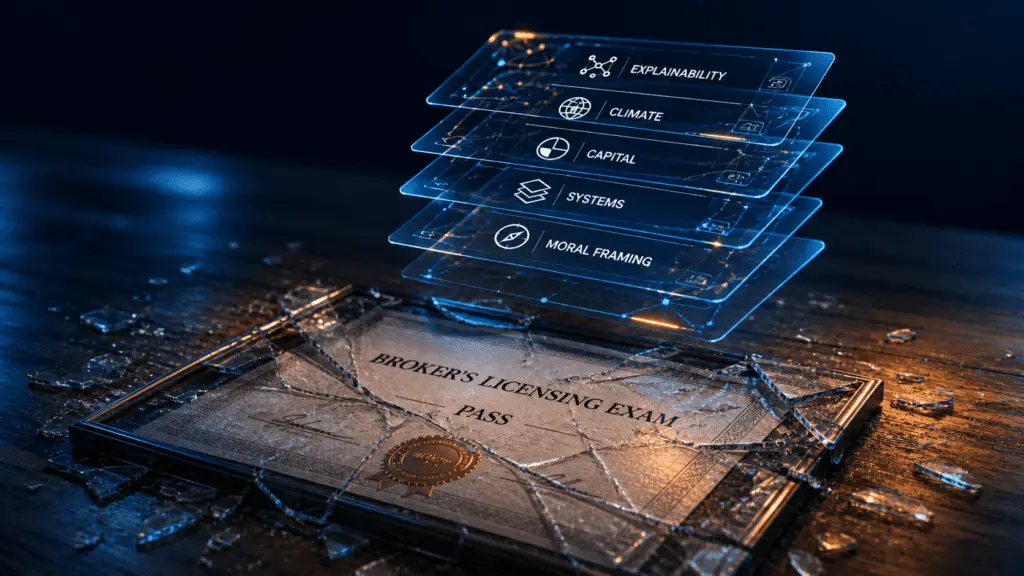
Insurance broker skills for the future are not the skills the existing infrastructure trains for. For right now, they are the skills you have to build deliberately, on your own time, in the quiet years before the disruption makes the gap obvious. Each is buildable through daily practice. Together, they produce a positioning that the transactional broker cannot retrofit when the gap becomes undeniable.
Most brokers will defer because the immediate reward is invisible. The small group who do not defer will compound an advantage that becomes the basis of their professional success over the next decade. The window is open right now, and the early movers know it.
Frequently asked questions
What insurance broker skills will be most valuable in the next decade?
Five skills compound disproportionately. Explainability, walking a client through why a model made a recommendation and where it might be wrong. Climate fluency, understanding coverage gaps and the regions facing permanent re-pricing. Capital structure literacy, knowing how risk flows between captives, carriers, capital markets, and public-private pools. Systems thinking, evaluating risk inside the climate, code, and capital triad. Moral framing, the discipline to refuse a placement the model would optimize toward but the long-arc judgment warns against. The licensing exam tests for none of these. The brokers who build them on their own time will define the industry by 2030.
How can insurance brokers prepare for AI replacing routine work?
AI is absorbing the access-to-information layer of the broker role at machine speed. Submissions, comparisons, claims triage, all increasingly handled by software. The defensive move is to invest in the layers AI structurally cannot occupy. Judgment under uncertainty. Trusted long-arc relationships. Articulating why a risk should be insurable when the model would optimize toward exclusion. Insurance broker skills for the future are not the transactional skills the licensing curriculum tested for. They are the skills that produce the moments where clients trust you to make a recommendation the model cannot defend on its own.
What should I read to develop the human skills insurance brokerage will reward?
Two or three Munich Re or Swiss Re climate scenario reports per quarter will build climate fluency faster than any course. One book per year on systems thinking will change how you read placement decisions. One conversation per quarter with a parametric structurer, capital markets specialist, or model governance researcher will compound across years. Insurance broker skills for the future are built through reading and adjacent conversations, not through broker association seminars alone. The seminars cover the floor. The skills you read on your own time become the ceiling.
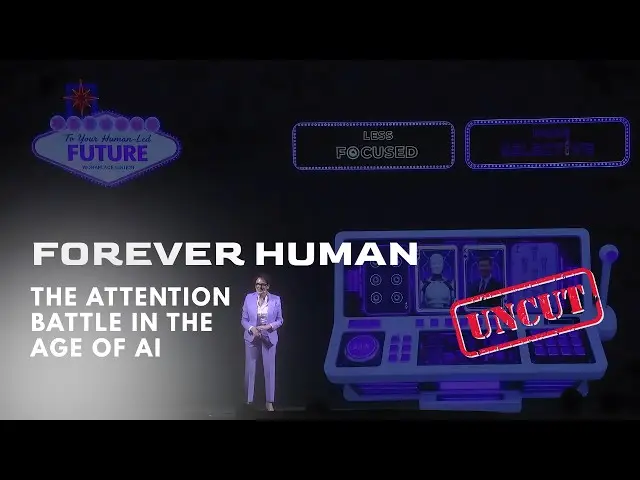
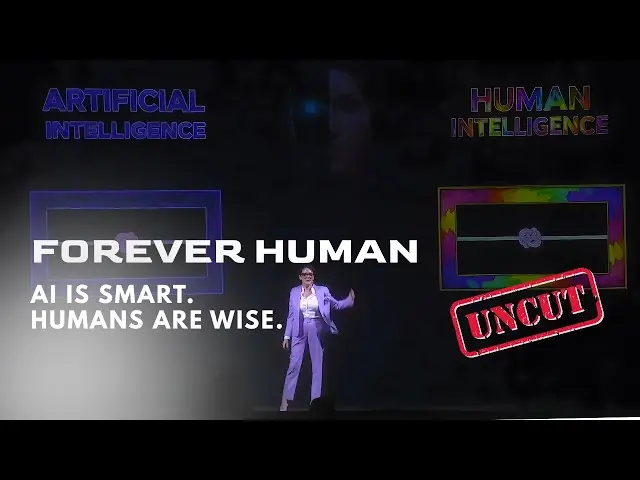
Hall of Fame keynote speaker Sylvie di Giusto explores these shifts in her keynote “Forever Human“, where audiences experience firsthand how artificial intelligence is reshaping expectations, perception, and leadership behavior.
Sylvie di Giusto is an International Hall of Fame keynote speaker who works with executive audiences across industries on the human edge that determines who thrives through structural disruption. Her Forever Human series projects the trajectory of major industries by 2050 and examines the human professional skills that compound through the transition.
If your audience would benefit from a keynote on the human skills that decide who leads through industry disruption, the conversation starts at sylviedigiusto.com/contact.