Leadership in the Digital Age: Why Human Judgment Matters More Than Ever

Share This Post

Leadership in the Digital Age: Why Human Judgment Matters More Than Ever

Artificial intelligence can process more data in seconds than most teams could analyze in months. Dashboards update instantly. Predictions appear with a click. Algorithms recommend what to do next. For many leaders, this creates the impression that decision-making is becoming faster, smarter, and increasingly automated. But leadership in the digital age reveals something more complex.

Technology may accelerate information, but it does not replace judgment. In fact, the more insights organizations generate, the more leaders must interpret, question, and contextualize those insights. The real challenge for leadership in the digital age is therefore not simply adopting new technologies. It is understanding how human judgment, emotional intelligence, and responsibility interact with those technologies. Because while artificial intelligence can analyze information, leaders still decide what that information actually means.

KEY TAKEAWAYS

  • Leadership in the digital age requires interpreting data, not just receiving it
  • Artificial intelligence accelerates information but not wisdom
  • Leaders must balance algorithmic insight with human judgment
  • Context, trust, and culture cannot be fully captured in data
  • The speed of technology increases the importance of thoughtful leadership
  • Strong leaders guide teams through complexity rather than outsourcing decisions

Technology Moves Faster Than Leadership

Artificial intelligence excels at speed. It can analyze patterns across millions of data points, simulate scenarios, and identify trends in seconds. For operational tasks, this capability is extraordinary. But leadership in the digital age is not defined by speed alone.

When information arrives instantly, leaders often feel pressure to react instantly. Teams begin moving faster simply because the systems around them move faster. Meetings accelerate. Decisions shorten. Reflection disappears. Yet meaningful leadership decisions rarely benefit from rushed thinking.

A dashboard may show declining performance. A model may predict a shift in customer behavior. An algorithm may recommend restructuring a team. Those signals matter. But interpreting them requires context, experience, and an understanding of human dynamics that data alone cannot provide. Technology can reveal what is happening. Leadership determines what to do about it.

Data Does Not Capture the Whole Story

Artificial intelligence is remarkably effective at remembering information. Algorithms can store enormous amounts of historical data and retrieve it instantly. But leadership in the digital age requires more than remembering events. It requires understanding meaning.

A report may show that a client relationship ended unexpectedly. Data may reveal declining engagement across a department. Performance metrics may suggest a sudden drop in productivity. Those numbers describe outcomes. They rarely reveal the underlying story. The tension between two departments that has been building quietly for months. The employee who lost motivation after a leadership change. The client who began reconsidering their partnership long before the cancellation appeared in the system.

These details rarely live inside dashboards. They live in conversations, observations, and human relationships. Which means leadership in the digital age requires something algorithms cannot replicate: the ability to interpret human context.

Leadership Decisions Are Human Decisions

Artificial intelligence can recommend actions. It can forecast outcomes and simulate risk. But leadership decisions rarely exist inside purely logical environments.

A leader deciding whether to restructure a team must consider morale, trust, and long‑term culture. A manager deciding how to respond to declining engagement must read the emotional signals behind the metrics. An executive evaluating a strategic change must weigh financial projections against organizational stability. These moments illustrate the reality of leadership in the digital age.

Technology can inform decisions. But leaders remain responsible for making them. Responsibility cannot be automated.

Emotional Intelligence Remains a Leadership Advantage

Artificial intelligence has become increasingly capable of identifying patterns in language, sentiment, and behavior. It can analyze surveys, evaluate written feedback, and detect emotional signals in communication. Yet recognizing emotion is not the same as understanding it.

A system may flag frustration in an employee message. A leader senses whether that frustration signals burnout, disagreement, or simply a difficult day. A model may detect hesitation in a customer interaction. A sales leader understands whether that hesitation reflects concern, confusion, or negotiation. Leadership in the digital age, therefore, relies heavily on emotional intelligence.

The ability to read nuance, interpret silence, and understand human motivations often determines whether decisions strengthen relationships or damage them. And those capabilities remain uniquely human.

What Leadership in the Digital Age Means for Leaders

The rise of artificial intelligence does not diminish the importance of leadership. It increases it. As technology produces more insights and recommendations, leaders must guide their teams in interpreting those signals responsibly. Here are some practices that define effective leadership in the digital age.

Leadership in the digital ageArtificial intelligence often presents insights with authority. Charts appear precise. Predictions appear confident. Strong leaders remind their teams that every algorithm reflects assumptions, training data, and limitations. Encouraging healthy skepticism helps teams treat AI insights as inputs rather than unquestioned conclusions. Without this mindset, organizations risk confusing technological confidence with actual certainty.

Leadership in the digital ageSpeed is one of the defining features of digital systems. Leaders who practice effective leadership in the digital age understand that not every decision should match that pace. Some decisions require reflection, discussion, and careful interpretation of human impact. Slowing down at critical moments protects organizations from reacting impulsively to automated recommendations. Thoughtful leadership often begins with a pause.

Leadership in the digital ageMost employees see dashboards, metrics, and analytics. Fewer understand what those signals truly mean. A central responsibility of leadership in the digital age is interpretation. Leaders help teams understand which signals matter, which ones are temporary noise, and how insights connect to broader strategy. Without that translation, teams may drown in information while losing clarity about priorities.

Leadership in the digital ageDigital systems generate constant alerts, reports, and notifications. Each one competes for the attention of leaders and teams. Strong leadership in the digital age involves actively protecting focus. This may mean limiting unnecessary alerts, prioritizing deep work, or clarifying which metrics truly matter. When attention becomes fragmented, decision quality declines.

Leadership in the digital ageMany organizations now rely heavily on digital tools for communication. Yet the most important leadership insights often emerge from direct conversations. Leaders who invest time in listening, observing, and engaging with their teams gain context that data alone cannot reveal. In the digital age, human dialogue remains one of the most powerful leadership tools available.

Leadership in the digital ageTeams watch how leaders respond to information. If leaders react instantly to every data signal, teams learn that speed matters more than judgment. If leaders demonstrate reflection, curiosity, and thoughtful interpretation, teams adopt the same mindset. Leadership in the digital age is therefore shaped not only by decisions themselves but by how leaders demonstrate the process of making them.

The Future of Leadership Is Still Human

Artificial intelligence will continue to evolve. Systems will analyze more data, generate more predictions, and automate more processes. These advancements will reshape how organizations operate. But leadership in the digital age will not be defined by technology alone. It will be defined by how leaders interpret that technology.

Algorithms can analyze patterns. Leaders decide what those patterns mean. And the organizations that succeed in the digital age will be those where technology expands human insight rather than replacing it.

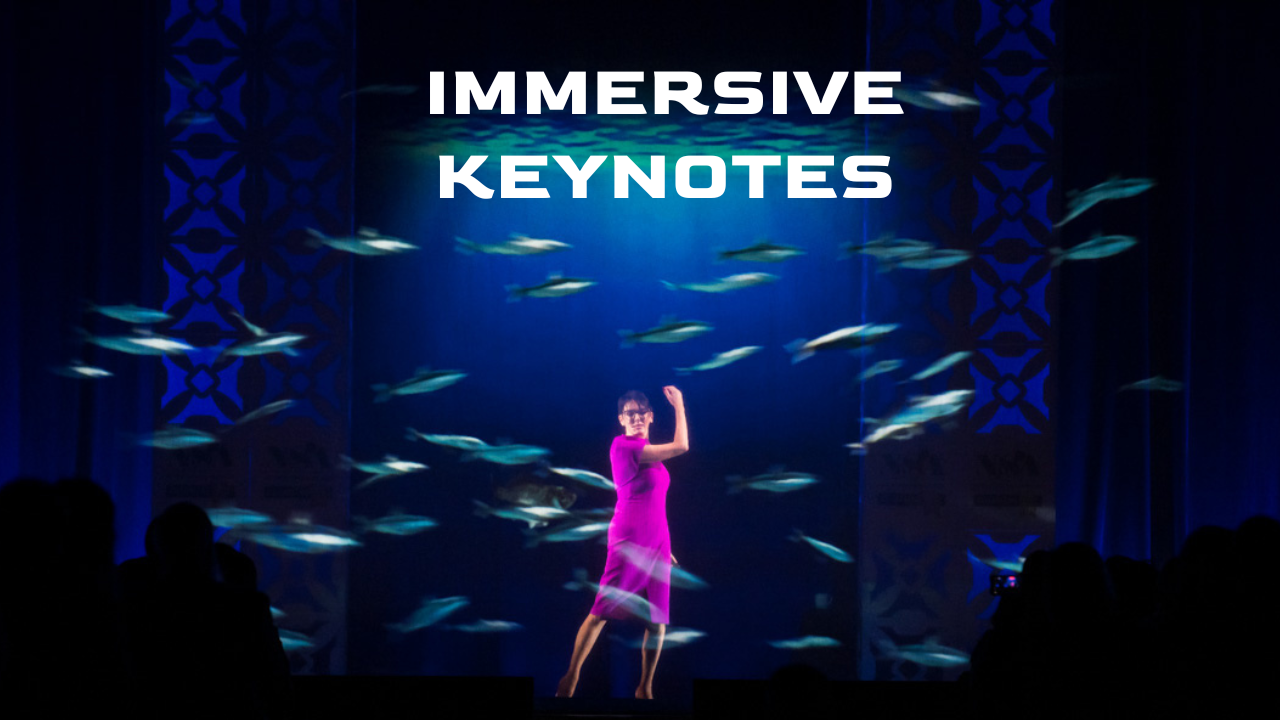
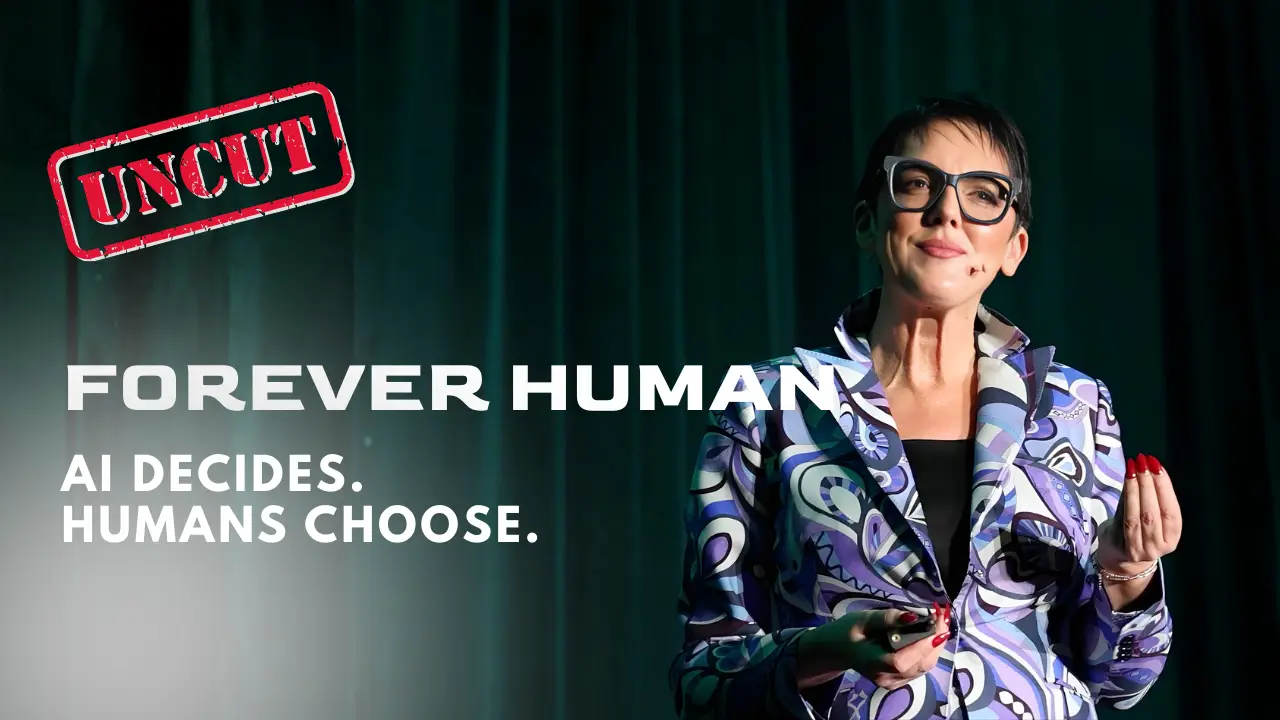
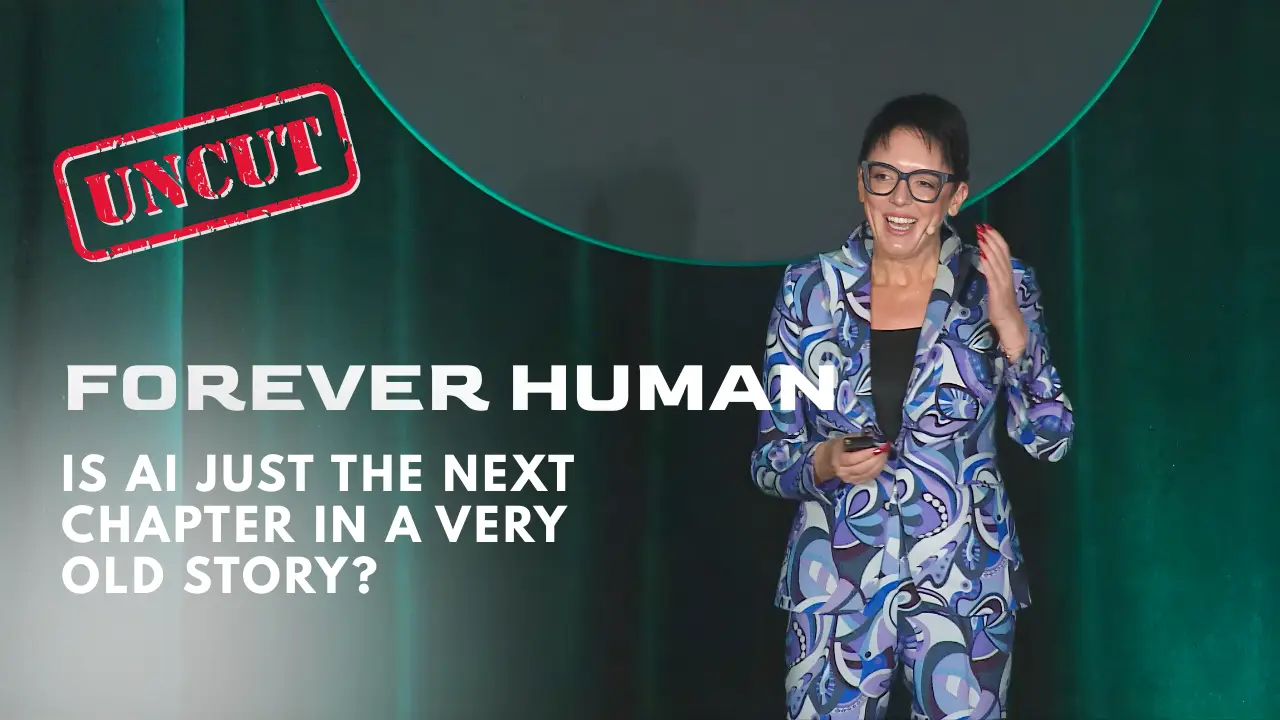
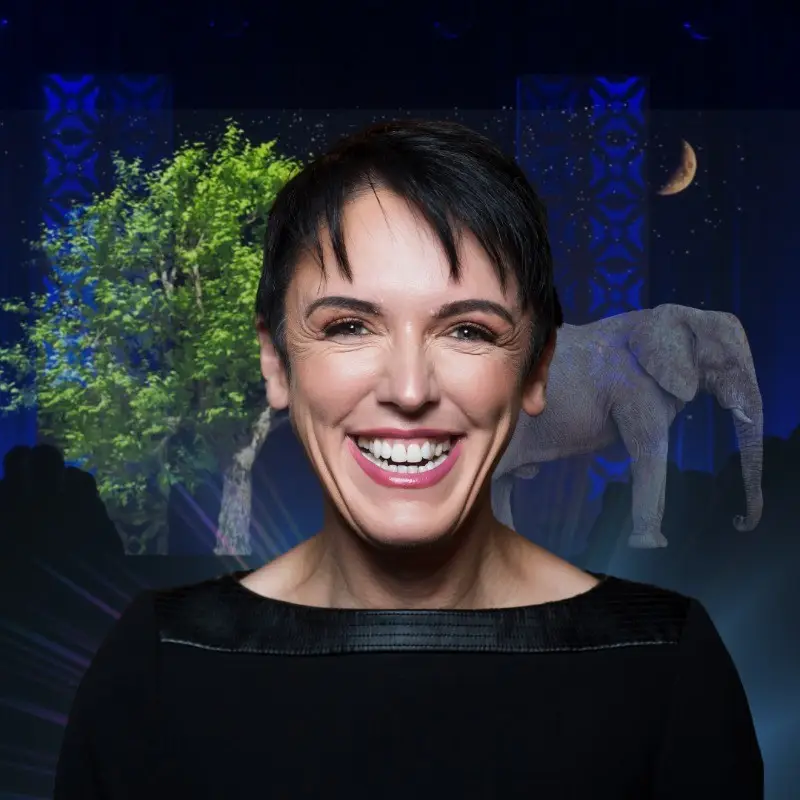
Hall of Fame keynote speaker Sylvie di Giusto examines the evolving reality of leadership in the digital age in her keynote “Forever Human.” Through an immersive experience, audiences see how artificial intelligence is redefining expectations, influencing perception, and changing the way leaders make decisions and support their teams. Organizations that explore these insights prepare their leaders not only for technological change, but for the human transformations unfolding alongside it.

Explore the keynote that machines will never deliver.

Sylvie di Giusto, AI Keynote Speaker, Speed of AI

Hall of Fame keynote speaker Sylvie di Giusto is recognized worldwide for creating groundbreaking 3D immersive keynote experiences that inspire leaders to rethink leadership, perception, and decision-making in an AI-influenced world. Her work sits at the crossroads of human behavior and emerging technologies, helping organizations understand how people think, decide, and collaborate as leadership in the digital age continues to evolve. Sylvie is proudly represented by the global speaker management agency cmi. To inquire about her availability, reach out to her wonderful team.

LATEST INSIGHTS

ABOUT THE AUTHOR

Sylvie di Giusto, CSP, CPAE, is a multi-award-winning international Hall of Fame keynote speaker who explores how artificial intelligence is reshaping human behavior. Unlike other AI keynote speakers, she approaches the topic through a human lens, examining how leadership and client relationships evolve as machines grow more capable.

BRING FOREVER HUMAN TO your evenT

Looking for an AI keynote speaker who doesn’t give a tech talk, but a people talk?

Forever Human

THE AI KEYNOTE ABOUT HUMANS

Immersive 3D keynotes by Sylvie di Giusto

EXPERIENCE THE MAGIC

*Available as either a 3D immersive keynote experience or a traditional keynote format.

More To Explore

UNCUT. UNFILTERED.

THE SPEED SHIFT

THE ATTENTION ECONOMY

THE WISDOM GAP

THE FEAR OF THE NEW

Uncut - Video 4 - Forever Human

THE TRUST CRISIS

THE SPEED TRAP

THE HUMAN OVERRIDE

Uncut - Video 1 - Forever Human

THE DISRUPTION CYCLE