How Trust and AI Are Reshaping Client Relationships

Share This Post

How Trust and AI Are Changing the Way Clients Choose Who to Work With

Today, proposals may be generated with AI. Marketing messages can be automated. Customer service responses may come from chatbots. Reports can be written in seconds. None of this is inherently negative. In fact, many of these tools make organizations faster and more efficient.

But something subtle is happening inside client relationships. As artificial intelligence becomes more involved in communication, analysis, and decision support, clients are beginning to wonder where the human thinking actually sits. In other words, trust and AI are becoming deeply intertwined in how people evaluate the organizations they work with.

The question clients increasingly ask is not simply whether something is impressive. The real question is whether the work reflects genuine thinking, judgment, and responsibility.

KEY TAKEAWAYS

  • Trust and AI are increasingly shaping how clients evaluate organizations
  • Clients are becoming more sensitive to automated communication
  • Authenticity is emerging as a powerful credibility signal
  • Transparency about technology strengthens client confidence
  • Human interpretation matters more as AI generates more information
  • Client-facing professionals must actively protect trust

When AI Enters the Client Relationship

Artificial intelligence is rapidly becoming part of everyday business operations. Sales teams use AI to draft outreach emails. Marketing departments generate campaign copy. Customer service platforms respond automatically to common questions. Analysts use AI tools to summarize large data sets and identify patterns. From an operational perspective, this makes perfect sense. AI dramatically increases speed and efficiency.

From the client’s perspective, however, something else is happening. When communication begins to feel automated, clients may start to question whether they are interacting with thoughtful professionals or simply with well-configured systems. The difference matters.

Clients rarely object to organizations using technology. What they care about is whether someone is still paying attention, thinking critically, and taking responsibility for the relationship. When AI-generated communication begins to dominate interactions, clients can quietly feel as if the relationship itself has become automated. That perception, even if unintended, slowly changes the emotional foundation of the partnership.

How Automation Changes Client Perception

Most organizations adopt artificial intelligence to improve efficiency. But efficiency alone does not build strong client relationships. Clients evaluate companies through a different lens. They notice responsiveness, attention, judgment, and understanding. They want to feel that their situation is being considered thoughtfully, not simply processed quickly.

When AI begins generating proposals, summaries, and responses, clients may begin to ask themselves subtle questions. “Did someone actually think about our situation?” or “Was this recommendation carefully evaluated?” or “Did the system simply produce the fastest possible answer?”

This does not mean that AI automatically weakens trust. In fact, many clients appreciate it when technology helps organizations move faster. The issue arises when automation replaces visible human thinking. Trust and AI intersect at the moment when clients begin to wonder who is actually behind the work. If that answer becomes unclear, confidence can weaken even if the output itself looks impressive.

Why Authenticity Is Becoming a Competitive Advantage

As artificial intelligence becomes better at producing polished outputs, authenticity begins to stand out more clearly. Clients can often sense when communication feels overly optimized or unusually uniform. Perfect grammar, perfectly structured emails, and flawless presentations may look impressive, but they can also feel strangely impersonal if they lack human context.

Ironically, small signals of human presence often build more confidence than perfectly generated communication. A thoughtful follow-up question. A comment that references something the client mentioned earlier. A moment where someone pauses and says, “Let me think about that.” These signals show that someone is engaged with the situation rather than simply delivering automated responses.

In environments where trust and AI are constantly interacting, authenticity becomes a powerful differentiator. Clients are not just evaluating results. They are evaluating attention, care, and accountability.

Clients Want to Know Who Is Thinking

One of the most important shifts happening in client relationships today is this: clients increasingly want to know who is doing the thinking. Artificial intelligence can generate suggestions, summarize information, and identify patterns. But clients still expect professionals to interpret those insights, challenge assumptions, and apply judgment. When an organization presents recommendations without explaining how they were evaluated, clients may wonder whether the work reflects expertise or simply automated output.

This is where human interpretation becomes essential. Professionals who explain how they reviewed information, what they considered important, and why they chose a specific direction demonstrate something AI alone cannot provide: discernment. Discernment builds trust because it shows that a real person evaluated the situation rather than simply accepting the fastest possible answer.

Transparency Strengthens Client Confidence

Many professionals assume that clients expect everything to be done manually. In reality, most clients understand that organizations use technology. What matters far more is transparency.

When professionals openly explain how they use AI, clients often feel more, not less, comfortable. Statements such as, “We used AI to analyze the data, but our team evaluated the recommendations,” clarify where technology helped and where human judgment took over.

Transparency reduces uncertainty. Clients do not have to guess how the work was produced or whether automation replaced thoughtful analysis. Instead, they see a clear process where technology supports professionals rather than replacing them. In the relationship between trust and AI, openness about tools and methods signals confidence and credibility.

What This Means for Client-Facing Professionals

For people working in sales, marketing, consulting, and customer experience, this shift creates both a challenge and an opportunity. Artificial intelligence will continue to become more capable. It will generate more content, more insights, and more automated interactions. But the more technology expands, the more valuable human judgment becomes in client relationships.

Professionals who actively demonstrate their thinking, interpretation, and responsibility will stand out more clearly than ever. Organizations do not need to avoid artificial intelligence to protect trust. They need to use it thoughtfully. Here are some principles client-facing professionals can apply.

Trust and AI Clients rarely object to technology itself. What they want to see is the reasoning behind recommendations. When professionals explain how they evaluated information, what stood out in the data, and how they arrived at a decision, they demonstrate judgment. Visible thinking reassures clients that someone carefully considered their situation rather than simply accepting automated output.

Trust and AI 2AI can draft messages quickly, but relationships are built through relevance. Referencing specific client situations, past conversations, and current challenges signals attention. When communication reflects genuine familiarity with the client’s world, trust grows. Without this personalization, even well-written messages can feel generic and distant.

Trust and AI Clients appreciate clarity about how work is done. Explaining where technology assists and where human expertise takes over removes uncertainty. This transparency helps clients understand that automation increases efficiency while professionals still guide the final decisions.
Trust and AI AI is excellent at producing information. Trust grows when professionals show how they interpret it. Explaining trade-offs, potential risks, and contextual factors demonstrates experience. Clients value partners who help them understand the implications behind data rather than simply presenting automated summaries.

Trust and AI Artificial intelligence can suggest options, but accountability must remain human. When professionals clearly stand behind their recommendations, clients feel reassured that someone evaluated the consequences. Ownership signals responsibility, which is one of the strongest foundations of trust in any client relationship.

Trust and AI Technology can support communication, but meaningful relationships still depend on genuine interaction. Listening carefully, asking thoughtful questions, and responding personally create moments where clients feel understood. These human exchanges often strengthen trust more than any automated system ever could.

The Future of Client Relationships in an AI World

Artificial intelligence will continue transforming how organizations work. Communication will become faster, analysis more powerful, and operations more efficient. But trust in client relationships will still depend on something technology cannot easily replicate: human accountability.

Clients want to know that someone understands their situation, evaluates the information carefully, and stands behind the outcome. And this is why the conversation around trust and AI is not simply about technology. It is about responsibility. Because in a world where systems can generate almost anything, the most valuable signal left may still be the presence of a thoughtful human mind behind the work.

In Forever Human, Hall of Fame keynote speaker Sylvie di Giusto brings audiences face-to-face with the new realities of leadership in an AI-driven world. Whether delivered as a groundbreaking immersive experience or a traditional keynote, she reveals how artificial intelligence is altering expectations, influencing perception, and changing how leaders support their teams and make critical decisions. Organizations that explore these insights prepare their leaders not just for technological disruption, but for the deeper human changes that accompany it.

Explore the keynote that machines will never deliver.

Sylvie di Giusto, AI Keynote Speaker, Speed of AI

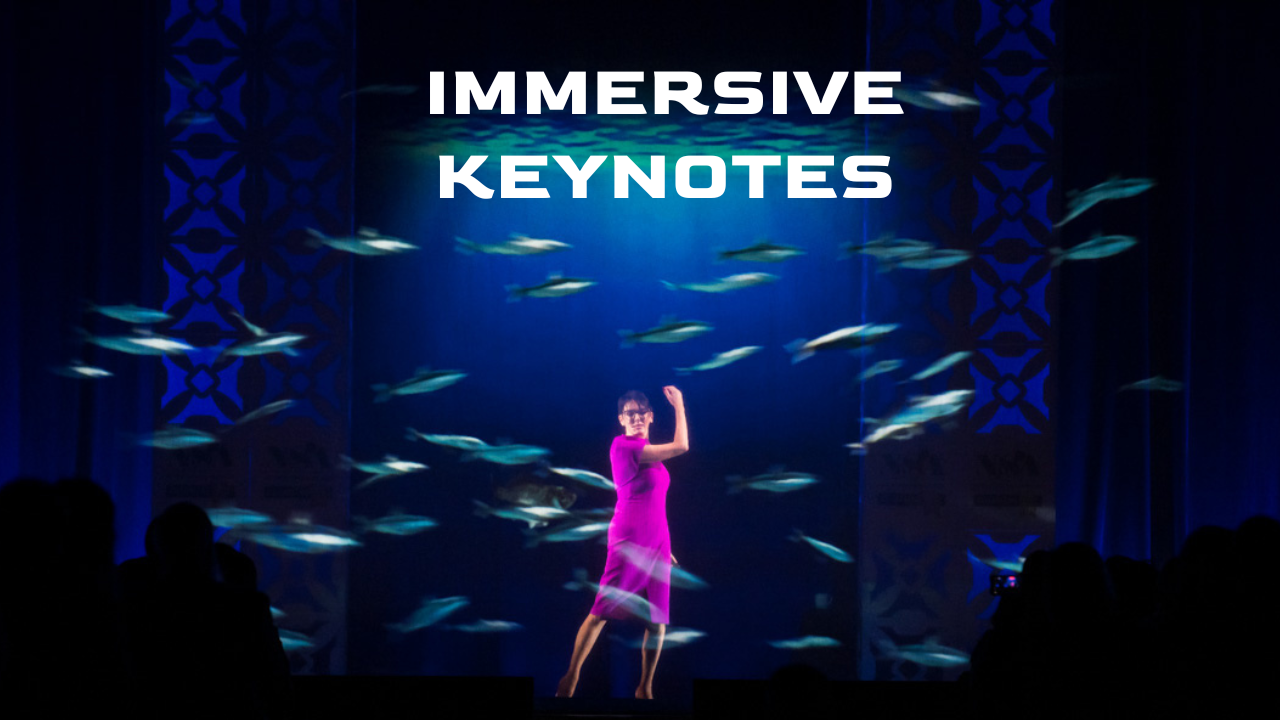
Hall of Fame keynote speaker Sylvie di Giusto is known worldwide for her groundbreaking 3D immersive keynote experiences that challenge leaders to rethink perception, leadership, and decision-making in an AI-driven world. Her work explores how human behavior intersects with emerging technologies, helping organizations understand how people think, decide, and collaborate as the workplace continues to evolve. Sylvie is proudly represented by the global speaker management agency CMI. To inquire about her availability, reach out to her wonderful team.

LATEST INSIGHTS

ABOUT THE AUTHOR

Sylvie di Giusto, CSP, CPAE, is a multi-award-winning international Hall of Fame keynote speaker who explores how artificial intelligence is reshaping human behavior. Unlike other AI keynote speakers, she approaches the topic through a human lens, examining how leadership and client relationships evolve as machines grow more capable.

BRING FOREVER HUMAN TO your evenT

Looking for an AI keynote speaker who doesn’t give a tech talk, but a people talk?

Forever Human

THE AI KEYNOTE ABOUT HUMANS

Immersive 3D keynotes by Sylvie di Giusto

EXPERIENCE THE MAGIC

*Available as either a 3D immersive keynote experience or a traditional keynote format.

More To Explore

UNCUT. UNFILTERED.

THE SPEED SHIFT

THE ATTENTION ECONOMY

THE WISDOM GAP

THE FEAR OF THE NEW

Uncut - Video 4 - Forever Human

THE TRUST CRISIS

THE SPEED TRAP

THE HUMAN OVERRIDE

Uncut - Video 1 - Forever Human

THE DISRUPTION CYCLE