AI in Reinsurance: What AI Absorbs, What It Cannot, and What That Means for the Next Decade
AI in reinsurance is no longer a debate about whether the technology will arrive. It has arrived. The technology debate is over. The strategic debate is what comes next. And the strategic question is not whether to adopt the AI stack. That decision is already made. The strategic question is what the human professional does on top of the AI floor, and most reinsurers are answering that question with silence. The investment in tooling is visible because vendors make it visible. The investment in human capability is invisible because no procurement line item rewards it. The result is reinsurers that have built one half of the strategy and assumed the other half would happen on its own.
AI in reinsurance is a necessary infrastructure, and reinsurers that fail to deploy it will be uncompetitive within the next few years. But the differentiation in five years will not be in the AI stack, because it will be commoditized. The differentiation will be what the human professional uniquely does on top of the AI, and that capability has to be built deliberately right now.
KEY TAKEAWAYS
- AI in reinsurance is absorbing routine cession analytics, exposure aggregation, model running, and documentation at machine speed.
- The differentiation in five years will not be the AI stack. It will be commoditized. The differentiation will be the human layer built on top.
- The reinsurers investing only in AI tooling are completing one half of the strategy. The other half is the human capability layer.
- AI cannot read primary climate science, navigate full capital structures, challenge models on substance, or make moral framing calls.
- The leadership timeline for human capability is moving slower than the technology timeline. The gap is widening for most reinsurers.
- AI in reinsurance is not the threat. Failing to invest in the human layer while AI absorbs the rest is the threat.
- The reinsurers that close both gaps simultaneously will define the industry through the next decade.
What AI Has Already Absorbed Inside Reinsurance Workflows
Walk through any modern reinsurance underwriting floor today, and the workflow looks visibly different from what it did five years ago. Cession analytics that used to take a junior analyst three days to assemble now move through automated platforms in hours. Exposure aggregation that used to require manual cross-referencing now surfaces through APIs. Catastrophe model scenarios that used to consume a week now run in an afternoon. Documentation that used to require dedicated paralegal time is increasingly automated.
AI in reinsurance has absorbed the routine analytical and documentation layer at machine speed. The work that defined entry-level reinsurance professional roles for decades, the work that produced visible billable hours and predictable career progression, is being completed by software at a fraction of the cost. The absorption is accelerating, not slowing.
The strategic implication is that the existing career ladder no longer maps to where the work is going. The entry-level professional role as it existed years ago has been hollowed out. The senior treaty manager role still exists, but has fewer entry points. The reinsurers that have not yet redesigned their human capability development to align with the new reality are operating under a model that no longer supports the underlying work.
AI absorbed the routine analytical layer at machine speed. The career ladder built on that layer is collapsing in slow motion.
Sylvie di Giusto
The Investment Imbalance Most Reinsurers Are Making
There is an investment imbalance running through most reinsurers right now, and it is invisible from inside the firm because every line item looks defensible. The AI tooling investment is approved because vendors quantify the productivity gains. The platform investment is approved because procurement can measure the throughput. Every investment in the AI layer is justified within the existing measurement frame.
However, the investment in the human capability layer is not justified within that frame because the return is invisible for the first few months and only becomes apparent in a few years. Usually, because the reinsurer that runs programs on climate science fluency, capital structure literacy across alternative capital, model challenge, parametric literacy, and moral framing for its professional staff sees no immediate productivity gain.
The result is a structural imbalance. The AI investment is fully funded because it survives the budget process. The human capability investment is underfunded because it does not survive the budget process. Five years out, the reinsurers that funded both will be visibly differentiated. The reinsurers that funded only the AI stack will be undifferentiated and competing on price. AI in reinsurance requires simultaneous investments, not sequential ones.
The AI investment survives the budget process. The human capability investment usually does not.
Sylvie di Giusto
How AI-Augmented Underwriting Is Reshaping the Reinsurance Role
AI-augmented underwriting deserves a closer look because it is the area where AI in reinsurance has advanced the fastest and where the implications for professional workflows are most concrete. The major reinsurers have built or are building underwriting platforms that ingest cession submissions, analyze exposure, and produce indications with limited human underwriter intervention on routine submissions. The fastest of these systems indicates, in minutes, cessions that used to take days.
The implication for reinsurance professionals is that the role becomes more strategically important than ever. The professional who understands what the AI is looking for can structure cessions and respond to outputs in ways that get the right indication. The professional who treats the AI as a black box gets indications that reflect the model’s default assumptions, which are often more conservative than the underlying risk warrants.
Three concrete shifts AI-augmented underwriting is forcing on reinsurance professionals:
Cession structuring becomes a competitive variable. Professionals who understand the AI’s data model get better indications than professionals who treat the platform as opaque.
Climate context still matters, but has to be quantified for the land. AI systems read structured data. The professional who can translate qualitative climate context into structured fields, the model rewards become the strategic interface.
Model challenge becomes part of the professional job. When the AI produces an indication that is plausibly wrong, the professional who can pull the underlying logic and challenge it on substance gets the better outcome.
AI-augmented underwriting does not eliminate the reinsurance professional. It changes what the professional has to be good at. The professionals who develop the new fluency get better outcomes for their cedents. Those who do not become a pass-through layer could increasingly be bypassed by the cedent.
AI-augmented underwriting does not eliminate the professional. It just changes what the professional has to be good at, and many have not yet practiced the new skill set deliberately.
Sylvie di Giusto
Catastrophe Model AI and the Human Role That Remains
Catastrophe model AI augmentation is the second area where AI in reinsurance has moved fast, and where the human role is being concentrated rather than eliminated. Most major reinsurers now run AI-augmented catastrophe modeling, exposure analytics, and scenario evaluation. The simple analytical problems are being handled by software. The hard cases, the ones where the AI flagged something incorrectly, where the climate science underneath has shifted faster than the model training, where the regulatory environment is in flux, are the cases where human professionals matter more than ever.
The implication is that catastrophe-model judgment is concentrated on hard cases. The simple analyses do not need human involvement because the system handles them. The hard cases, the ones where the model is plausibly wrong, where the professional needs to challenge the analytical output on substance, where the long-arc consequences of a capacity decision affect cedent relationships and regulatory acceptance, are the cases where the professional who built the judgment layer matters most.
AI in reinsurance automated the easy modeling decisions and concentrated the hard ones into the professional’s hands. The reinsurers that invested in the human capability to handle the hard cases well will be the ones whose underwriting earns the cedent’s trust through complexity, with primary-source climate research from Munich Re climate research increasingly defining the underwriting frame. The ones that did not will see retention erode quietly until a major event makes it visible.
Catastrophe model judgment in the hard cases is now the visible test of what the reinsurer actually delivers.
Sylvie di Giusto
The Human Capability Stack Reinsurers Should Be Building
If AI in reinsurance is absorbing the routine layer and concentrating the harder work in the human layer, the question is which specific human capabilities a reinsurer should develop in its workforce right now. The distinction emerging across the industry is between teams that set the frame for what AI optimizes versus teams that execute someone else’s optimization. The answer is a deliberate stack that compounds over years and produces a professional differentiated from the commoditized AI baseline.
Five capabilities that compound for reinsurance professionals in the AI era:
Climate science fluency: the ability to read primary-source climate research and translate it into capacity and pricing implications.
Capital structure literacy: the ability to navigate traditional reinsurance, retro, ILS, sidecars, and parametric instruments.
Model challenge fluency: the ability to read catastrophe model outputs critically and to challenge them substantively.
Parametric instrument literacy: the ability to evaluate when parametric and hybrid structures fit and when traditional indemnity fits.
Moral framing in capacity decisions: the ability to articulate why a risk should or should not be priced when the model would optimize differently.
None requires a graduate degree or a sabbatical. All require deliberate reinsurer investment that does not show up in the next quarter’s output but compounds powerfully across five and ten year horizons.
The AI stack is the floor.
The human capability stack is the ceiling.
Sylvie di Giusto
What Reinsurer Leadership Should Be Doing in the Next 12 Months
For reinsurer leadership, the practical question is what to do in the next 12 months. The technology investment is already in motion at most reinsurers, so the higher-leverage move is the human capability investment that has been deferred. Three concrete moves matter most right now:
First, identify the professionals in the firm who already have early signals of the human capability stack and create internal time and budget for them to deepen it deliberately.
Second, build a quarterly internal program that exposes professional staff to adjacent specialists, climate scientists, ILS structurers, parametric specialists, in ways the existing CE infrastructure does not.
Third, begin measuring professionals on the work that the AI cannot do, not on the throughput metrics that AI is making meaningless.
The reinsurers that begin now will be visibly different by 2027. The ones that defer will be visibly behind by then.
Sylvie di Giusto

AI in reinsurance is not the threat. The threat is failing to invest in the human layer while the AI layer absorbs the rest. The reinsurers that are deploying the AI stack without simultaneously building the human capability layer are completing one half of the strategy and assuming the other half will happen on its own. It will not. It requires deliberate investment in capabilities the existing measurement frame does not reward and the existing infrastructure does not teach.
The window to build that human capability layer is open right now and will not stay open indefinitely. The reinsurers that begin in the next twelve months will be visibly differentiated in the future. The ones that wait will be commoditized against AI competitors who scaled faster. The strategic decision is whether to fund the human capability work that turns the AI stack into a differentiated reinsurer rather than a faster version of the same commoditized service.
Frequently asked questions
How is AI changing reinsurance today?
AI in reinsurance is absorbing the routine cession analytics, exposure aggregation, catastrophe model running, and documentation layers at machine speed. Submission processing, exposure aggregation, model scenario running, and routine documentation are increasingly handled by software. What that frees the human professional to do is the layer the software cannot occupy. Climate science judgment, capital structure navigation, model challenge fluency, parametric instrument decisions, and moral framing in capacity decisions. The reinsurers that invest only in the AI stack are completing one half of the strategy. The other half is rebuilding what the human professional uniquely does on top of the AI floor.
What can AI not do in reinsurance?
AI cannot read primary-source climate science and translate it into capacity implications, cannot navigate the full capital structure across traditional, retro, ILS, sidecars, and parametric, cannot challenge catastrophe model outputs on substance when the science underneath has shifted, cannot make moral framing calls about geographic insurability, and cannot provide judgment when the model output is plausible but wrong. The reinsurance professionals who develop these capabilities are the ones who will work alongside AI rather than be displaced by it.
Should reinsurers invest more in AI tools or in their human professionals?
Both, but the order matters. Most reinsurers are heavily investing in the AI tooling layer because vendors make it visible and procurement makes it measurable. The under-invested layer is the human capability layer. Reinsurers that build only the AI stack will be undifferentiated within five years because the AI tooling will commoditize. Reinsurers that build the AI stack and the human capability layer simultaneously will be differentiated by what their human professionals do that the AI cannot replicate.
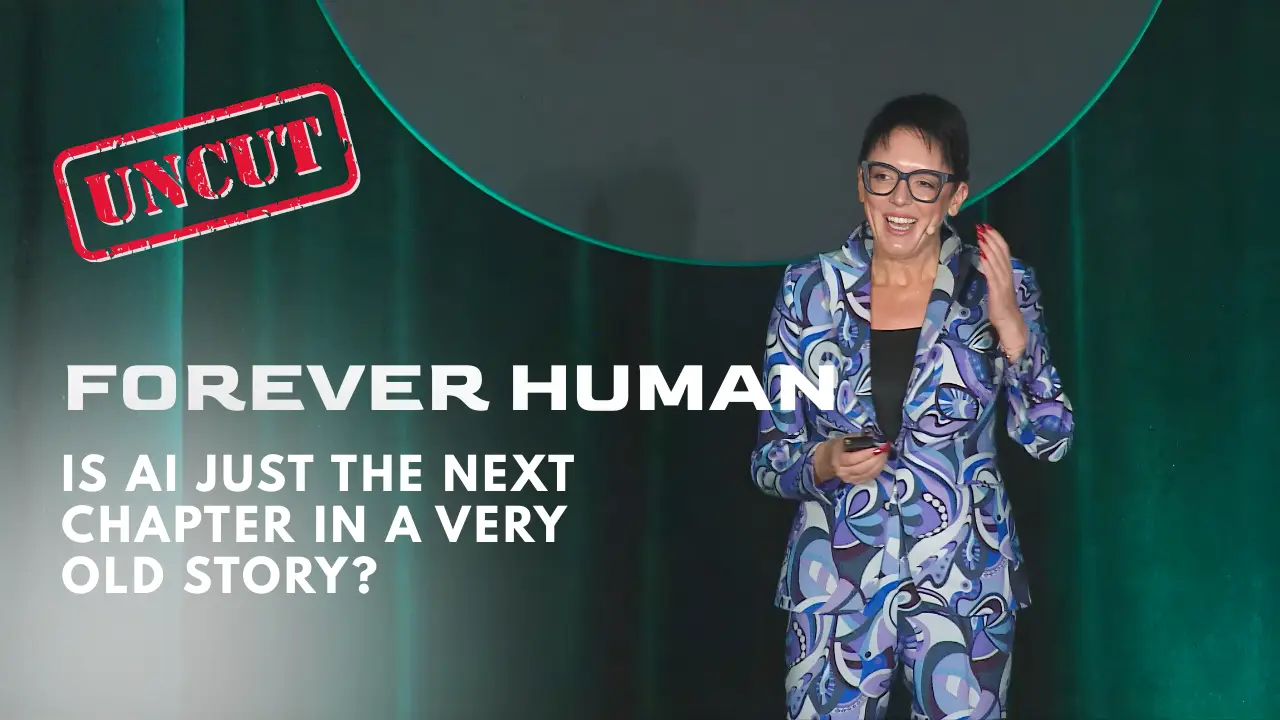
For reinsurer leadership rooms investing in the AI stack, Forever Human is the keynote that names the human capability layer the alternative-capital story does not.
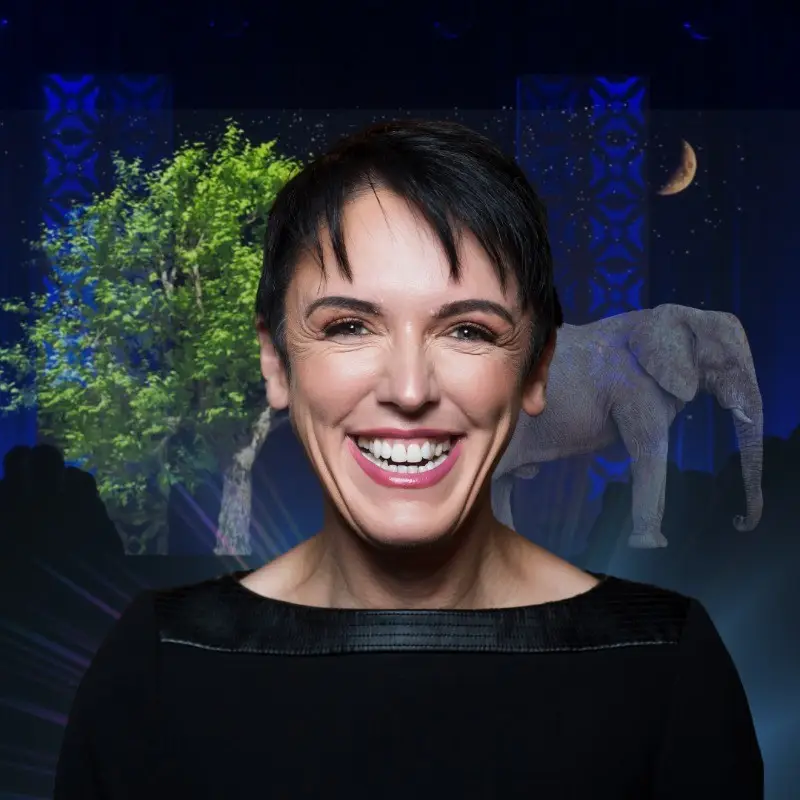
Sylvie di Giusto is an International Hall of Fame keynote speaker who works with executive audiences across industries on the human edge that determines who thrives through structural disruption. Her Forever Human series projects the trajectory of major industries by 2050 and examines what AI is actually doing inside professional workflows and where the human role is concentrating, not disappearing.
If your reinsurer leadership team or industry conference would benefit from a keynote on AI in reinsurance and the human capability stack that turns AI deployment into a competitive advantage, the conversation starts at sylviedigiusto.com/contact.