AI Decisions vs Human Choices: The Difference That Costs You
Your largest client just stood up an internal AI procurement system that scores brokers on response speed, price, explainability, and proprietary metrics nobody on the carrier side will fully disclose. You still have the relationship. You have lost the gatekeeping. The future of insurance brokerage arrived on a Tuesday morning, and most of your colleagues are treating it like it might happen to someone else, eventually. Not you. Not this year.
The transactional layer of the broker role is being absorbed. Algorithmic underwriting is mainstream. Claims triage is automated at the largest carriers. Submission processing is moving at machine speed inside platforms that the leadership team has already approved. Tractable handles claims through computer vision at a scale no broker network can match. None of that is a forecast. It is in production right now. The brokers who notice are repositioning. The ones who do not are being repositioned without being asked, and the gap between the two camps is widening.
The future of insurance brokerage is not about being faster at the work the algorithm now does. It is about being the one who decides what the algorithm is not allowed to do. That shift requires moving from placement skill to moral architecture, and the brokers who recognize this window as the positioning moment are the ones who will define what the industry becomes by 2050.
KEY TAKEAWAYS
- The algorithmic layer absorbs routine placement. The moral layer becomes the broker’s only sustainable edge.
- Your client is increasingly an algorithm. Your counterparty is the software you bought to negotiate on your behalf.
- Information advantage is gone. Trust shifts from persuasive to measurable. Explainability becomes the structural defense.
- Climate is redrawing coverage maps. Brokers negotiate financial resilience inside a planetary triage system, not placement.
- A handful of global platforms become systemic infrastructure. At that scale, neutrality is fiction. Oversight is policy.
- The broker in 2050 refuses the placement that the model optimizes toward. That refusal is the actual work.
- The decision to build moral architecture starts now. Five years from now, the gap becomes obvious to everyone.
When the Procurement AI Becomes Your Real Client
The moment when this matters is concrete. A large commercial buyer deploys procurement AI that evaluates broker recommendations before any human reads a name. It compares, scores, and shortlists. The system has no patience, no ego, no need for reassurance. By 2050, this will be the default state for most large accounts. Personal AI agents manage personal portfolios end-to-end. Enterprise systems scan exposure continuously and shift coverage across captives, carriers, and capital markets in real time. Most placements will happen machine-to-machine.
What makes this harder is that you are no longer negotiating with humans. You are negotiating with software you bought against software the carrier deployed, on terms set by data infrastructure that neither side controls fully. The skills that built broker careers, such as room-reading, relationship intuition, or the ability to detect what the human underwriter needs from a single interaction, do not transfer. Different skills do. Setting the boundaries under which your AI is allowed to negotiate. Explaining why your model made its recommendation in language that a procurement system can audit. Designing a placement that survives algorithmic scrutiny.
The future of insurance brokerage starts here. When your client becomes autonomous and algorithmic, the broker who can interface with it as a peer becomes the trusted partner. The broker who only delivers what the model produces becomes the layer that the client can bypass in parallel.
You used to win by understanding humans. Now you win by understanding systems. The shift requires building entirely new fluency.
Sylvie di Giusto
From Information Gatekeeper to Explainability Expert
For decades, the broker’s value rested on access to information no one else had. Carrier appetite. Loss patterns. Underwriter tendencies. Off-market capacity. That information edge is being drained in real time. Real-time appetite data streams openly. Loss patterns are tokenized and shared across platforms. Client AI simulates carrier responses before you place the call. Your steering patterns are traceable in ways that were not possible years ago. The information you used to sell is becoming a commodity.
What replaces it is explainability. The broker who can walk a client through what the model produced, where it is likely wrong, and what assumptions are buried in the output, becomes the trusted voice. The broker who only delivers the model’s answer becomes redundant the moment the client has direct access to the same model. Explainability is not a soft skill in this environment. It is the structural defense against commoditization.
The shift requires deliberate practice that most brokers are not doing yet. Reading model documentation. Asking the carrier’s underwriting team how the model works, not just what it produced. Building the discipline to translate algorithmic outputs into a narrative that the client can audit. The future of insurance brokerage is the broker who can read what the model says, understand what it does not say, and articulate both.
Information was your advantage. Now it is available everywhere at zero cost.
Sylvie di Giusto
The Moment When Infrastructure Requires Governance
At the top of the market, a structural shift is underway. A handful of global broker platforms increasingly mediate the flows. Retail. Wholesale. Reinsurance. Captives. Capital markets. All routes through the same small set of organizations. These platforms hold the deepest cross-market data. They mediate vast capital movements. Their failure is systemic. (The Council of Insurance Agents & Brokers tracks this consolidation in its quarterly market reports, and the trajectory is accelerating as private-equity-backed roll-ups continue to absorb regional brokers into the global platforms.)
At that scale, brokers stop being connectors. They become infrastructure. The shift is structural. Infrastructure attracts oversight. It carries public consequences. It cannot credibly claim neutrality because designing the routing determines who gets capital and who does not. Regulators will move in. Public scrutiny will follow. The broker leadership operating in that environment will spend more time in front of legislators than in front of clients.
The future of insurance brokerage at the infrastructure scale is no longer a commercial story. It is a governance story. The brokers who recognize they are becoming infrastructure and invest in governance, transparency, and moral framing now will be the ones who define the standard. Those who operate as if they are private intermediaries will find themselves regulated as utilities without having been designed for that future.
When you become too central to fail, the business becomes a governance problem.
Sylvie di Giusto
Climate Gaps Are Rewriting the Insurability Map
Climate is already reshaping what gets priced and what gets socialized. Persistent coverage gaps are emerging. Carriers are exiting entire regions. Public-private pools are absorbing tail risk that the private market no longer underwrites. Mega-cities, agricultural belts, water systems, and infrastructure corridors are increasingly covered through structured deals that include adaptation milestones, decarbonization targets, and geographic shifts as preconditions.
The broker in this world is no longer placing risk. The broker is negotiating financial resilience inside a planetary triage system. Which regions continue to receive coverage? Which industries adapt fast enough to remain insurable? Which clients can finance the resilience investments the carrier will require before underwriting? Premium becomes policy. Capital steers behavior.
The future of insurance brokerage is being shaped by brokers who can read climate signals, translate them into placement implications, and advise clients on the trajectory of their own insurability. The brokers who cannot will be reactive to carrier decisions rather than proactive. This is not a twenty-year question. It is a five-year operating question.
You are not placing cover anymore. You are negotiating which futures get capital.
Sylvie di Giusto
Five Skills That Stack Into Competitive Advantage
The future of insurance brokerage is built on capabilities the existing curriculum does not teach. Five skills compound disproportionately over the decade. Each is buildable through deliberate practice. Each is the difference between leading and being absorbed.
Five skills the future of insurance brokerage actually demands:
The future of insurance brokerage belongs to the brokers who deliberately invest in this stack, not to those who wait for the existing curriculum to catch up.
Explainability: walking a client through model logic and blind spots. The single most defensive skill against commoditization.
Climate fluency: reading primary research and translating it into which assets remain insurable and for how long.
Capital structure literacy: navigating captives, ILS, parametric instruments, and public-private pools, not just carrier markets.
Systems thinking: evaluating placement inside climate, code, and capital systems rather than as standalone deals.
Moral framing: the discipline to articulate why a risk should not be priced even when the algorithm would optimize toward it.
None of these are on the licensing exam. All of them decide who the industry calls when the hard questions arrive.
Sylvie di Giusto
The Conversations Arriving at Your Door
These conversations are about to land at every broker’s desk, and the brokers who can hold them with substance will become the trusted advisors of the next decade. Those who deflect will quietly find that the substantive questions are taken elsewhere.
Why is this risk insurable, and why is that one socialized? Clients will want to understand the moral architecture behind capital decisions, not just the price.
How should we build, deploy, and operate given what is now insurable and what is not? The broker becomes the strategy advisor, not the transaction executor.
What is your firm’s position on AI use in our placement, and how is bias being audited? Procurement systems will require these answers in writing.
When the model recommends a path that conflicts with our values, how does your firm respond? Clients will want to know there is a human at the override point.
The future of insurance brokerage is the broker who walks into those conversations ready.
The prepared brokers will be the trusted ones. The rest will be replaced by software.
Sylvie di Giusto
The 2050 Broker Is Being Shaped in 2026
The leader of an insurance brokerage in 2050 will not be the most aggressive deal closer.
The leader will be the moral architect who can read climate, capital, and AI governance signals simultaneously and translate them into positioning that holds up across scenarios.
The leader will be the one whose clients trust them with the long-arc call, not because they are the fastest to quote, but because their reasoning is explainable and their judgment is demonstrated across cycles.
The leader will be willing to refuse a placement the model would otherwise optimize toward, even when every short-term incentive pushes in the opposite direction.
The future of insurance brokerage is being shaped right now by the choices made in 2026. The decision to invest in non-transactional skills. The decision to broaden the stakeholder network. The decision to develop the discipline of principled refusal. The leaders who decide early will quietly become the trusted voices the industry turns to when disruption fully arrives. Those who defer will spend the next decade trying to catch up on positioning that cannot be bought on demand.
The future of insurance brokerage is being shaped right now by the choices nobody is watching you make.
Sylvie di Giusto

The future of insurance brokerage is not a 2050 problem. It is a 2026 reality showing up in procurement scoring systems, algorithmic syndicates, AI-mediated claims platforms, and the climate-driven re-pricing of entire regions. The work is to move from connector to moral architect, build the five compounding skills, prepare for the conversations clients are about to start having, and invest in the human-edge categories AI cannot occupy. The future will be defined by the small group who recognized this as a positioning window and used it. That window is open right now.
Frequently asked questions
What will the future of insurance brokerage actually look like by 2050?
The broker stops being a transactional connector and becomes infrastructure. AI agents on both sides handle the routine placement work end to end. Comparison, negotiation, claims, all happen at machine speed without a human in the loop. The remaining human work moves up the value stack: defining the boundaries under which the AI can negotiate, designing markets where no embedded solution exists yet, structuring planetary-scale climate resilience deals. The future of insurance brokerage rewards judgment, restraint, and explainability. The transactional volume work is being absorbed by software faster than most brokers admit.
Will AI replace insurance brokers?
AI is replacing the parts of the broker role that were always about access and transactional execution. Submissions, comparisons, routine claims support, all gone or going. AI is not replacing the parts about judgment under uncertainty, defining which risks should never be priced, or holding the trust relationship with a client through a complex multi-year resilience strategy. The future of insurance brokerage moves from placement skill to moral architecture, and the brokers who make that move deliberately are the ones whose careers compound through the disruption. The brokers who try to compete on transaction speed are competing on AI's home field.
What skills should insurance brokers build right now?
Five skills compound disproportionately over the decade. Explainability, the ability to walk a client through why a model made a recommendation and where the recommendation might be wrong. Climate fluency, understanding how coverage gaps emerge and which regions and industries face permanent re-pricing. Capital structure literacy, knowing how risk now flows between captives, carriers, capital markets, and public-private pools. Systems thinking, evaluating risk inside the larger climate, code, and capital triad rather than as standalone deals. Moral framing, the discipline to refuse a placement that the model would optimize toward but the long-arc judgment warns against.
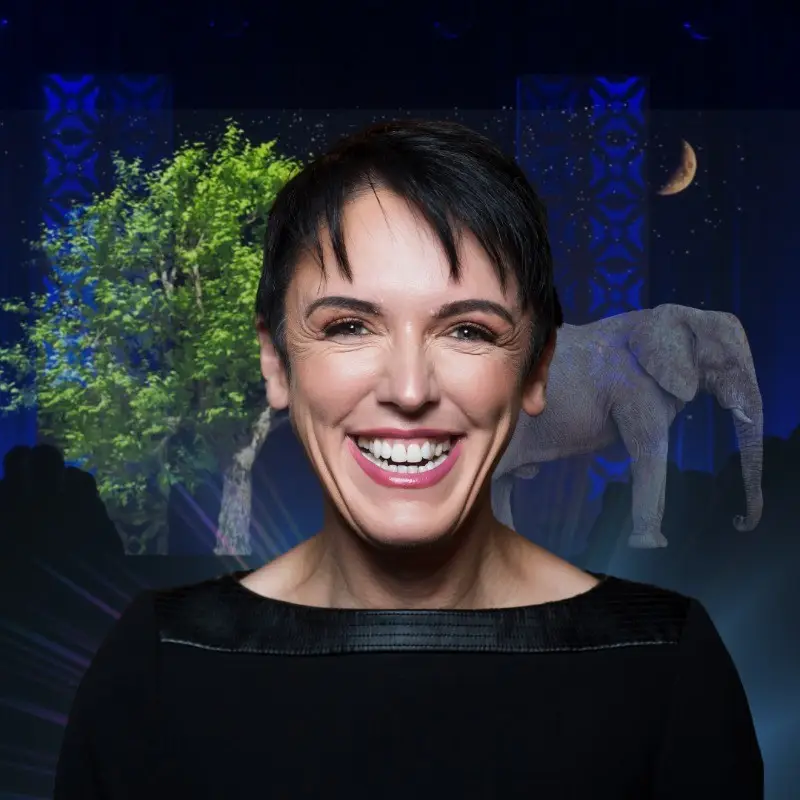
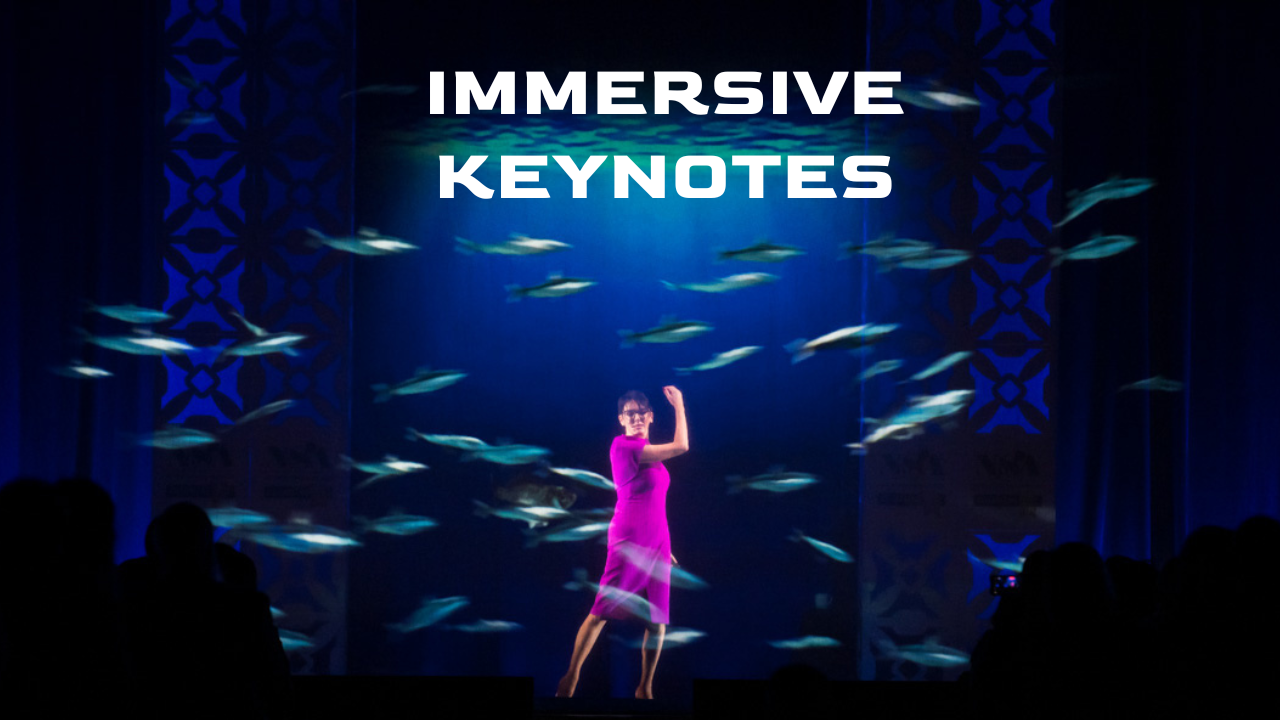
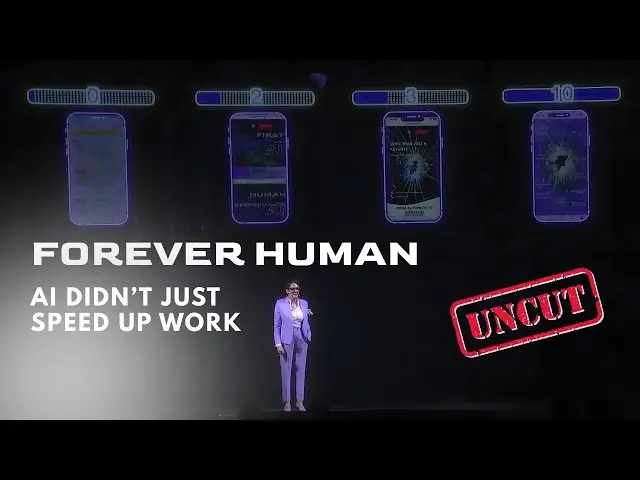
Sylvie di Giusto is an International Hall of Fame keynote speaker who works with executive audiences on the human edge that determines who thrives through structural disruption. Her Forever Human series projects the state of major industries by 2050 and examines what the human professional in those industries should be doing now to be positioned for the transition.
If your audience would benefit from a keynote on the human edge that decides who leads through industry disruption, the conversation starts at sylviedigiusto.com/contact.