Human Fear of AI: Why We Panic First and Adapt Later

Share This Post

Human Fear of AI: Why the Future Is Less Scary Than It Feels

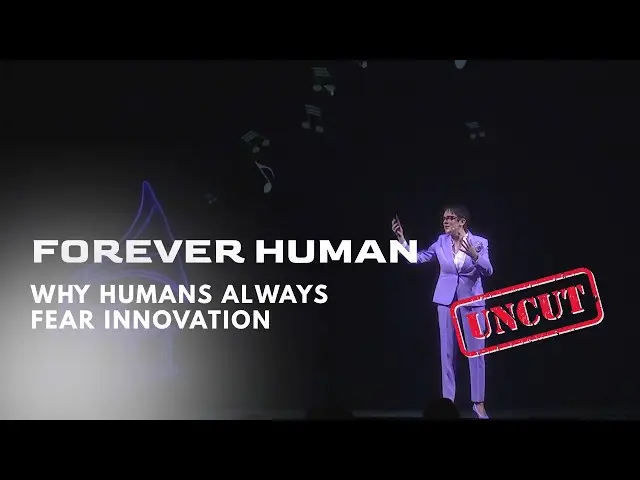
Every time a major new technology appears, humanity reacts in exactly the same way. First, we panic. Then we adapt. And a few years later, we look back and wonder why we were so worried in the first place. This pattern has repeated itself for centuries. The printing press, the radio, television, the internet, or smartphones. Every one of these innovations sparked concern, criticism, and occasionally full-blown hysteria. People feared society would collapse, intelligence would disappear, or human connection would vanish. Now, artificial intelligence has entered the stage, and the pattern is repeating itself once again.

Across industries, the human fear of AI has become one of the most fascinating behavioral reactions to modern technology. Professionals worry that machines will replace their jobs, undermine creativity, or fundamentally change the way people think and collaborate. Yet when we zoom out and look at history, something interesting becomes clear. Our reaction to new technology rarely says as much about the technology itself as it does about human psychology. As I often say in my keynote Forever Human,” every time technology disrupts our world, we panic first, we adapt second, and later we wonder why we worried so much. Understanding the human fear of AI therefore begins with recognizing that fear is not unusual. It is part of the process. The real question is what we do with that fear once we notice it.

KEY TAKEAWAYS

  • Human fear of AI follows a historical pattern seen with every major technology
  • Initial panic often fades once people learn how to use new tools
  • Artificial intelligence automates tasks, but humans redefine their roles
  • Creativity, empathy, and judgment remain deeply human advantages
  • Fear often comes from uncertainty rather than real risk
  • Professionals who experiment with AI gain confidence quickly
  • Emotional intelligence becomes even more valuable in an AI-driven world
  • Adapting early allows individuals and organizations to shape the future

The Pattern We Keep Repeating

The human fear of AI feels unique because the technology itself feels unprecedented. But the emotional response is anything but new.

When the printing press first appeared, critics warned that written texts would destroy memory. If people could simply read information, they argued, nobody would bother remembering anything anymore. When the radio entered homes, many believed it would bring chaos into family life. Suddenly, voices from the outside world could fill the living room. Some feared it would disrupt peace and traditional routines. Then came television. Critics worried it would turn viewers into passive zombies and corrupt the minds of children. Decades later, the internet triggered similar concerns. People feared it would spread misinformation, enable crime, and destroy privacy forever.

Sound familiar? Each time a new technology arrived, the human fear of AI—or its historical equivalent—followed the same pattern. First came anxiety about how society would change. Then came adaptation as people learned how to use the technology. Eventually, the innovation simply became part of everyday life. History does not tell us that technology is harmless. But it does show that human beings are remarkably good at adjusting.

Why Artificial Intelligence Feels Different

Even though history offers reassurance, the human fear of AI still feels deeply personal for many professionals today. Artificial intelligence is not just another communication tool like the radio or television. It is capable of performing tasks that once required human thinking. Writing, analyzing data, summarizing reports, even generating ideas. For many professionals, this raises an uncomfortable question: if machines can do these things faster, where does that leave us?

The answer lies in understanding what artificial intelligence actually changes. AI is extraordinarily effective at processing information and automating structured tasks. It can organize, calculate, summarize, and predict patterns across vast datasets. What it cannot do is interpret the deeper meaning of those patterns in the messy, emotional, and unpredictable world of human interaction.

Artificial intelligence may generate a strategy. Humans decide whether that strategy makes sense in a particular moment. It may draft a message. Humans determine whether the tone feels appropriate. It may highlight risks. Humans decide which ones truly matter. Once we begin to see the difference between automation and judgment, the human fear of AI starts to look less like a threat and more like a transition.

Technology Changes Tasks. Humans Redefine Roles.

One of the biggest misunderstandings behind the human fear of AI is the assumption that technology simply replaces people. History shows something more interesting. Technology rarely eliminates human contribution. Instead, it shifts where that contribution happens.

When calculators became common, accountants did not disappear. They spent less time calculating and more time advising. When spreadsheets replaced paper ledgers, finance professionals did not lose relevance. They gained new analytical capabilities. The same pattern is unfolding with artificial intelligence.

AI is exceptionally good at removing repetitive, structured tasks from daily work. Drafting basic reports, organizing information, and processing large datasets. That shift creates space for something else: deeper thinking.

Professionals can spend more time interpreting information, building relationships, solving complex problems, and making strategic decisions. In other words, technology automates tasks while humans redefine value. Understanding this shift helps reduce the human fear of AI, because it reframes the conversation. Instead of asking “Will machines replace us?” we can start asking “What becomes more valuable when machines handle the routine work?”

The Skills That Become More Valuable

As artificial intelligence becomes more capable, something unexpected happens in the workplace. The most human skills become the most valuable. The human fear of AI often focuses on what machines can do. Yet the real opportunity lies in what machines cannot replicate easily.

Empathy. Judgment. Creativity. Ethical reasoning. Leadership. These qualities rarely appear in datasets. They emerge through experience, relationships, and reflection. When routine tasks are automated, professionals have more capacity to focus on these human capabilities.

Consider leadership. A machine might analyze employee engagement scores and detect declining morale. But a leader understands why the team feels uncertain after a restructuring announcement.

Or consider creativity. AI can generate variations of existing ideas. Humans imagine entirely new possibilities.

Or consider trust. Clients may appreciate fast responses from automated systems, but they build loyalty through relationships with people.

As technology advances, these human abilities become even more important. The future of work is not less human. In many ways, it becomes more so.

Clients Reveal More Between The Lines Than In The Words They Send

Fear often grows in the absence of familiarity. The more mysterious a technology feels, the more intimidating it becomes. One of the most effective ways to reduce the human fear of AI is surprisingly simple: interaction. When professionals begin experimenting with AI tools, the unknown quickly becomes understandable. Here are several practical ways to move from anxiety to curiosity.

Human Fear of AIMany people assume they must fully understand artificial intelligence before they can safely begin using it. That belief often keeps them stuck in observation mode, watching others experiment while their own uncertainty quietly grows. In reality, familiarity does not come from studying a technology at a distance. It comes from interacting with it.

Try asking an AI tool to summarize an article, generate several rough ideas, or outline a presentation you are already planning to create. The goal is not to produce perfect work. The goal is to build comfort. Once you see how the tool responds, where it helps, and where it falls short, the technology quickly stops feeling mysterious. The human fear of AI often shrinks the moment professionals realize that they are still the ones directing the process.

Human Fear of AIOne of the fastest ways to intensify the human fear of AI is to frame the technology as an opponent. When people ask themselves, “Can AI replace me?” they automatically move into a defensive mindset where every new capability feels threatening.

A more productive question is, “How could AI assist me?” When professionals begin treating artificial intelligence as a collaborator rather than a competitor, the dynamic changes entirely. Instead of worrying about losing relevance, they start discovering ways to save time, generate ideas faster, or simplify complex tasks. The shift from competition to collaboration turns fear into experimentation, and experimentation often reveals that human judgment still guides the outcome.

Human Fear of AIUnderstanding what artificial intelligence can do is useful. Understanding what it cannot do is empowering. Many professionals experience the human fear of AI because they assume the technology is capable of far more than it actually is.

Spend time noticing where AI struggles. It often misses context, misunderstands nuance, or fails to interpret emotional signals that humans recognize instantly. It may produce technically accurate answers that lack judgment or situational awareness. Once professionals begin observing these limitations, the technology stops feeling like an all-powerful replacement and starts looking more like a powerful tool that still depends on human interpretation.

Human Fear of AIIronically, one of the most effective ways to overcome the human fear of AI has very little to do with technology itself. It has to do with strengthening the capabilities that remain distinctly human.

As automation increases, skills such as communication, empathy, leadership, and strategic thinking become even more valuable. These abilities help professionals interpret situations, build trust, and make decisions that cannot be reduced to data alone. When people invest in these skills, they begin to see artificial intelligence not as something that diminishes their value but as something that amplifies the impact of their uniquely human strengths.

Human Fear of AICuriosity may be the most underrated antidote to technological fear. Professionals who remain curious approach new tools with questions rather than conclusions.

Instead of assuming artificial intelligence will dramatically disrupt their role, they ask how it works, where it helps, and where it fails. That mindset transforms anxiety into exploration. Over time, curiosity builds familiarity, familiarity builds confidence, and confidence dissolves much of the human fear of AI that once felt overwhelming.
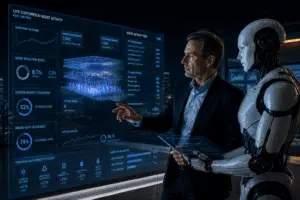
Technology evolves quickly. The professionals who adapt most successfully are rarely the ones who know everything. They are the ones who stay curious enough to keep learning. Curiosity dissolves fear surprisingly fast.

A Future That Is Still Human

The human fear of AI tells us something important about ourselves. It reveals how deeply people care about purpose, identity, and contribution. Work is not just a set of tasks. It is a source of meaning and connection. When technology changes how we work, it naturally triggers questions about where we fit.

Yet history reminds us that humanity has faced this moment many times before. Every major innovation initially felt disruptive. And every time, people discovered new ways to create value, build relationships, and move forward.

Artificial intelligence will change many aspects of work. But it will not remove the need for curiosity, judgment, creativity, empathy, leadership, or imagination. In fact, it may highlight those qualities more clearly than ever. The future will undoubtedly include powerful machines. But it will still belong to humans who know how to use them wisely.

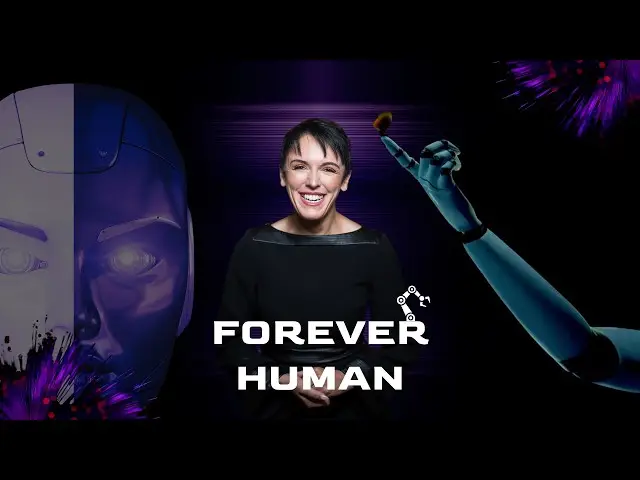
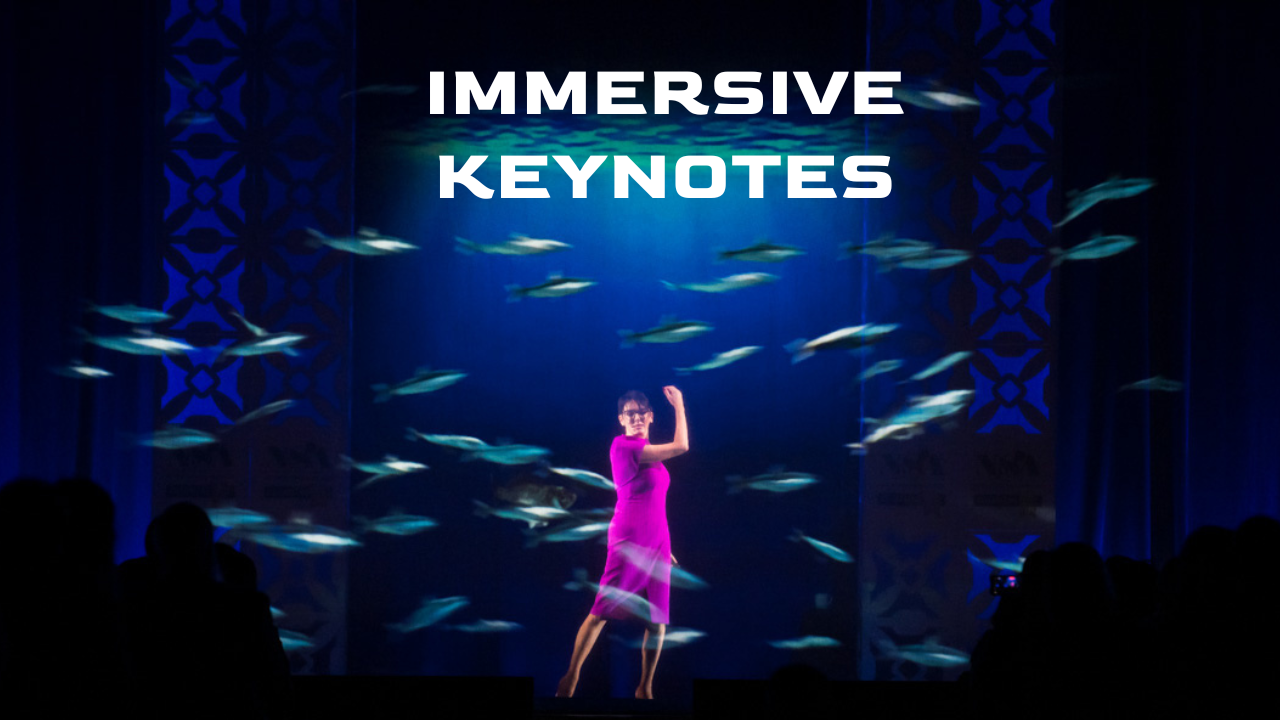
Hall of Fame keynote speaker Sylvie di Giusto explores the human side of artificial intelligence. Through her groundbreaking immersive 3D keynote Forever Human, she helps audiences understand how AI is reshaping the way we think, decide, lead, and connect. While many conversations focus on the technology itself, Sylvie focuses on what that technology does to people.

Sylvie di Giusto, AI Keynote Speaker, Speed of AI

Hall of Fame keynote speaker Sylvie di Giusto explores the human side of artificial intelligence. While many conversations focus on what the technology can do, her work focuses on how it changes people, their attention, decisions, leadership, and the way professionals adapt to new realities. Known for pioneering immersive 3D keynote experiences, she helps organizations understand how humans continue to redefine their roles as technology evolves. As she often reminds audiences, this is not really a technology talk; it’s a people talk. Sylvie is represented globally by the speaker management agency cmi. To inquire about her availability, reach out to her team.

LATEST INSIGHTS

ABOUT THE AUTHOR

Sylvie di Giusto, CSP, CPAE, is a multi-award-winning international Hall of Fame keynote speaker who explores how artificial intelligence is reshaping human behavior. Unlike other AI keynote speakers, she approaches the topic through a human lens, examining how leadership and client relationships evolve as machines grow more capable.

BRING FOREVER HUMAN TO your evenT

Looking for an AI keynote speaker who doesn’t give a tech talk, but a people talk?

Forever Human

THE AI KEYNOTE ABOUT HUMANS

Immersive 3D keynotes by Sylvie di Giusto

EXPERIENCE THE MAGIC

*Available as either a 3D immersive keynote experience or a traditional keynote format.

More To Explore

UNCUT. UNFILTERED.

THE SPEED SHIFT

THE ATTENTION ECONOMY

THE WISDOM GAP

THE FEAR OF THE NEW

Uncut - Video 4 - Forever Human

THE TRUST CRISIS

THE SPEED TRAP

THE HUMAN OVERRIDE

Uncut - Video 1 - Forever Human

THE DISRUPTION CYCLE